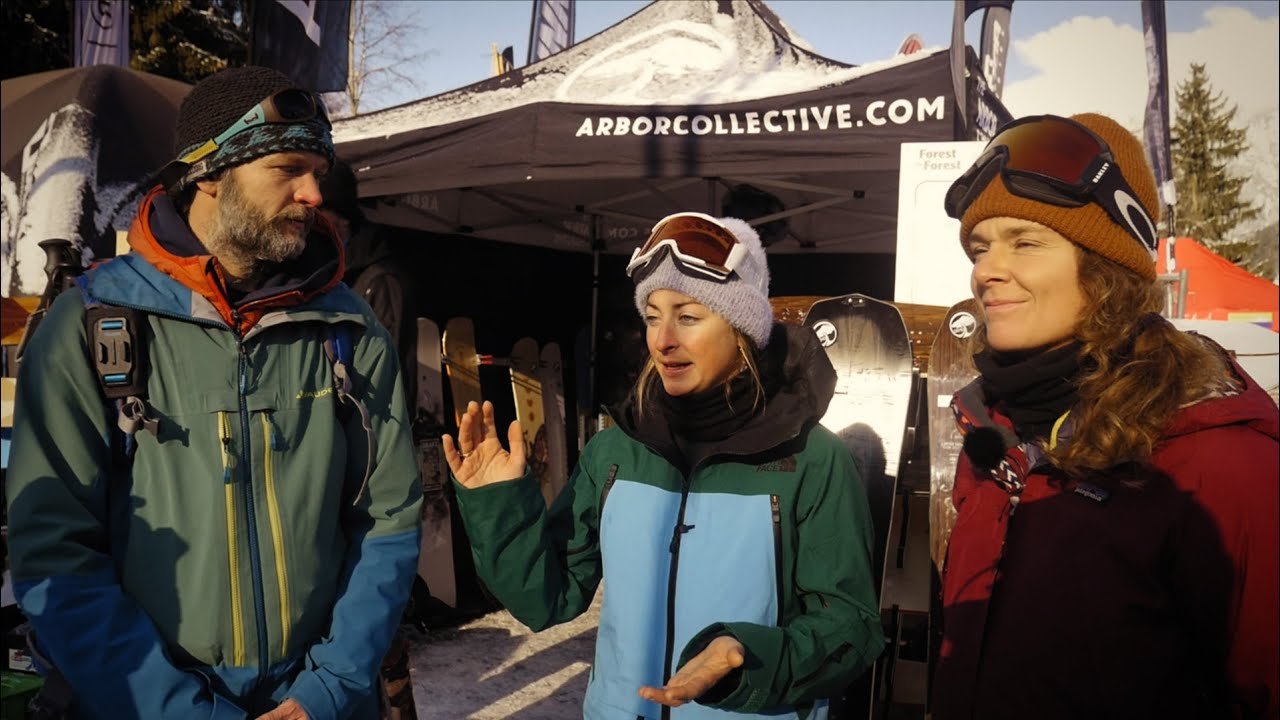
Marie-France Roy & Mary Rand: Your line. Your decision.
A film crew is waiting, the line looks good and everyone is motivated. But you have doubts. Moments like these make the human side of risk management so important. In our conversation with Marie-France Roy and Mary Rand, we explore the pleasure of splitboarding and the importance of making your own decisions.
We met the then Arbor team riders at Shop’s First Try. The video was published on 9 December 2020. Here, the conversation gets its own article, with the central ideas to read and timestamps to explore individual topics.
Watch the full conversation
The English-language interview runs for 15:46. Audio quality is limited towards the end. The sections below are an editorial summary of the conversation.
Slow down and get closer to the mountains
Marie-France describes what splitboarding brought to her riding compared with access by lift, helicopter or snowmobile: time. Time to look at a line while approaching it, notice conditions and appreciate the surroundings. Moving at your own pace changes how you see a mountain.
Mary is candid about how unfamiliar climbing felt at first. Moving uphill on two halves and learning kick turns did not come naturally straight away. Once she was back on her snowboard for the descent, she felt at home again. That honesty matters: being a professional snowboarder does not mean every new movement is already familiar.
Start with knowledge and people you trust
Asked what they would recommend to women starting splitboarding, the riders emphasise courses and knowledgeable support. That includes equipment skills as well as the foundations of travelling in the backcountry.
Mary explains that professional avalanche courses helped her develop confidence. Mentors also played an important role. The message is encouraging: you do not need to know everything before you start learning. You do need an environment where you can ask questions and build a foundation.
When the crew wants more than you do
We discuss filming pressure, sponsor expectations and the challenge of having a team assembled when conditions might be better another day. Marie-France recalls placing much of her trust in others when she first entered the backcountry. As her knowledge grew, her own judgment became more important.
That does not mean ignoring other perspectives. She talks about choosing partners with a similar risk tolerance and a crew that respects concerns. You should be able to say that something feels wrong without being pushed into a decision.
There is more than one plan
Mary stresses preparation and routine: learning about the snowpack in the area, preparing the group and thinking through alternatives. She also discusses equipment checks and having a second or third plan.
Her point about quiet group members stands out. Someone who is not speaking may still have something important to contribute. Open communication includes asking them. Experience and skills can vary across a group while everyone still has room to voice a concern.
Where you are changes the decision
Remoteness, equipment, group skills and access to help shape the context of a tour. Marie-France discusses adapting her risk tolerance to the type of access and the possibilities for rescue. The question is not only whether you can ride a line, but what an incident there would mean for the group.
The conversation closes with passing on a line or changing plans. Terrain does not always look as expected when you reach it. Choosing another option belongs to the process, and the crew needs to accept a no.
Jump to a topic
- 0:43: How splitboarding changes your view of a mountain
- 1:40: Mary on learning to travel uphill
- 4:42: Getting started, courses and mentors
- 6:32: Filming, expectations and personal decisions
- 10:01: Preparation, alternatives and communication
- 12:24: Risk, location and access to rescue
- 14:35: Passing on a line and saying no
Prepare your next tour
The conversation shares personal experiences from 2020. For your next tour, explore our mountain weather sources, official avalanche bulletins and tour-planning knowledge.
Our Nicholas Wolken interview offers another perspective on listening and group decisions. Find more conversations under Learn from experienced riders.