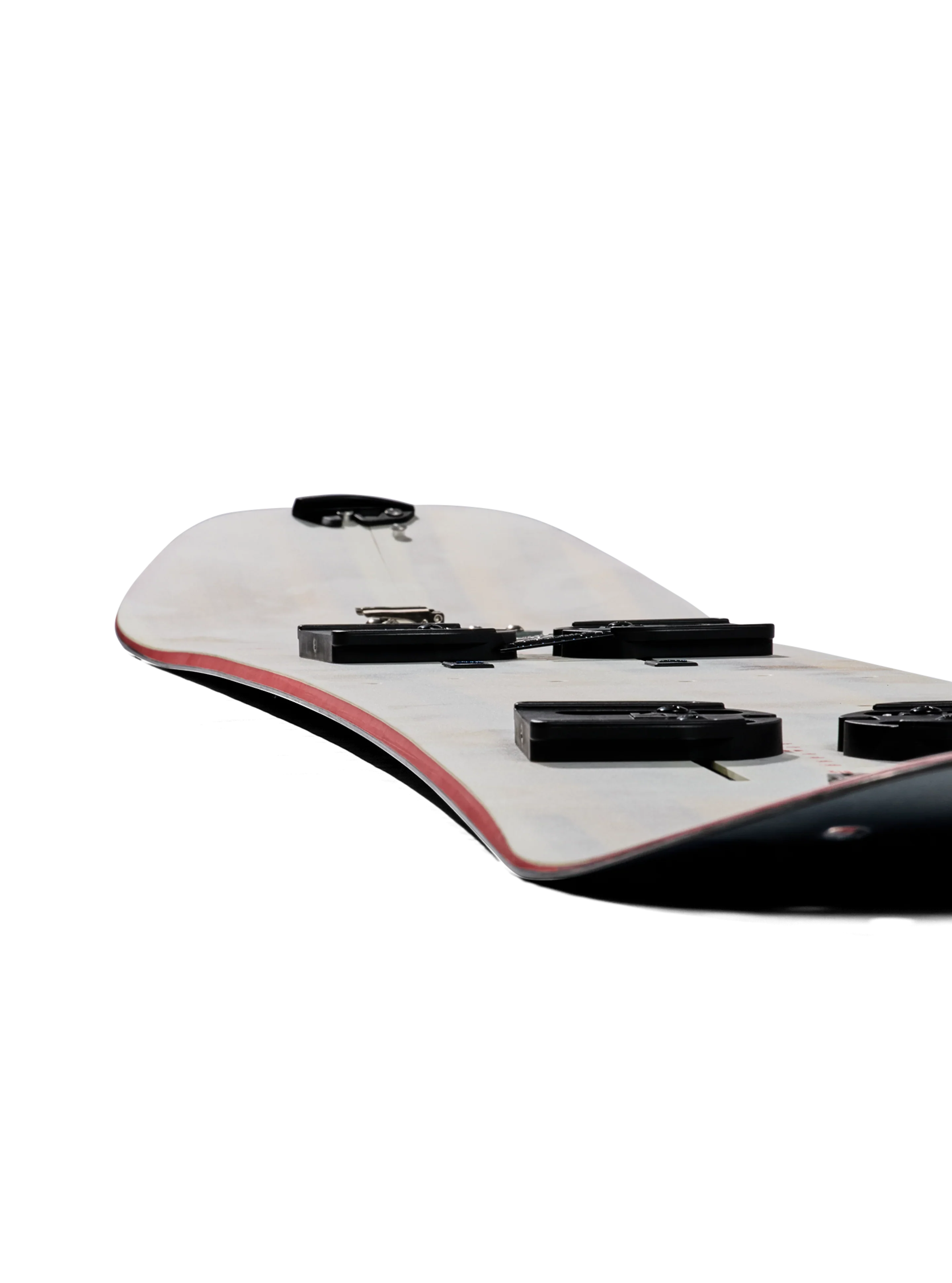
When the descent dictates the touring objective, the High Fidelity is Burton’s performance-focused option. Directional Camber, 7 mm of taper and carbon reinforcement point towards fast, powerful lines for experienced riders who actively drive the edge.
Is the Burton Family Tree High Fidelity Camber Splitboard 26/27 right for you?
The High Fidelity addresses tours where the descent sets the objective. It is aimed at riders looking to drive a board deliberately through the edge rather than cruise gently between powder pillows. Directional Camber and the firmer character describe that intention. Whether it fits you depends more on riding style than on the steepness of a product photograph.
Its 7 mm taper is more moderate than that of a pronounced powder fish. Together with the freeride geometry, that creates a different brief from the 3D Fish: a board for active riding rather than maximum powder specialisation. Carbon reinforcement forms part of the construction. On its own, it proves neither better damping nor superior grip on every surface.
How does it fit your approach, size and setup?
If the choice is between Hometown Hero and High Fidelity, start with how often you genuinely ride with speed and sustained pressure. A more demanding concept does not automatically improve a relaxed touring day. Older Burton models such as the Straight Chuter provide interesting context in our archive, but their tests are not High Fidelity tests and do not establish direct succession or identical behaviour.
| Your decision | Our assessment |
|---|---|
| A good fit for | Experienced riders who deliberately drive their descents |
| Think more carefully about | Assuming a more demanding board improves every relaxed tour |
| Compare directly | Burton Family Tree Hometown Hero Splitboard and Jones Men’s Solution Splitboard |
What have we learned from earlier seasons?
The workbook contains no hands-on High Fidelity test. Its detailed 21/22 Straight Chuter and Leaderboard reports do help frame a useful question: does a demanding board make your riding more enjoyable, or mainly use more energy on ordinary tours? These are different models, not documented identical predecessors.
What did we learn on the Straight Chuter? Its tail felt reassuring in steep gullies, on bigger drops and when riding aggressively. It also handled variable snow at speed with control. Lighter riders needed considerable leg strength, and everyday touring felt more cumbersome. On the climb it was well balanced, kick turns came easily and edge hold impressed on hard snow up to 35° in that particular test. That is a test observation, not clearance for a given slope angle.
What set the Leaderboard apart? It was stiffer still and demanded consistently active riding. With enough strength, it offered controlled riding through variable snow and a surfy feel even at speed. Balance, tracking and edge hold worked well on the ascent.
How does that help you choose? Maximum stiffness is not a goal in itself for relaxed tours. If you deliberately load the board and value a supportive tail, trying the High Fidelity makes sense. Whether it gives you the right amount of support remains a question for that ride; the older Burton tests cannot answer it for the current board.
What has changed since 25/26 and earlier models?
Our archive contains no directly corresponding 25/26 page for this exact model. Its current role and the older or related models discussed above, where available, provide the useful comparison. An earlier board from the same brand does not establish identical construction.
FAQ: What should you know before your first tour?
Is this a tested successor to the Straight Chuter?
Our sources do not establish that. We have older tests of performance-oriented Burton splits, but they cannot be relabelled as a High Fidelity test. This page assesses the current construction separately.
Which Burton Family Tree High Fidelity Camber Splitboard size should I choose?
Current listed lengths are 154, 158, 162 cm. Start with the rider-weight range for each length, then check boot width and stance. Frequent kick turns favour manageable equipment; extra length purely for assumed flotation is not a universal solution. Reference points from the table: 154 cm: 120-180 lb. / 54-82kg, waist 248mm; 158 cm: 150-200 lb. / 68-91kg, waist 250mm. These are manufacturer recommendations, not weight limits established in our tests.
Which other boards should I compare?
Burton Family Tree Hometown Hero Splitboard: Mixed touring days with a versatile freeride brief. Jones Men’s Solution Splitboard: One board for varied snow and active freeride touring. Choose around your usual tours and an appropriate size rather than favouring a model purely because of its position in the price list.
What original test experience do we have?
There is no hands-on High Fidelity test in this file. The 21/22 Straight Chuter and Leaderboard reports show why riding style and leg strength matter with demanding Burton splits. Their observations are a model comparison here; their scores and weights are not transferred to the High Fidelity.
What do I need in addition to the board?
This board uses Split Channel. Plan for compatible splitboard bindings or interface hardware, correctly sized boots and properly matched skins. The Channel system alone does not establish that every existing binding fits without extra parts. Check what the specific offer actually includes.
Is an earlier-season version worth considering?
Yes, when model, size and condition suit you. Compare the specific model-history information rather than only the year label. For a used board, inspect the base, edges, inserts and connectors. An earlier test score cannot replace a condition check.
Which sizes and specifications are available?
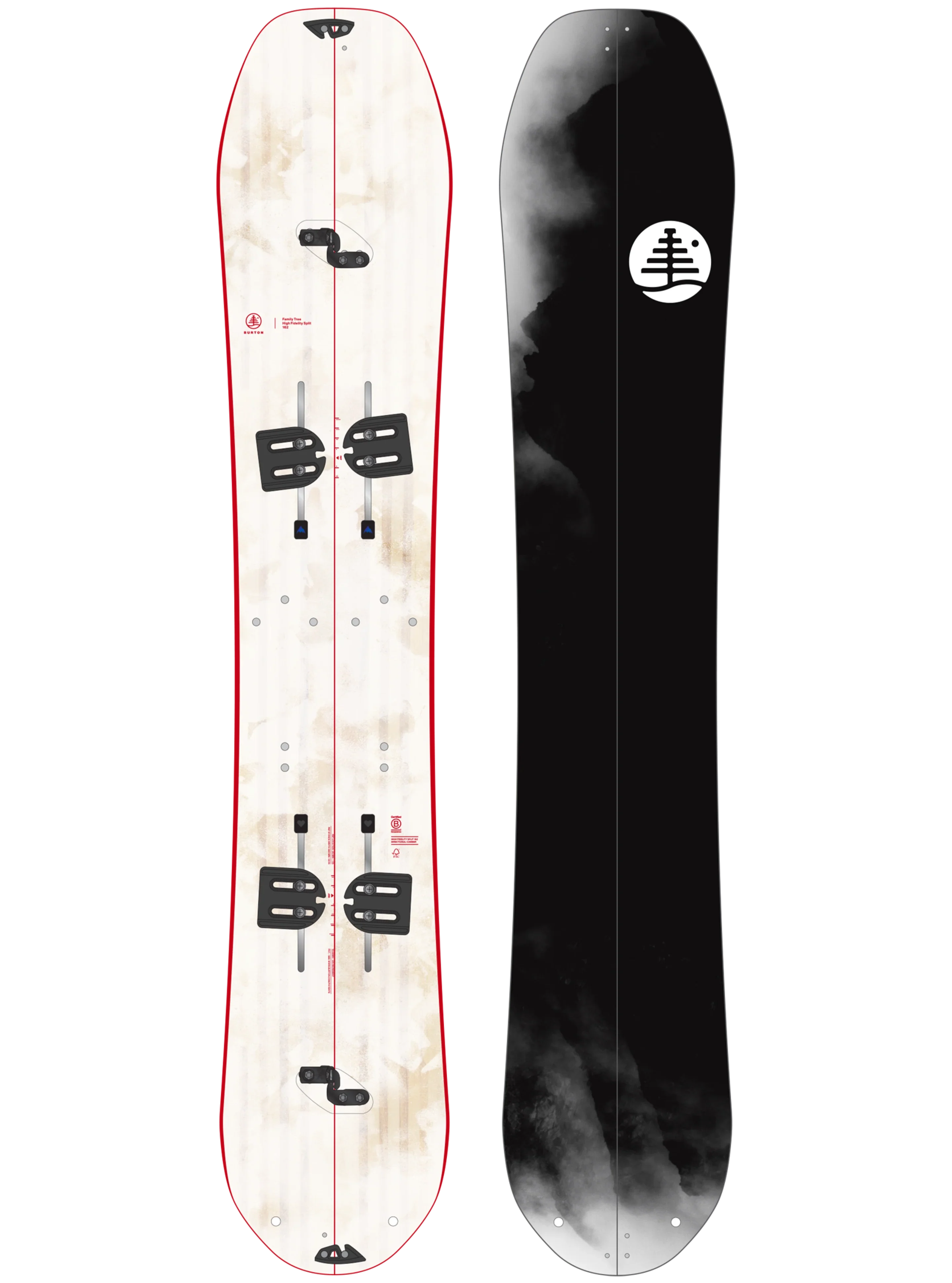
Sizes: 154, 158, 162 cm. Profile: Directional Camber.
The table contains manufacturer figures for the specified lengths.
What are the measurements for each size?
| Board size (cm) | 154 | 158 | 162 |
|---|---|---|---|
| Rider weight | 120-180 lb. / 54-82kg | 150-200 lb. / 68-91kg | 180-260 lb.+ / 82-118kg+ |
| Waist width | 248mm | 250mm | 254mm |
| Stance setback (mm) | -25 | -25 | -25 |
| Binding size | Men's M, Women's L | Men's L, Women's L | Men's L, Women's L |
| Running length | 1080mm | 1120mm | 1160mm |
| Sidecut radius | 7.6m | 7.8m | 8.1m |
| Sidecut depth | 19.3mm | 20.0mm | 20.7mm |
| Reference stance | 530mm | 560mm | 560mm |
| Nose width | 290.1mm | 293.5mm | 298.9mm |
| Tail width | 283.1mm | 286.5mm | 291.9mm |
| Effective edge | 1120mm | 1160mm | 1200mm |
Where do the information and images come from?
Burton Snowboards: Burton Family Tree High Fidelity Camber Splitboard, manufacturer information checked 15 October 2026. Product images: manufacturer.
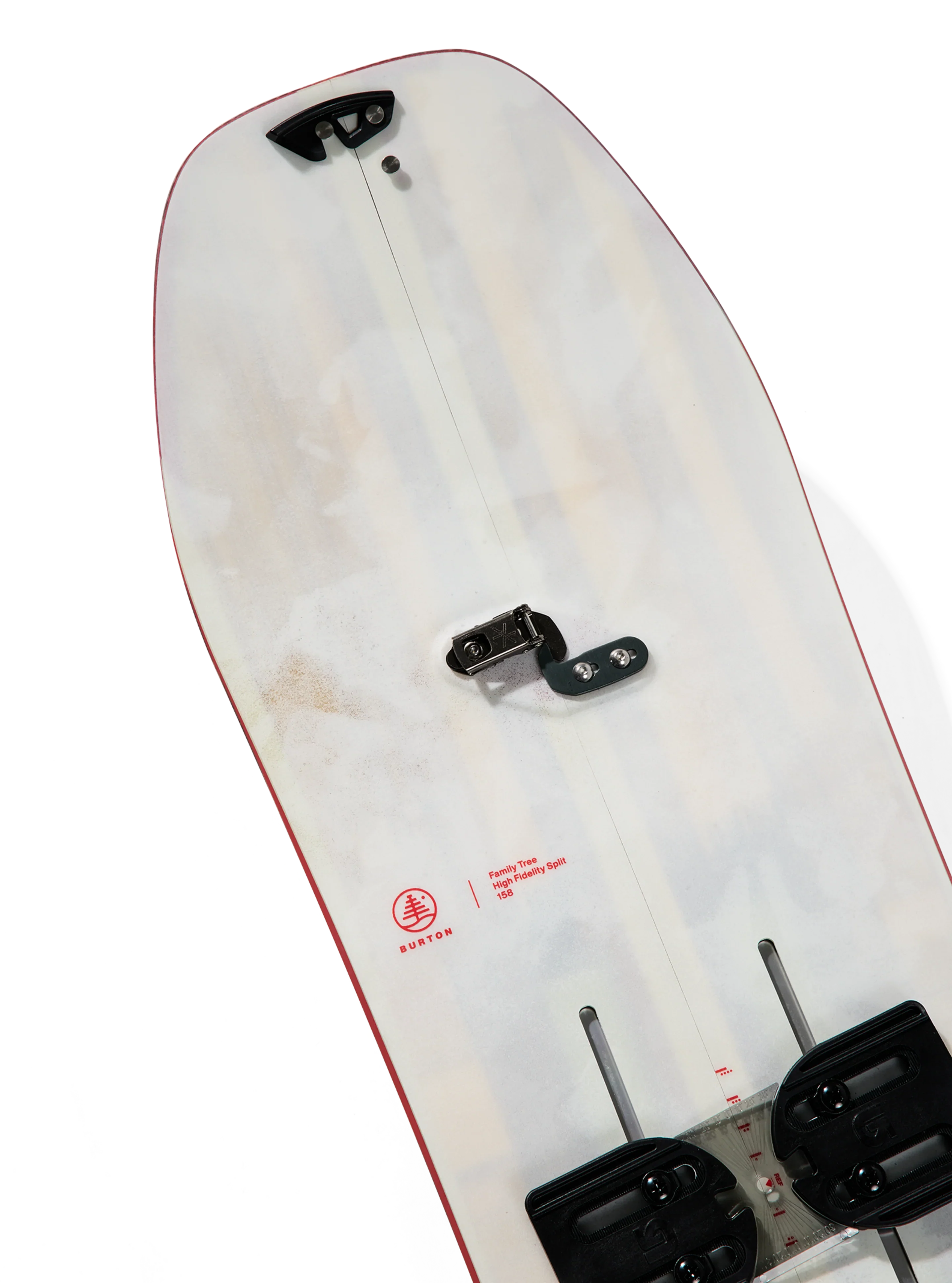
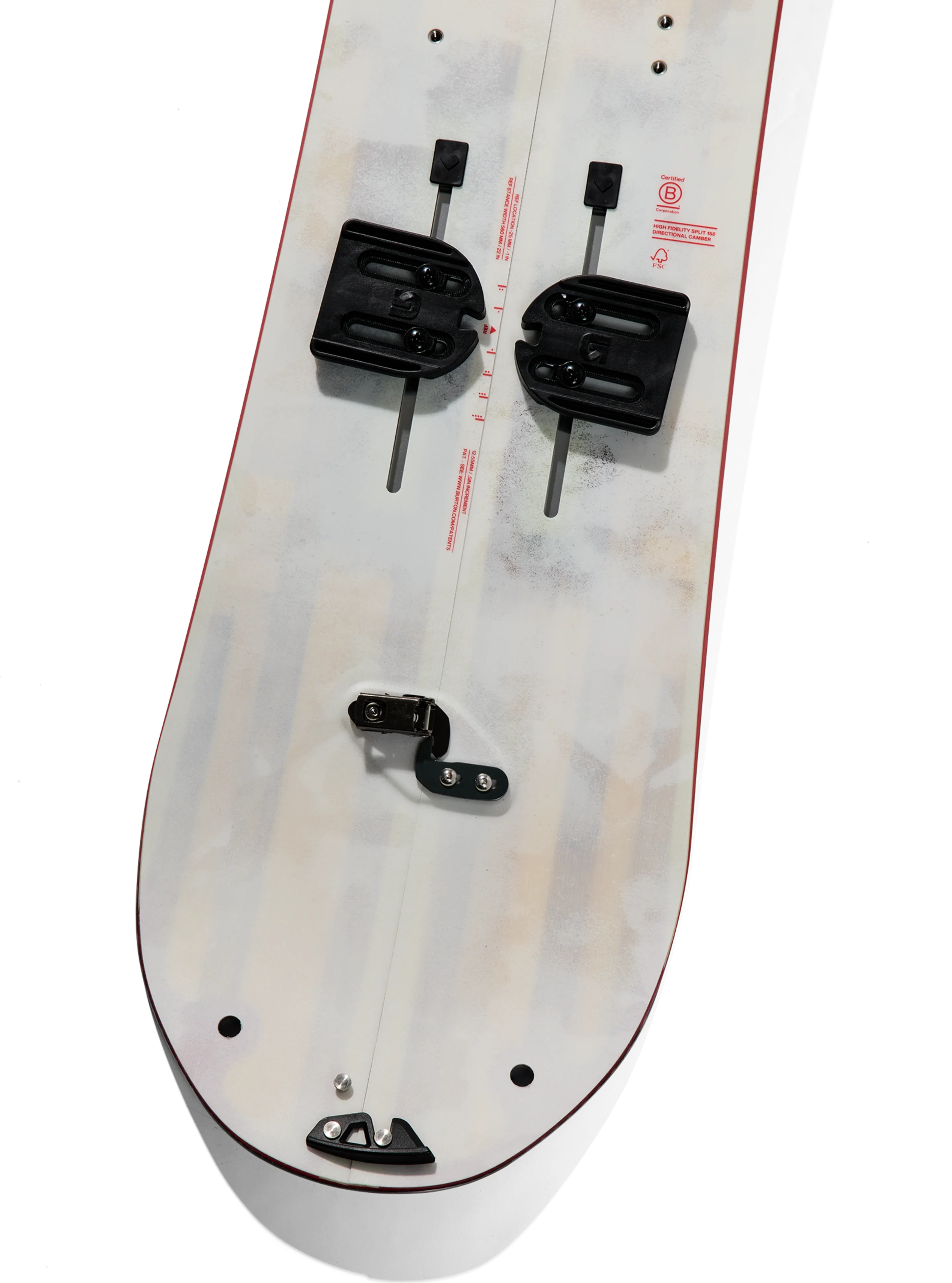
What does the board look like? (5 photos)
Show 1 more images