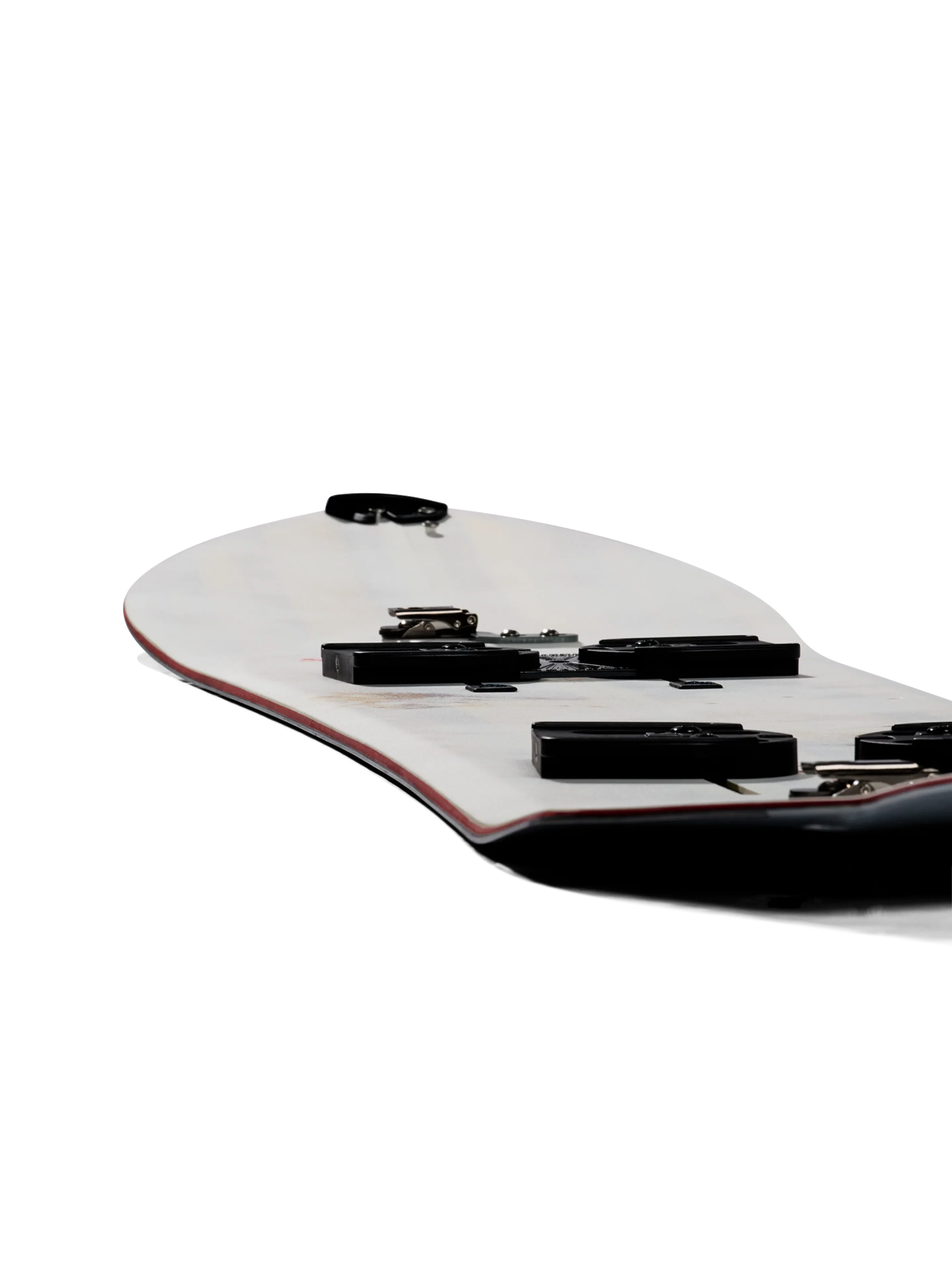
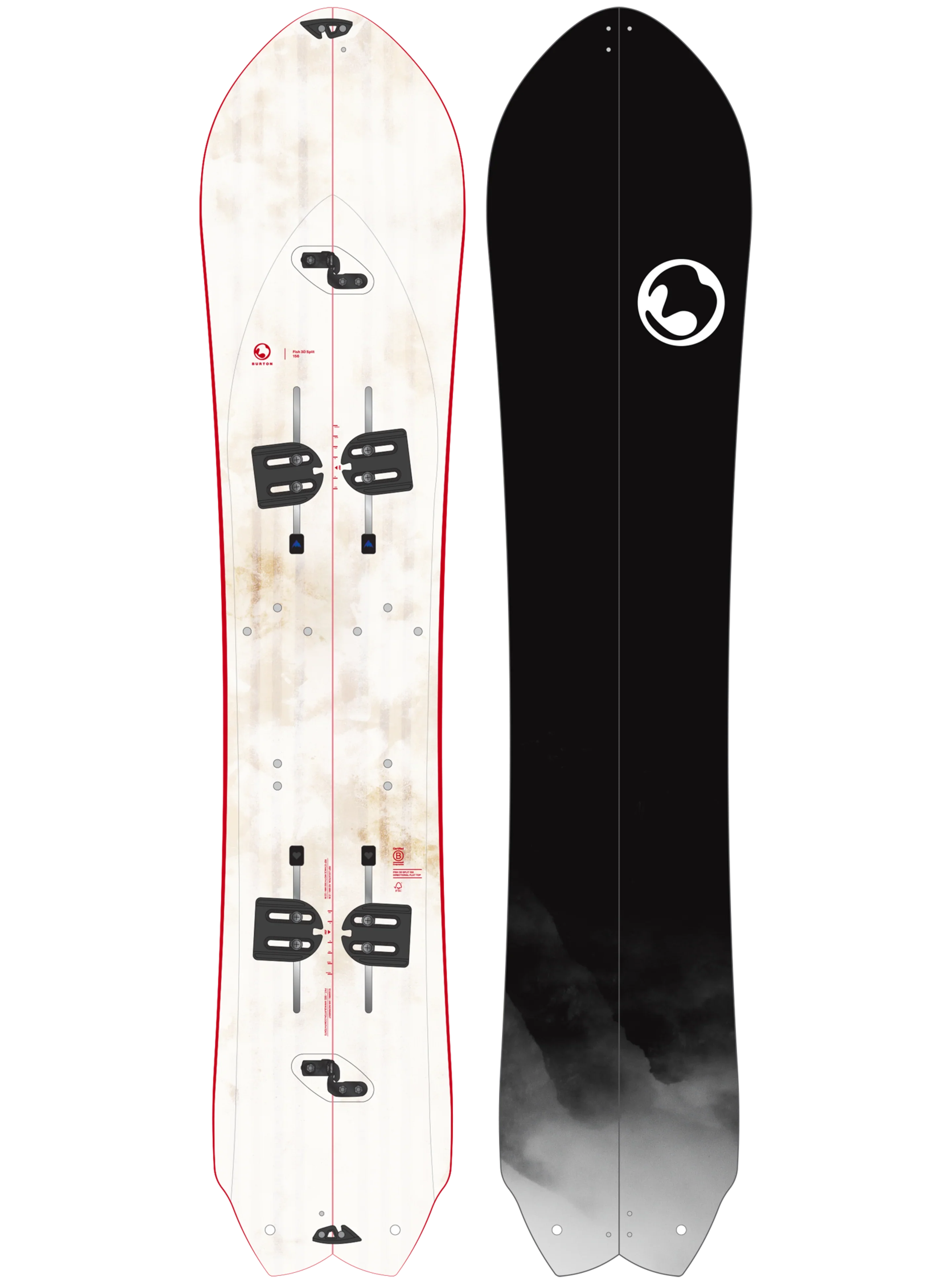
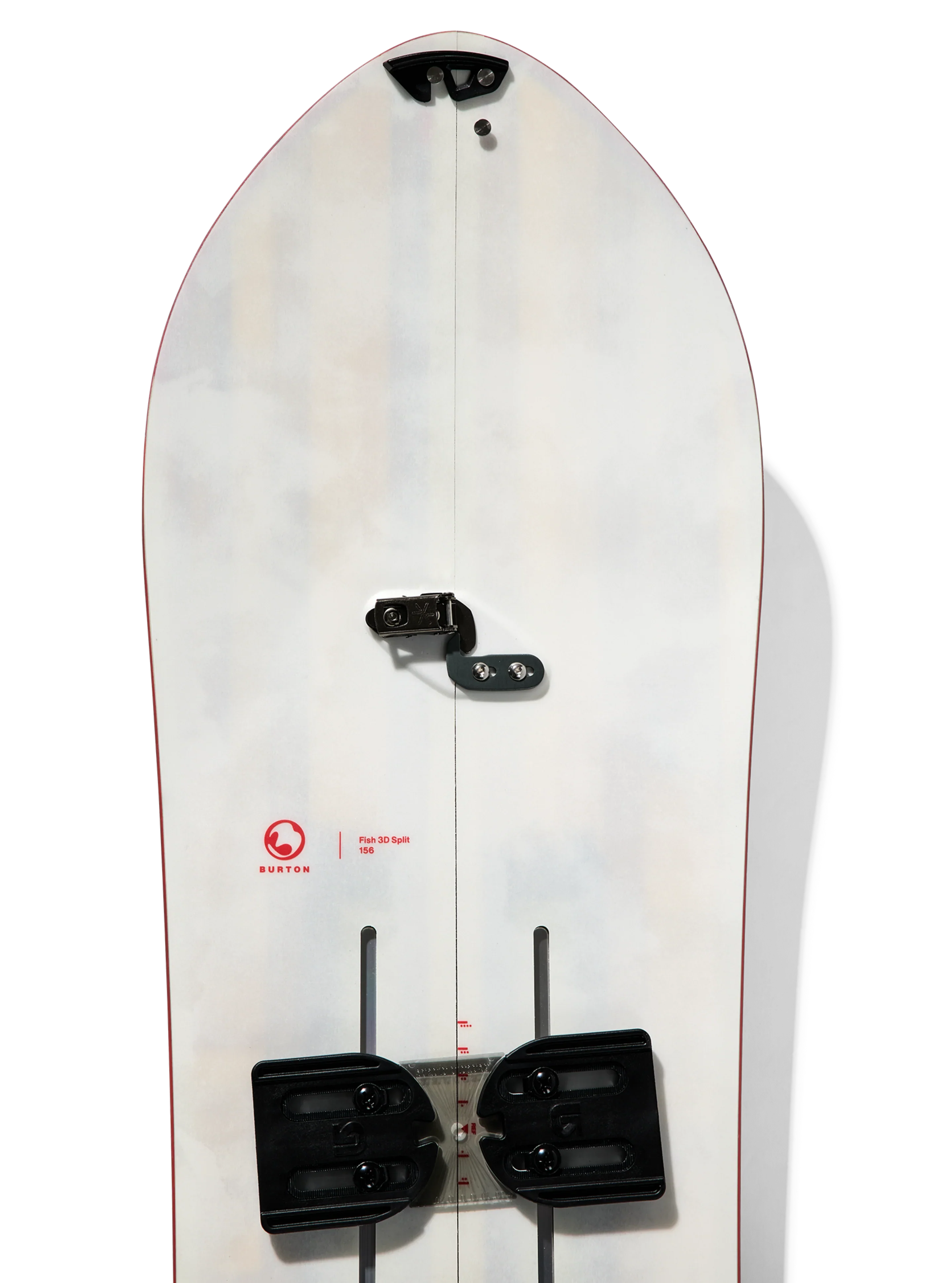
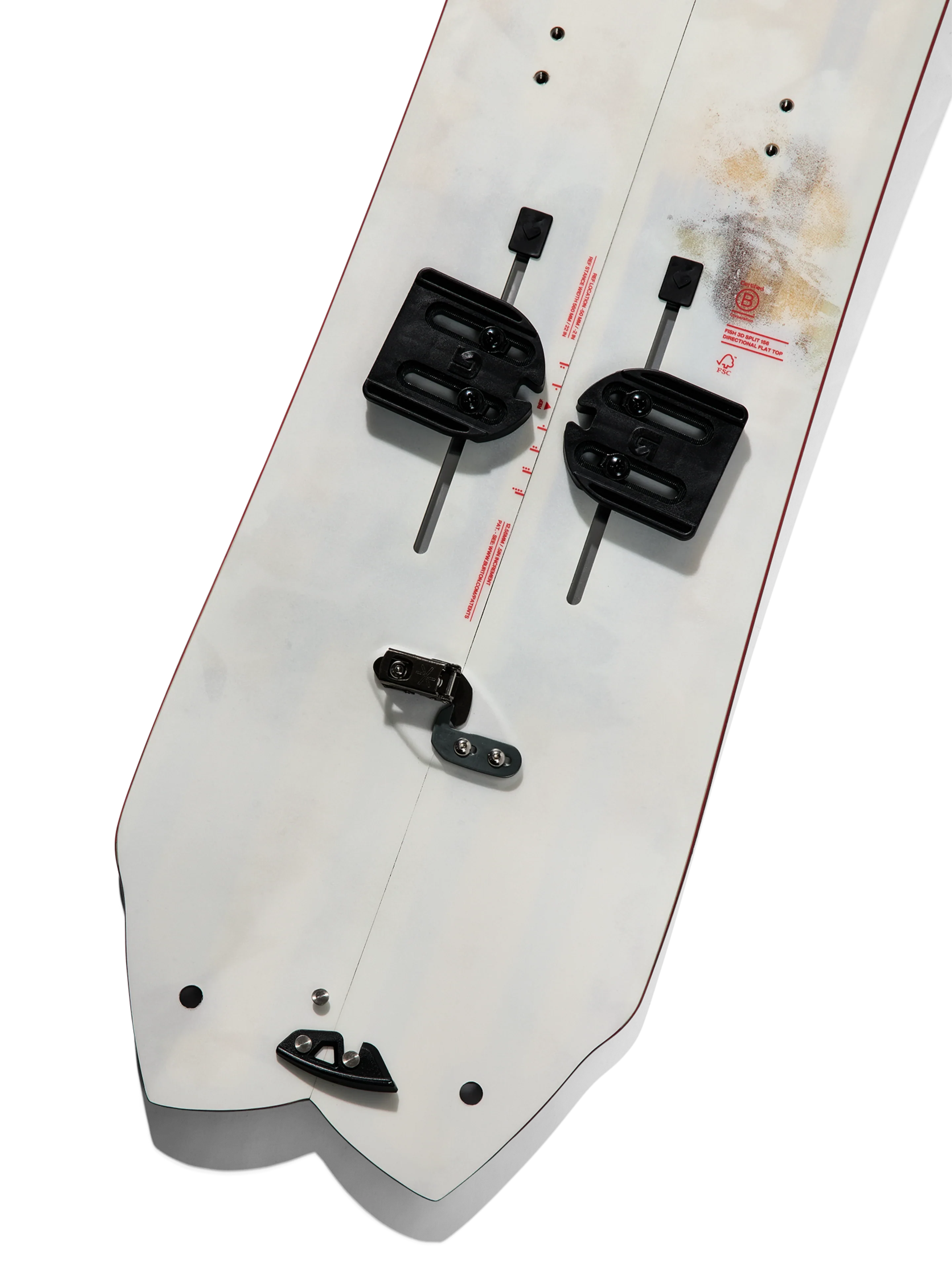
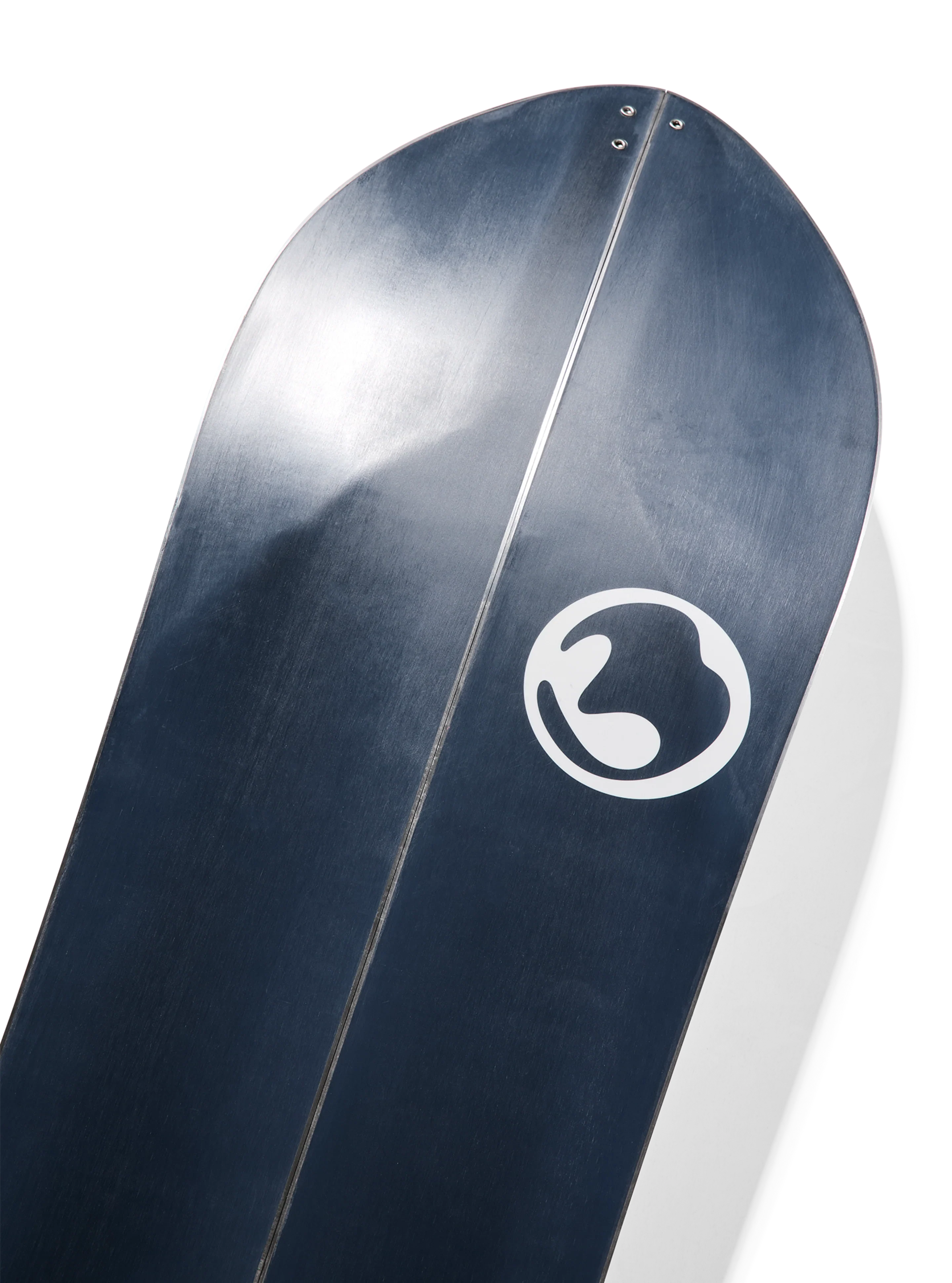
The 3D Fish is built around days when deep snow sets the pace. Substantial taper, a swallowtail and three-dimensional shaping at the nose and tail define its powder brief. Directional Flat Top makes this a specialist concept for riders drawn to deep trees and open powder bowls.
Is the 3D Fish Flat Top Splitboard 26/27 right for you?
The Fish belongs on the shortlist if you would rather explore a slope through repeated turns than take the straightest route down. Its wide nose and substantially narrower tail prioritise powder. Three-dimensional contours at the nose and tail are intended to soften the transition through snow. A direct riding comparison is the best way to establish whether you personally prefer that approach.
Our 15/16 Fish coverage already highlighted manoeuvrability on deep days in tight terrain. The current 3D Fish name also illustrates why an old test cannot simply be redated. The additional shaping belongs to the current version, while our older observations describe the previous shape. The clear powder emphasis is the common thread, not proof of an identical ride.
How does it fit your approach, size and setup?
If this will be your only split, include less perfect days in the decision: firm traverses, a tracked-out exit and limited fresh snow. An all-round design such as the Hometown Hero is the relevant comparison. As an additional board for snowy tours, specialisation is precisely the attraction. Size around surface area, rider weight and boot width; a short length label does not automatically make this a small shape.
| Your decision | Our assessment |
|---|---|
| A good fit for | Deep trees, short turns and a clear powder priority |
| Think more carefully about | An only board mainly for firm, uncertain touring conditions |
| Compare directly | Burton Family Tree Hometown Hero Splitboard and Jones Storm Chaser Splitboard |
What have we learned from earlier seasons?
Our 15/16 Fish entry highlights manoeuvrability on deep days in tight terrain. That assessment matched the wide nose, substantially narrower tail and Directional Flat Top approach. The archive records 80/100 for riding. It provides useful historical evidence for the Fish’s powder emphasis, but does not test the present 3D shaping. The additional contours at the nose and tail are precisely the kind of detail for which an old riding impression cannot substitute for a new observation.
Read the original report: Burton FT Fish Split 15-16.
What has changed since 25/26 and earlier models?
Our archive contains no directly corresponding 25/26 page for this exact model. Its current role and the older or related models discussed above, where available, provide the useful comparison. An earlier board from the same brand does not establish identical construction.
FAQ: What should you know before your first tour?
Does the 15/16 Fish test cover today’s 3D Fish?
No. It records our experience with the older Fish and explains its powder emphasis. Current 3D shaping and construction need separate assessment. We use that report as historical evidence, not as a new 26/27 field test.
Which 3D Fish Flat Top Splitboard size should I choose?
Current listed lengths are 146, 151, 156 cm. Start with the rider-weight range for each length, then check boot width and stance. Frequent kick turns favour manageable equipment; extra length purely for assumed flotation is not a universal solution. Reference points from the table: 146 cm: 100-150 lb. / 45-68kg, waist 252mm; 151 cm: 120-180 lb. / 54-82kg, waist 258mm. These are manufacturer recommendations, not weight limits established in our tests.
Which other boards should I compare?
Burton Family Tree Hometown Hero Splitboard: Mixed touring days with a versatile freeride brief. Jones Storm Chaser Splitboard: Deep days, trees and an additional powder split in the quiver. Choose around your usual tours and an appropriate size rather than favouring a model purely because of its position in the price list.
What original test experience do we have?
There is historical evidence: Burton FT Fish Split 15-16. It concerns 15/16 and is discussed above. It is a comparison with an earlier generation or related variant, not an identical 26/27 field test.
What do I need in addition to the board?
This board uses Split Channel. Plan for compatible splitboard bindings or interface hardware, correctly sized boots and properly matched skins. The Channel system alone does not establish that every existing binding fits without extra parts. Check what the specific offer actually includes.
Is an earlier-season version worth considering?
Yes, when model, size and condition suit you. Compare the specific model-history information rather than only the year label. For a used board, inspect the base, edges, inserts and connectors. An earlier test score cannot replace a condition check.
Which sizes and specifications are available?
Sizes: 146, 151, 156 cm. Profile: Directional Flat Top.
The table contains manufacturer figures for the specified lengths.
What are the measurements for each size?
| Board size (cm) | 146 | 151 | 156 |
|---|---|---|---|
| Rider weight | 100-150 lb. / 45-68kg | 120-180 lb. / 54-82kg | 150-200 lb. / 68-91kg |
| Waist width | 252mm | 258mm | 260mm |
| Stance setback (mm) | -50 | -50 | -50 |
| Binding size | Men's L, Women's L | Men's L, Women's L | Men's L, Women's L |
| Running length | 890mm | 940mm | 990mm |
| Sidecut radius | 6.1m | 5.8m | 6.1m |
| Sidecut depth | 16.3mm | 19.2mm | 20.1mm |
| Reference stance | 505mm | 530mm | 560mm |
| Nose width | 299.6mm | 311.5mm | 315.3mm |
| Tail width | 269.6mm | 281.5mm | 285.3mm |
| Effective edge | 995mm | 1045mm | 1095mm |
Where do the information and images come from?
Burton Snowboards: 3D Fish Flat Top Splitboard, manufacturer information checked 15 October 2026. Product images: manufacturer. Earlier original coverage: Burton FT Fish Split 15-16.
What does the board look like? (5 photos)
Show 1 more images