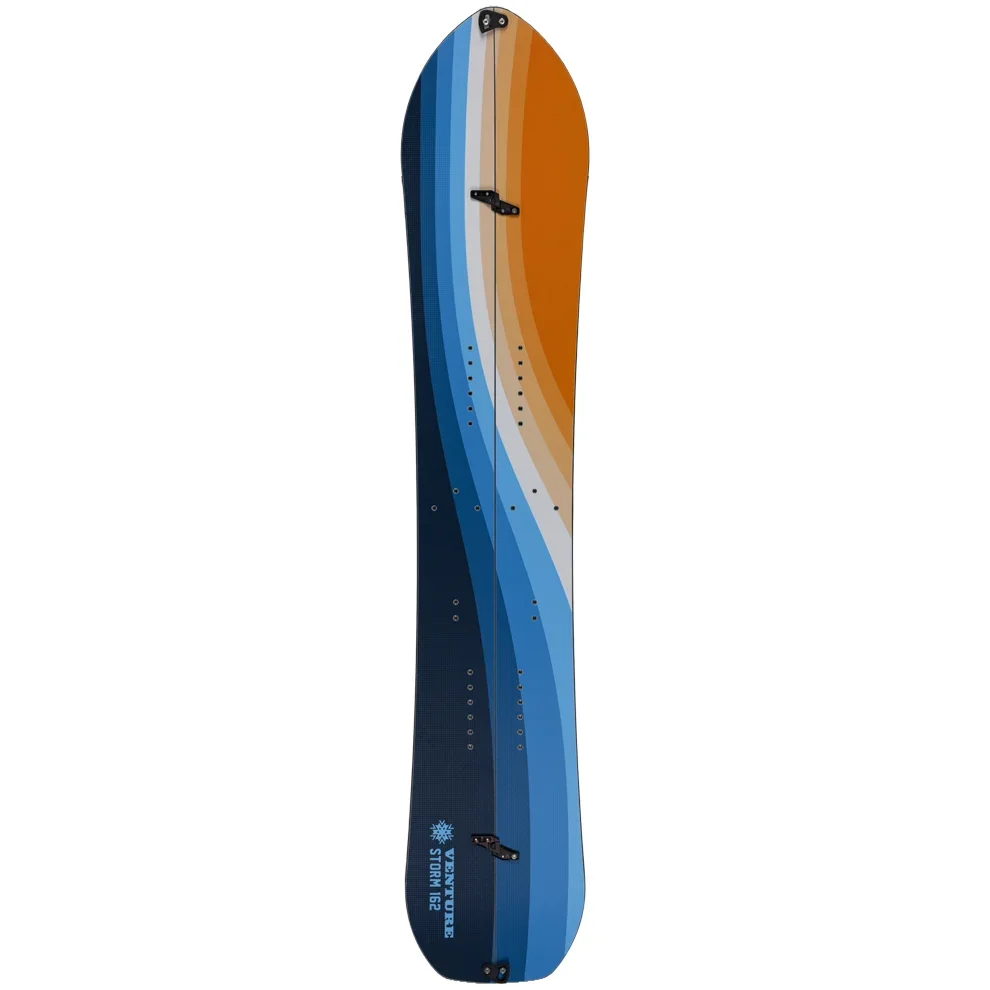
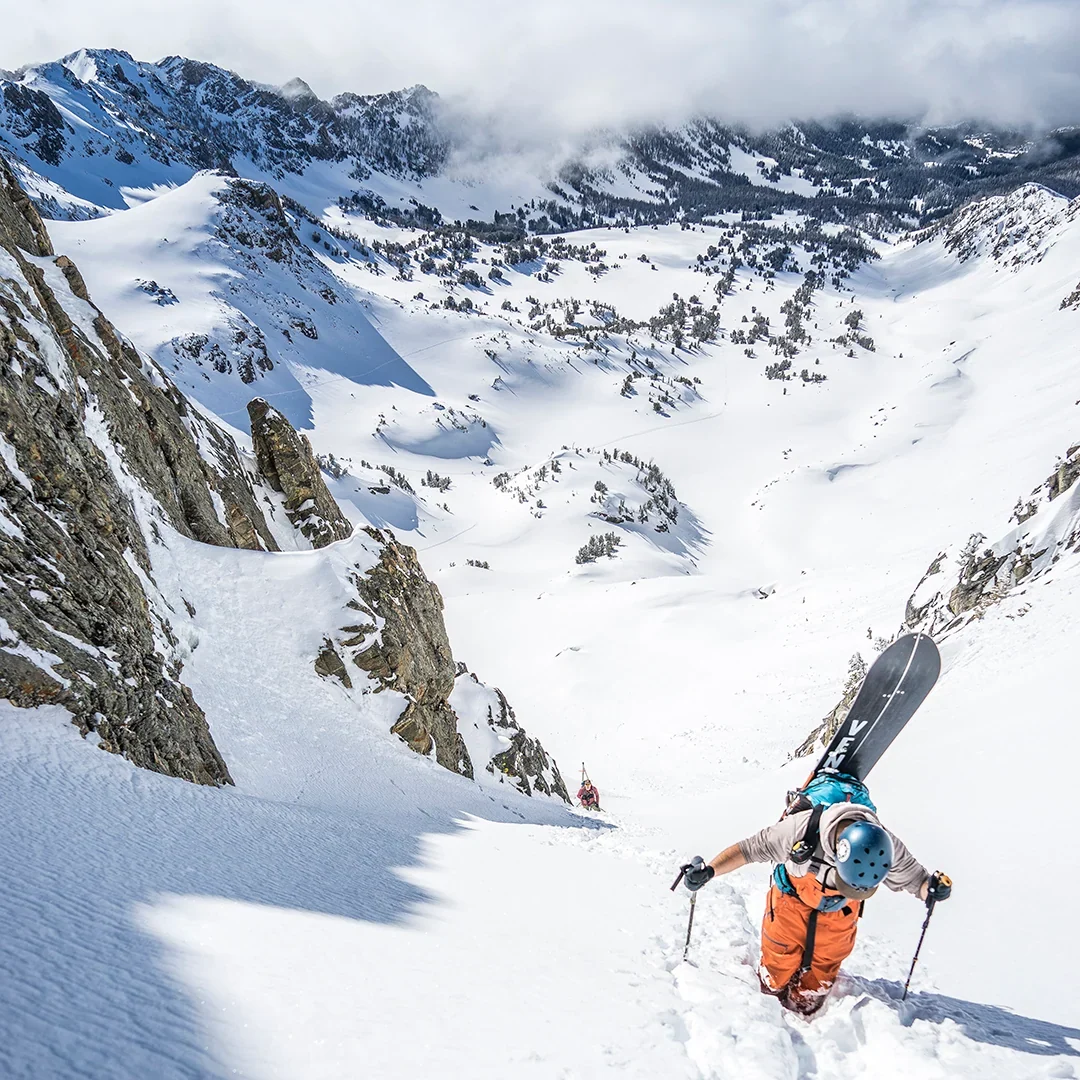
When the beautiful powder section turns into wind crust and tracked gullies lower down, a dependable all-rounder matters. The Storm fills that freeride role at Venture. A short tail, longer nose and 30 mm of setback make the brief clear: earn a descent you mainly want to ride facing forwards.
Is the Venture Storm Splitboard 26/27 right for you?
26/27 season guide: the version currently offered by the manufacturer.
Which type of splitboarder does it suit?
Freeride splitters in mixed conditions. A good descent is the goal, but not every tour ends in untouched powder. The Storm is Venture’s versatile freeride comparison for that reality. Its brief is less about training laps and more about a balanced complete setup for different snow conditions.
What does the shape offer on the descent?
Its 9 mm taper is moderate within Venture’s range, making it less specialised than the strongly tapered Euphoria. Manufacturer flex is 7 out of 11, above the Paragon and below the Odin. That comparison helps narrow the choice, but cannot tell you how it feels under your own feet. For many tours, willing turn initiation after the snow becomes heavier is more useful than choosing the most demanding board available.
What should you consider on the skin track?
A flat middle with gentle tip rocker differs from pronounced traditional camber. In an older hands-on report, we particularly liked how well that Storm climbed for a flat-rocker board. This is experience with the earlier generation, not a fresh measurement of the current deck. Well-fitting skins and clean edging still matter more than trusting a profile name.
How do you choose the right size and setup?
The four sizes link length and width: 152-24.5, 157-25.5, 162-26.5 and 167-27.5. Moving from 157 to 162 therefore also makes the board substantially wider. That can help with large boots; with smaller feet, do not size up solely in search of extra composure.
Venture lists Spark R&D Fixie clips plus mounted tip and tail clips with its splits. That does not include a complete binding or skins. Choose skins for width and suitable nose and tail fittings as well as total length.
A size label combines length and waist width, such as 162-26.5. That is useful when you keep the two numbers separate. After checking the rider-weight range, check boot overhang in your actual binding position. Venture is based in the USA, so confirm shipping and delivered costs for your country even when the regional shop displays euros.
How should boots, bindings and board work together?
Choose boots with dependable lateral support and highbacks that transmit your movement. A flat-rocker profile alone cannot provide grip on a hard traverse: width, boot and binding have to bring pressure to the edge together. That matters on first tours as well as demanding days.
Compare the Paragon for a more playful, slower style. Look at the Odin if you deliberately seek longer-radius turns and more support.
Read more about matching the components in our Splitboard Gear Guide.
Which test experience helps you choose?
We have not yet tested the current version ourselves. The following experience comes from earlier generations or the explicitly identified test pool.
Our 15/16 first-impression test liked the way that Storm combined descent and ascent. It climbed very well for a flat-rocker split, and its setup worked for us when the descent brought variable conditions. The report describes immediate enjoyment rather than a specialist tied to one snow type.
That experience fits today’s freeride positioning, but concerns a much earlier generation. Current dimensions, connectors and price therefore come from the current manufacturer page. An old observation about production in Silverton is also not a substitute for a present-day sustainability assessment.
If you already know an older Storm, compare its actual length and width with the current size steps. A familiar model name provides orientation; it does not guarantee identical feel across many years.
Sources of historical experience: Archived report 15/16.
What has changed since 25/26 and earlier models?
Venture currently offers this standard version without describing a separate technical revision for 26/27. Compare the exact size with any previous-season offer: length and width are closely linked at Venture. Check construction and connectors too. The year alone tells you little about which offer better suits your tours.
For the direct archive comparison: 25/26 model page.
Which other current boards fit your riding style?
Compare Venture Paragon Splitboard and Venture Odin Splitboard. The shape and usage differences are discussed above. For a demo, similar sizing, your own boots and a familiar stance help more than comparing random available lengths.
FAQ: What should you know before your first tour?
Is the Storm only for powder?
No. Venture currently positions it as a versatile freeride split for soft and variable snow. The Euphoria is the more dedicated powder option. Our older Storm experience supports its all-round brief, but remains evidence about the generation ridden at that time.
Which Venture Storm Splitboard size should I choose?
Currently listed sizes are 152-24.5, 157-25.5, 162-26.5, 167-27.5. The four sizes link length and width: 152-24.5, 157-25.5, 162-26.5 and 167-27.5. Moving from 157 to 162 therefore also makes the board substantially wider. That can help with large boots; with smaller feet, do not size up solely in search of extra composure.
What hands-on test experience is available?
We have not yet tested the current version ourselves. Experience with earlier versions or from Simon’s test pool is available here: Archived report 15/16. The report above explains what helps with your comparison.
Which current alternatives should I compare?
Venture Paragon Splitboard and Venture Odin Splitboard are the relevant comparisons discussed on this page. Choose shape, boot fit and your usual tours first. A different construction level becomes useful after those basics fit.
Which boots and bindings suit this board?
Choose boots with dependable lateral support and highbacks that transmit your movement. A flat-rocker profile alone cannot provide grip on a hard traverse: width, boot and binding have to bring pressure to the edge together. That matters on first tours as well as demanding days.
Is this a new construction for 26/27?
A distinct technical 26/27 version is not established by the current manufacturer data. We show the presently offered standard model and identify historical tests separately.
Which sizes and specifications are available?
These are manufacturer specifications, not our own measurements.
Which measurements and sizes does the manufacturer specify?
| Spec | 152 | 157 | 162 | 167 |
|---|---|---|---|---|
| Effective Edge (cm) | 111 | 115 | 119 | 123 |
| Nose Length (cm) | 25 | 25.5 | 26 | 26.5 |
| Tail Length (cm) | 16 | 16.5 | 17 | 17.5 |
| Nose Width (cm) | 29.1 | 30.3 | 31.4 | 32.6 |
| Tail Width (cm) | 28.2 | 29.4 | 30.5 | 31.7 |
| Waist Width (cm) | 24.5 | 25.5 | 26.5 | 27.5 |
| Sidecut Depth (cm) | 2.09 | 2.16 | 2.24 | 2.31 |
| Sidecut Radius (m) | 7.39 | 7.66 | 7.92 | 8.19 |
| Surface Area (cm²) | 3819 | 4104 | 4400 | 4705 |
| Shoe Size (US Men) | 6 - 8 | 8 - 10 | 10 - 12 | 12 - 14 |
| Rider Height | 5'3" - 5'10" | 5'5" - 6'0" | 5'7" - 6'2" | 5'9" - 6'4" |
| Rider Weight (lbs) | 120 - 180 | 140 - 200 | 160 - 220 | 180 - 240 |
Where do the information and images come from?
Current product information, price and product images: Venture Storm Splitboard – manufacturer page. Checked 15 October 2026. Photographs and size charts are provided by the manufacturer. Our own and historical test experience is described in the test section and assigned to the relevant boards.
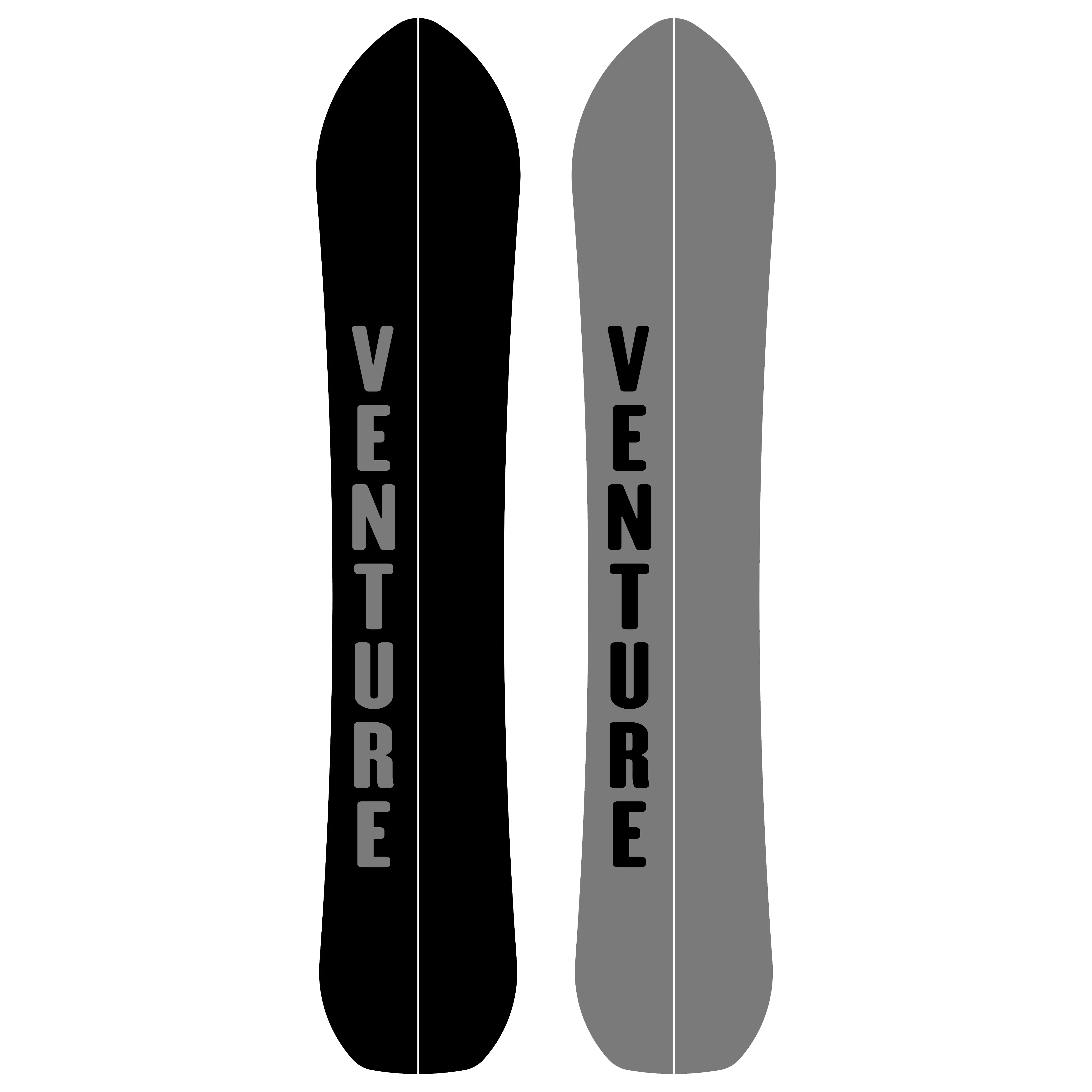
What does the board look like? (3 photos)