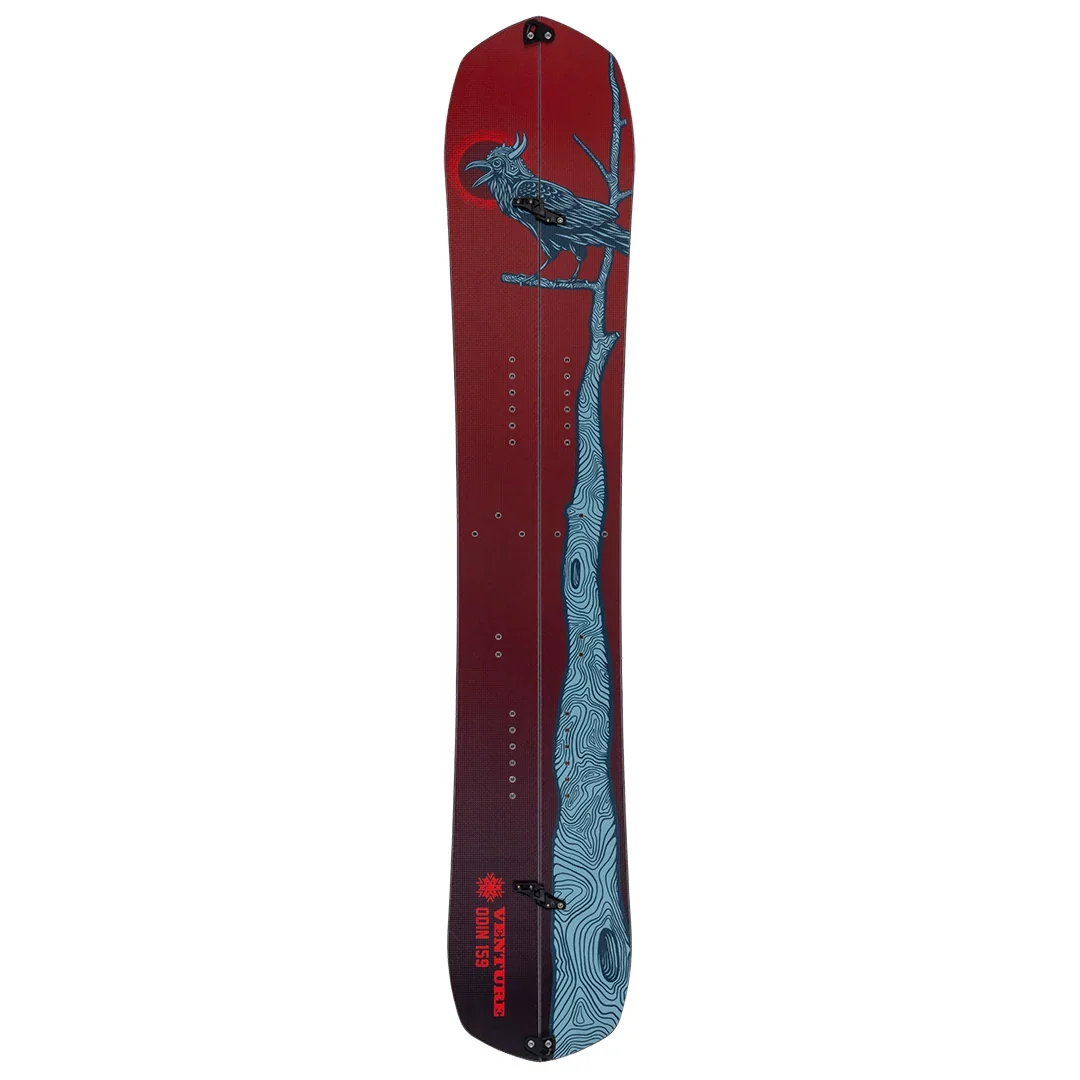
On open faces, do you look for a long turn rather than the next little slash? The Odin is the relevant comparison in Venture’s range. Its relatively large sidecut radius and firmer flex target experienced riders who deliberately load their board and enjoy carrying speed.
Is the Venture Odin Splitboard 26/27 right for you?
26/27 season guide: the version currently offered by the manufacturer.
Which type of splitboarder does it suit?
Alpine splitters and powerful freeriders. You want long turns on open faces and deliberately seek a firmly tuned board. The Odin concept fits that better than relaxed tours full of small playful moves. Its larger radius should be an intentional choice, not a perceived upgrade over a more manageable board.
What does the shape offer on the descent?
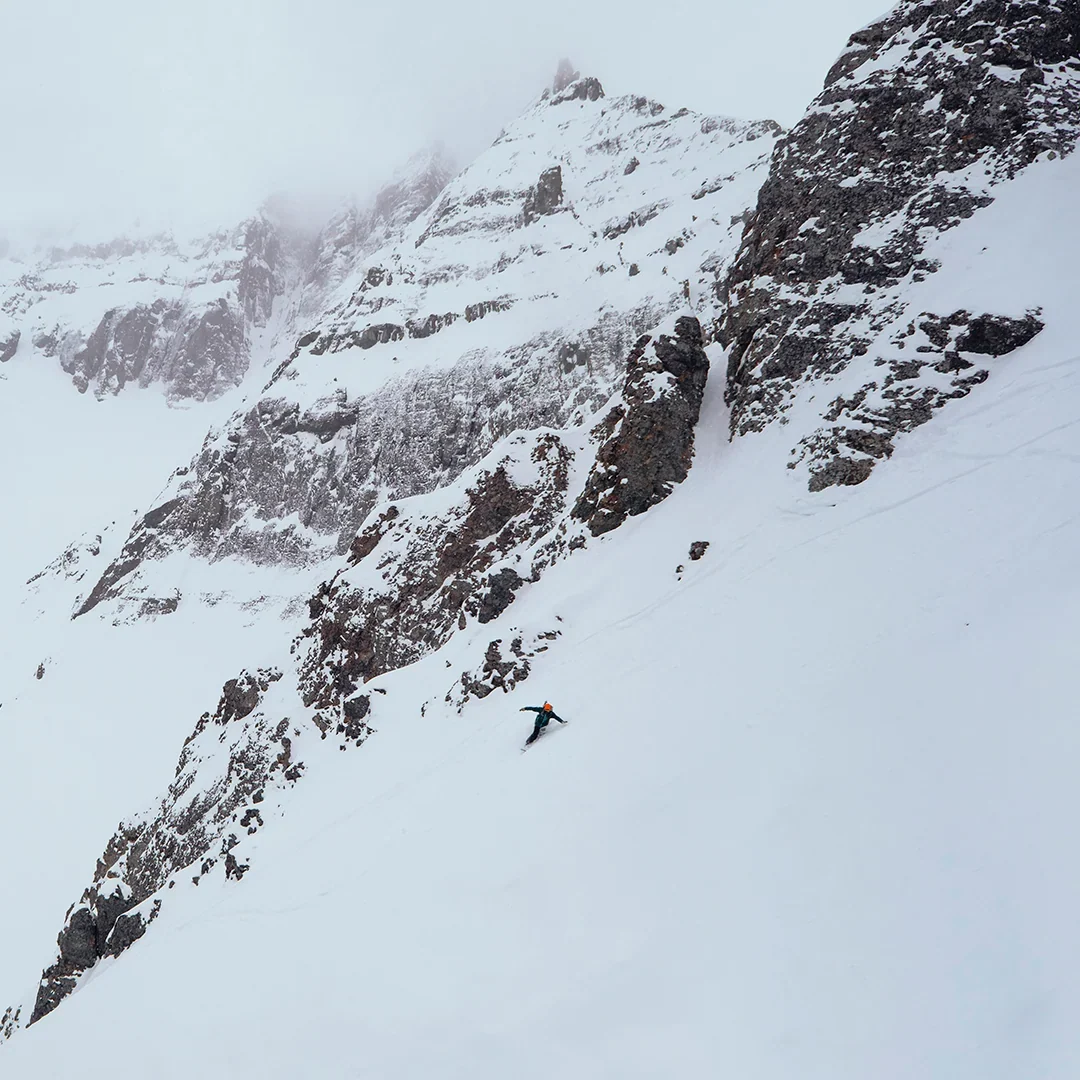
Current radii run from 9.60 to 10.63 m, with manufacturer flex at 8 out of 11. That explains the brief more clearly than a big-mountain photograph: this shape is drawn for longer lines. If tight trees and repeated small direction changes dominate your tours, compare the Storm or Paragon first. A long edge may add composure, but still needs deliberate handling in confined terrain.
What should you consider on the skin track?
The Odin also uses Venture’s flat middle and rockered ends. Our older test highlighted composure and a solid character, although the sizes and construction from that time should not be equated with today’s specification. Take particular care with width for the ascent. An unnecessarily wide board does not become easier to edge with smaller boots just because it appears to offer more support downhill.
How do you choose the right size and setup?
Lengths of 154, 159, 164 and 169 cm are paired with waists from 24.5 to 27.5 cm. Width therefore increases by a full centimetre at each length step. Check rider weight and boot overhang first, then consider how much board you want to move through kick turns and slower manoeuvres.
Venture lists Spark R&D Fixie clips plus mounted tip and tail clips with its splits. That does not include a complete binding or skins. Choose skins for width and suitable nose and tail fittings as well as total length.
A size label combines length and waist width, such as 162-26.5. That is useful when you keep the two numbers separate. After checking the rider-weight range, check boot overhang in your actual binding position. Venture is based in the USA, so confirm shipping and delivered costs for your country even when the regional shop displays euros.
How should boots, bindings and board work together?
That purpose needs a balanced chain of boots, highbacks and board. Very soft boots or highbacks can absorb the pressure you want to apply when edging. Check heel hold and suitable width first; the stiffest binding cannot compensate for an excessively broad shape.
A demanding board does not automatically make learning to tour easier. If you lack ascent experience, good fit and a manageable size matter more than support for occasional fast lines.
Read more about matching the components in our Splitboard Gear Guide.
Which test experience helps you choose?
We have not yet tested the current version ourselves. The following experience comes from earlier generations or the explicitly identified test pool.
In our 13/14 and 14/15 tests, the Odin of that time was a solid, noticeably rockered split that remained composed at speed. We liked its float, agility and edge hold. The later report highlighted how that generation’s lighter construction benefited performance. This belongs to a historical model change, not a newly established weight reduction for 26/27.
Today’s Odin is still positioned for committed big-mountain riding. We have taken its present radii and sizes afresh from Venture. Old size lists and test scores are not carried over to the current board. Across a long model history, the exact size matters more than the familiar name on the topsheet.
The useful buying thought from those reports remains: if you value composure at speed, the Odin is a plausible candidate. Whether today’s width and flex also suit slower sections is something to check in your own setup.
Sources of historical experience: Archived report 14/15 · Archived report 14/15.
What has changed since 25/26 and earlier models?
Venture currently offers this standard version without describing a separate technical revision for 26/27. Compare the exact size with any previous-season offer: length and width are closely linked at Venture. Check construction and connectors too. The year alone tells you little about which offer better suits your tours.
Earlier model page in the archive: Venture Odin 14-15.
Which other current boards fit your riding style?
Compare Venture Storm Splitboard and Venture Paragon Splitboard. The shape and usage differences are discussed above. For a demo, similar sizing, your own boots and a familiar stance help more than comparing random available lengths.
FAQ: What should you know before your first tour?
Who should choose the Odin over the Storm?
Riders deliberately seeking long-radius turns and a more firmly tuned board. On Venture’s scale the Storm is softer, with a tighter radius and a more general freeride brief. The Odin is a riding-style decision rather than an automatic upgrade.
Which Venture Odin Splitboard size should I choose?
Currently listed sizes are 154-24.5, 159-25.5, 164-26.5, 169-27.5. Lengths of 154, 159, 164 and 169 cm are paired with waists from 24.5 to 27.5 cm. Width therefore increases by a full centimetre at each length step. Check rider weight and boot overhang first, then consider how much board you want to move through kick turns and slower manoeuvres.
What hands-on test experience is available?
We have not yet tested the current version ourselves. Experience with earlier versions or from Simon’s test pool is available here: Archived report 14/15 · Archived report 14/15. The report above explains what helps with your comparison.
Which current alternatives should I compare?
Venture Storm Splitboard and Venture Paragon Splitboard are the relevant comparisons discussed on this page. Choose shape, boot fit and your usual tours first. A different construction level becomes useful after those basics fit.
Which boots and bindings suit this board?
That purpose needs a balanced chain of boots, highbacks and board. Very soft boots or highbacks can absorb the pressure you want to apply when edging. Check heel hold and suitable width first; the stiffest binding cannot compensate for an excessively broad shape.
Is this a new construction for 26/27?
A distinct technical 26/27 version is not established by the current manufacturer data. We show the presently offered standard model and identify historical tests separately.
Which sizes and specifications are available?
These are manufacturer specifications, not our own measurements.
Which measurements and sizes does the manufacturer specify?
| Spec | 154 | 159 | 164 | 169 |
|---|---|---|---|---|
| Effective Edge (cm) | 112 | 116 | 120 | 124 |
| Nose Length (cm) | 23 | 23.5 | 24 | 24.5 |
| Tail Length (cm) | 19 | 19.5 | 20 | 20.5 |
| Nose Width (cm) | 28.2 | 29.3 | 30.4 | 31.5 |
| Tail Width (cm) | 27.4 | 28.5 | 29.6 | 30.7 |
| Waist Width (cm) | 24.5 | 25.5 | 26.5 | 27.5 |
| Sidecut Depth (cm) | 1.64 | 1.69 | 1.75 | 1.81 |
| Sidecut Radius (m) | 9.60 | 9.94 | 10.28 | 10.63 |
| Surface Area (cm²) | 3839 | 4120 | 4411 | 4711 |
| Shoe Size (US Men) | 6 - 8 | 8 - 10 | 10 - 12 | 12 - 14 |
| Rider Height | 5'3" - 5'10" | 5'5" - 6'0" | 5'7" - 6'2" | 5'9" - 6'4" |
| Rider Weight (lbs) | 130 - 190 | 150 - 210 | 170 - 230 | 190 - 250 |
Where do the information and images come from?
Current product information, price and product images: Venture Odin Splitboard – manufacturer page. Checked 15 October 2026. Photographs and size charts are provided by the manufacturer. Our own and historical test experience is described in the test section and assigned to the relevant boards.
What does the board look like? (4 photos)