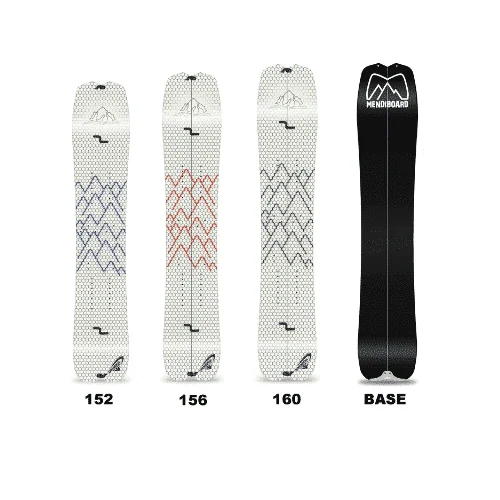
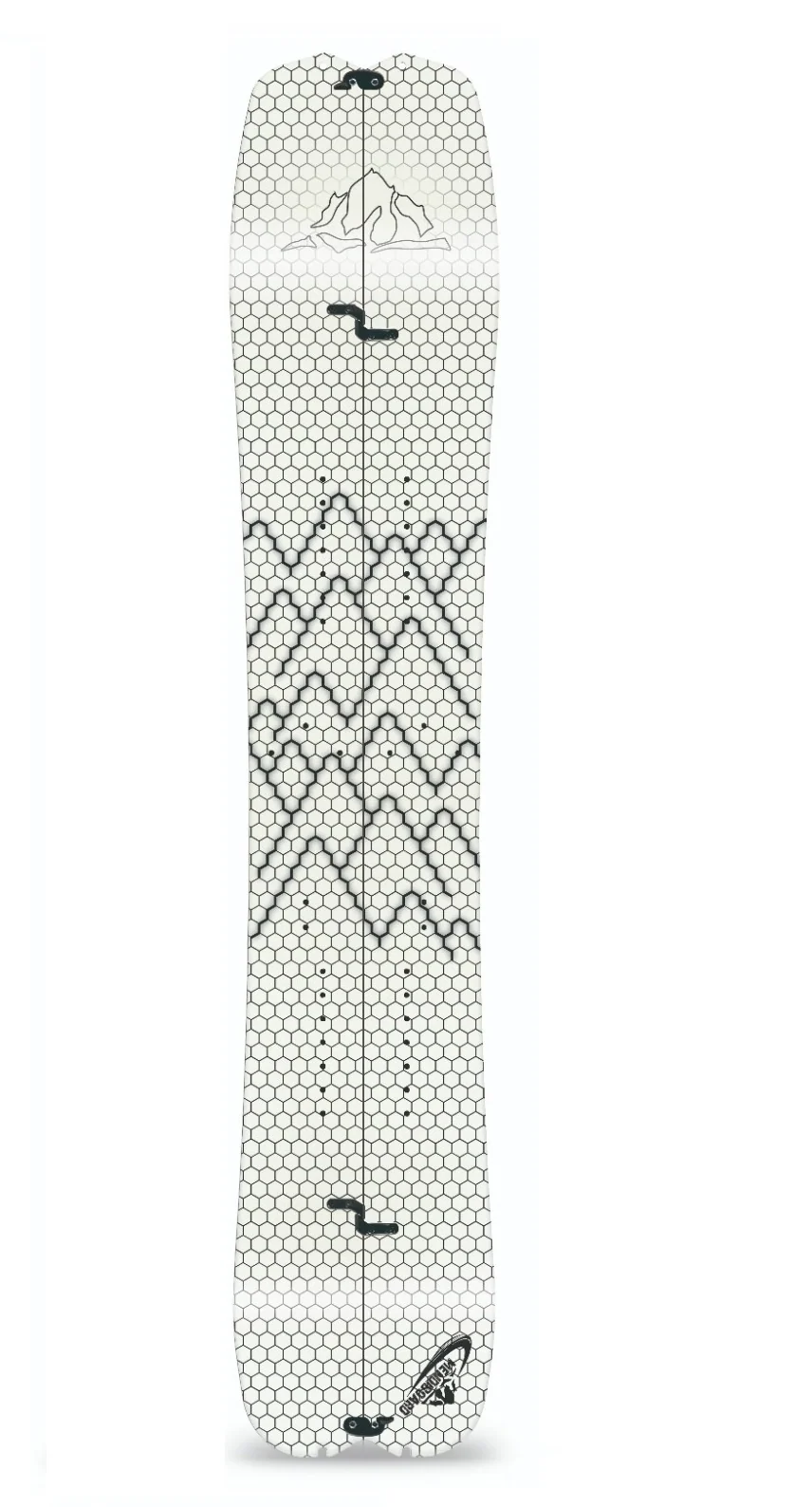
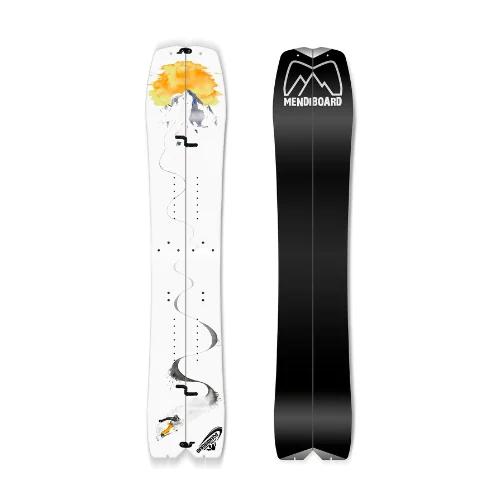
Long climbs and a board you deliberately drive through its camber: that is a good reason to consider the Pro Carbon Series. A paulownia core, carbon construction and lighter topsheet focus attention on weight. With a manufacturer flex of 9, it also targets riders who want a firmly tuned board.
Is the Mendiboard Pro Carbon Series 26/27 right for you?
26/27 season guide: the version currently offered by the manufacturer.
Which type of splitboarder does it suit?
Alpine splitters with long approaches. You plan longer tours and deliberately want to drive a firm board. The Pro Carbon idea fits that better than relaxed outings on very soft equipment. For training laps, weigh the complete setup first: a lighter deck alone does not make a light touring system.
What does the shape offer on the descent?
A raised nose and 40 mm of setback are intended to complement the pronounced camber in powder. This remains a directional concept for active turns. If your ideal day is relaxed surfing through the trees, the less expensive Sakon is a useful comparison. Before choosing a stiff board, consider whether its support will still help at the end of a long day. Carbon construction alone cannot answer that question.
What should you consider on the skin track?
The long contact area is relevant when the skin track firms up. A light touring setup nevertheless involves more than the deck: bindings, skins and snow collecting on the topsheet all travel uphill with you. Mendiboard lists Phantom Hercules hooks and seven rows of stance inserts. Confirm the supplied hardware and compatibility with your binding system before ordering; extra stance options cannot compensate for unsuitable board width.
How do you choose the right size and setup?
Manufacturer weights are size-specific: 2.7 kg in 152, 2.8 kg in 156 and 2.9 kg in 160 cm. Waist width increases from 250 to 257 mm. No size in this selection is explicitly labelled Wide. With larger boots, check overhang at your normal binding angles rather than assuming the longest option will fit.
Mendiboard offers individual boards and additional packages. The price here belongs to the individual board. Include suitable skins, bindings and the required interface when comparing a complete touring setup. A package price only becomes meaningful alongside its exact contents.
Dedicated openings or fittings for skin attachment are a practical Mendiboard detail. Before ordering, confirm the correct skin length and fitting for your exact model. A general statement about binding compatibility also does not replace checking the required interface and the components actually included.
How should boots, bindings and board work together?
At a manufacturer flex of 9, boots and highbacks need to transmit your movement. If the boot collapses first, the intended pressure does not consistently reach the edge. Check heel hold and fit alongside stiffness; a nominally stiff boot that is too large is of little help.
Lower weight and a high flex number are not advantages for every rider. Choose the Pro Carbon because you want its support, not simply its carbon label.
Read more about matching the components in our Splitboard Gear Guide.
Which test experience helps you choose?
We have not yet tested the Mendiboard Pro Carbon Series ourselves. The advice on this page is based on manufacturer information and the principles in our Gear Guide. We therefore cannot yet describe the feel of this exact board from personal riding experience.
On a demo, we would focus on the points discussed above for your riding style: can your boots put enough pressure on the edge, does the board remain comfortable to move after a longer climb, and does the size work when the snow becomes heavier lower down? Use your usual boots where possible and compare a suitable length.
What has changed since 25/26 and earlier models?
Mendiboard currently offers this model without publishing a complete season-by-season change log. We include the present offer in the 26/27 season guide. “New” in a product description alone does not date every detail to this season. Compare the exact generation, dimensions and actual package contents.
For an older offer, confirm the dimensions and construction of that exact version. A claimed weight saving is only comparable when board length and the components included in the measurement match.
Which other current boards fit your riding style?
Compare Mendiboard Backcountry Climb 2.0 and Mendiboard Sakon. The shape and usage differences are discussed above. For a demo, similar sizing, your own boots and a familiar stance help more than comparing random available lengths.
FAQ: What should you know before your first tour?
Is the Pro Carbon automatically the best Mendiboard?
Only if the lighter build and firm flex match your touring needs. The Climb 2.0 costs less and the Sakon has a different emphasis. We have no hands-on report for the current Pro Carbon, and do not transfer the Backcountry test to its carbon construction.
Which Mendiboard Pro Carbon Series size should I choose?
Currently listed sizes are 152, 156, 160. Manufacturer weights are size-specific: 2.7 kg in 152, 2.8 kg in 156 and 2.9 kg in 160 cm. Waist width increases from 250 to 257 mm. No size in this selection is explicitly labelled Wide. With larger boots, check overhang at your normal binding angles rather than assuming the longest option will fit.
What hands-on test experience is available?
We have not yet tested the Mendiboard Pro Carbon Series ourselves. Our assessment is based on manufacturer information and our Gear Guide. We do not assign our own riding scores to it.
Which current alternatives should I compare?
Mendiboard Backcountry Climb 2.0 and Mendiboard Sakon are the relevant comparisons discussed on this page. Choose shape, boot fit and your usual tours first. A different construction level becomes useful after those basics fit.
Which boots and bindings suit this board?
At a manufacturer flex of 9, boots and highbacks need to transmit your movement. If the boot collapses first, the intended pressure does not consistently reach the edge. Check heel hold and fit alongside stiffness; a nominally stiff boot that is too large is of little help.
Is this a new construction for 26/27?
The current manufacturer page does not date every change by season. The Climb 2.0 specifies changes from the older Climb; comparisons should always use the exact version and dimensions.
Which sizes and specifications are available?
These are manufacturer specifications, not our own measurements.
Which measurements and sizes does the manufacturer specify?
| Size (cm) | 152 | 156 | 160 |
|---|---|---|---|
| Nose width (mm) | 292 | 298 | 302 |
| Waist width (mm) | 250 | 254 | 257 |
| Tail width (mm) | 284 | 288 | 291 |
| Nose length (mm) | 290 | 300 | 305 |
| Tail length (mm) | 195 | 200 | 205 |
| Effective edge (cm) | 114 | 118 | 121 |
| Sidecut radius (m) | 8.2 | 8.4 | 8.6 |
| Setback (mm) | 40 | 40 | 40 |
| Rider weight (kg) | 50–70 | 65–80 | 75–100 |
| Board weight (kg) | 2.7 | 2.8 | 2.9 |
Where do the information and images come from?
Current product information, price and product images: Mendiboard Pro Carbon Series – manufacturer page. Checked 15 October 2026. Photographs and size charts are provided by the manufacturer. Our own and historical test experience is described in the test section and assigned to the relevant boards.
What does the board look like? (3 photos)