A firm skin track in the morning, wind-affected snow up high and perhaps powder in the trees: the Backcountry Climb 2.0 is Mendiboard’s answer to mixed touring days. It is worth considering if you want a traditionally focused touring board while keeping enough budget for well-fitting boots, bindings and skins.
Is the Mendiboard Backcountry Climb 2.0 26/27 right for you?
26/27 season guide: the version currently offered by the manufacturer.
Which type of splitboarder does it suit?
Freeride splitters and versatile tourers. You want a board for the whole touring day, not just its best 300 vertical metres. Consider the Climb 2.0 when the morning track may be firm and mixed snow waits lower down. Ascent behaviour matters for first tours too: being a capable snowboarder does not yet mean being experienced on traverses.
What does the shape offer on the descent?
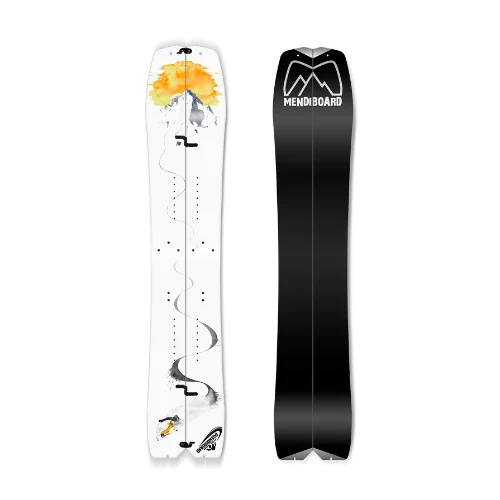
For the 2.0, Mendiboard has softened the V outline of the nose and added more tail rise. The intention is straightforward: preserve nose area for float while helping the tail release into a turn. A PU outer sidewall is also part of the package, with reduced vibration claimed by the manufacturer. Whether that feels noticeably different from an earlier Backcountry cannot be established by testing the older board. Tracked and uneven snow would make a particularly useful setting for a comparison ride.
What should you consider on the skin track?
According to Mendiboard, the nose and tail geometry lets experienced tourers skin without exchanging the halves from side to side. That option assumes clean, parallel tracking. In a narrow skier’s track, the brand still recommends exchanging them to prevent the halves and their hardware from catching. Choose your board with your binding system and actual skinning habits in mind; this particular feature needs to work with both.
How do you choose the right size and setup?
The current chart lists 153, 157, 161 and 161W. Width matters here: the 161W has a 264 mm waist compared with 258 mm on the regular 161. For smaller boots, extra width also means more distance to roll onto the edge. The 162 in our newly supplied Backcountry report is a different version.
Mendiboard offers individual boards and additional packages. The price here belongs to the individual board. Include suitable skins, bindings and the required interface when comparing a complete touring setup. A package price only becomes meaningful alongside its exact contents.
Dedicated openings or fittings for skin attachment are a practical Mendiboard detail. Before ordering, confirm the correct skin length and fitting for your exact model. A general statement about binding compatibility also does not replace checking the required interface and the components actually included.
How should boots, bindings and board work together?
Pair it with boots that provide lateral support and bindings whose highbacks transmit pressure. A very soft boot can become the limiting part when edging. If you already own a usable setup, check its fit before spending more simply to reduce board weight.
Relaxed powder tours do not require maximum stiffness everywhere. For frequent firm traverses, however, pressure transfer deserves priority over an especially soft, surfy feel.
Read more about matching the components in our Splitboard Gear Guide.
Which test experience helps you choose?
We have not yet tested the current Backcountry Climb 2.0 ourselves. Our 26/27 Backcountry report concerns the earlier 162 cm version, recorded at 3.2 kg. The following experience belongs to that ridden board and helps compare the model family.
What stood out on tour? We rode the Backcountry repeatedly in a broad mix of conditions. On firm snow, its long traditional camber gave strong edge hold. Balance and forward tracking made skinning comfortable, with easy kick turns. In deep snow the relatively short but raised nose helped when breaking trail.
How did it ride downhill? Alongside powder and hardpack, crust was especially memorable. The higher nose and its contact area helped the tested board emerge from the crust, catching less than some more conventional comparison boards. That made the descent more fluid and saved effort. Careful finishing and a thoughtful skin attachment supported the positive overall impression.
What does that mean for the current model? It explains why we take the Backcountry family seriously as a touring comparison. The 2.0 revises nose, tail and parts of the construction, so those new details are initially assessed from manufacturer information. The tested 150 cm women’s version from 21/22 is another different build; its ratings are not turned into a 2.0 result either.
| Test criterion | Tested Backcountry 162 |
|---|---|
| All-mountain | 80/100 |
| Freestyle | 70/100 |
| Powder | 80/100 |
| Speed | 70/100 |
| Agility | 75/100 |
| Downhill edge hold | 80/100 |
| Traversing | 80/100 |
| Weight | 75/100 |
| Finishing | 80/100 |
| Sustainability | 70/100 |
Overall climbing and riding fields are blank in the test sheet. We have not calculated a new overall score.
Sources of historical experience: Archived report 20/21 · Archived report 21/22.
What has changed since 25/26 and earlier models?
Mendiboard currently offers this model without publishing a complete season-by-season change log. We include the present offer in the 26/27 season guide. “New” in a product description alone does not date every detail to this season. Compare the exact generation, dimensions and actual package contents.
Compared with the older Climb, the 2.0 page specifies a less pronounced V nose, increased tail rise, an outer PU sidewall and changes to the wood-and-fibre layup. These are stated changes, but the newly supplied 162 cm Backcountry test cannot directly verify their effect.
For the direct archive comparison: 25/26 model page.
Which other current boards fit your riding style?
Compare Mendiboard Sakon and Mendiboard Pro Carbon Series. The shape and usage differences are discussed above. For a demo, similar sizing, your own boots and a familiar stance help more than comparing random available lengths.
FAQ: What should you know before your first tour?
What changed from the older Climb to the 2.0?
Mendiboard specifies a less pronounced V nose, more tail rise and an outer PU sidewall with a revised wood-and-fibre layup. Those are documented manufacturer changes. Testing a 162 cm Backcountry does not automatically establish how the current 161 cm Climb 2.0 rides.
Which Mendiboard Backcountry Climb 2.0 size should I choose?
Currently listed sizes are 153, 157, 161, 161W. The current chart lists 153, 157, 161 and 161W. Width matters here: the 161W has a 264 mm waist compared with 258 mm on the regular 161. For smaller boots, extra width also means more distance to roll onto the edge. The 162 in our newly supplied Backcountry report is a different version.
What hands-on test experience is available?
We have not yet tested the current Climb 2.0 ourselves. Our new Backcountry report concerns the earlier 162 cm version. Its impressions and individual scores appear above as a clearly identified comparison.
Which current alternatives should I compare?
Mendiboard Sakon and Mendiboard Pro Carbon Series are the relevant comparisons discussed on this page. Choose shape, boot fit and your usual tours first. A different construction level becomes useful after those basics fit.
Which boots and bindings suit this board?
Pair it with boots that provide lateral support and bindings whose highbacks transmit pressure. A very soft boot can become the limiting part when edging. If you already own a usable setup, check its fit before spending more simply to reduce board weight.
Is this a new construction for 26/27?
The current manufacturer page does not date every change by season. The Climb 2.0 specifies changes from the older Climb; comparisons should always use the exact version and dimensions.
Which sizes and specifications are available?
These are manufacturer specifications, not our own measurements.
Which measurements and sizes does the manufacturer specify?
| Size (cm) | 153 | 157 | 161 | 161W |
|---|---|---|---|---|
| Nose width (mm) | 292 | 296 | 300 | 306 |
| Waist width (mm) | 254 | 256 | 258 | 264 |
| Tail width (mm) | 287 | 292 | 294 | 299 |
| Nose length (mm) | 290 | 295 | 302 | 302 |
| Tail length (mm) | 185 | 190 | 193 | 193 |
| Effective edge (cm) | 114 | 118 | 121 | 121 |
| Sidecut radius (m) | 8.6 | 8.8 | 9 | 9.2 |
| Setback (mm) | 25 | 25 | 25 | 25 |
| Rider weight (kg) | 50–70 | 65–80 | 75–100 | 75–120 |
| Board weight (kg) | 2.9 | 3 | 3.1 | 3.2 |
Where do the information and images come from?
Current product information, price and product images: Mendiboard Backcountry Climb 2.0 – manufacturer page. Checked 15 October 2026. Photographs and size charts are provided by the manufacturer. Our own and historical test experience is described in the test section and assigned to the relevant boards.
The 26/27 Backcountry report is based on our editorial test notes for the ridden 162 cm board.
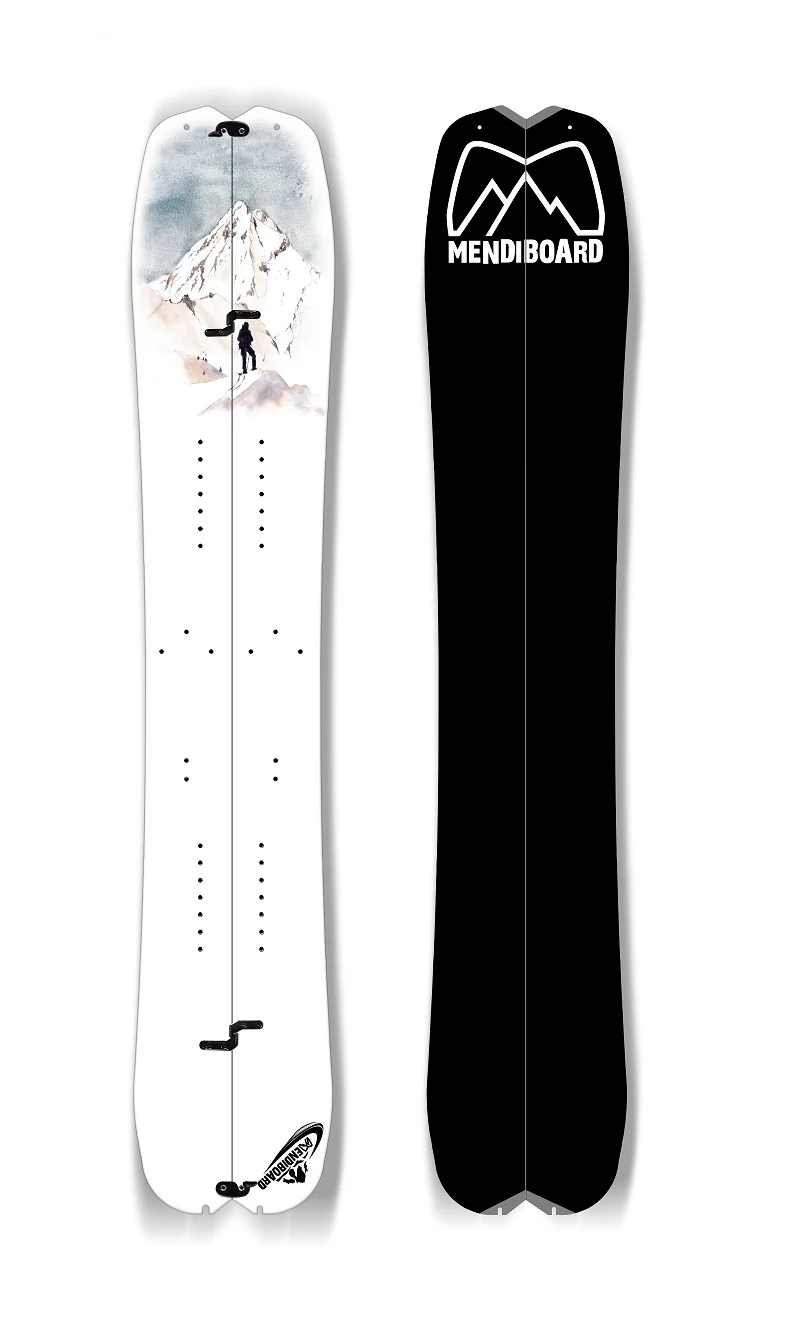
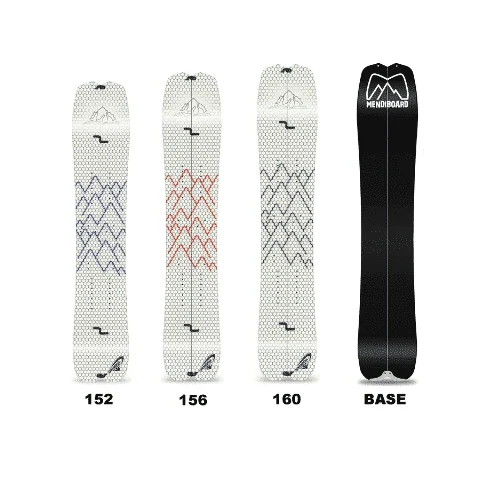
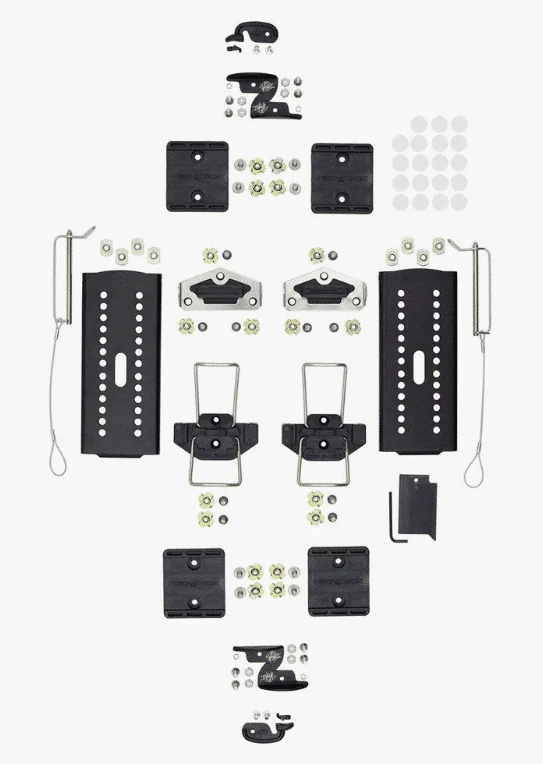
What does the board look like? (5 photos)
Show 1 more images