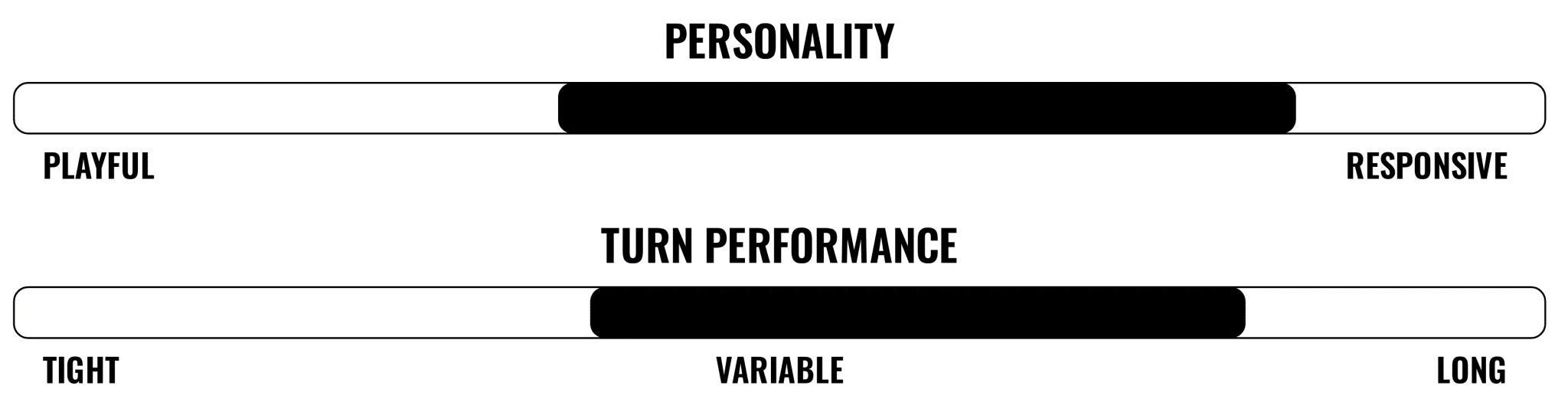
The Shorty B.C focuses on a surf-inspired descent with a supportive nose and tail. Its name does not make it a small board: the current range runs from 159 to 169. The 164 we rode previously is a useful reference for this style.
Is the Stranda Shorty B.C Splitboard right for your tours?
You seek soft descents and often choose tours by the snow. A shape can have a clear preference for that. Still consider how you reach the powder: a broad board on a narrow firm traverse asks something different from breaking trail in fresh snow. Descending also differs between slow play through trees and long arcs on an open face. Match surface area to weight and width to your feet.
What matters on the skin track?
The whole setup matters on the skin track. A board can pivot easily downhill and still need lateral support from boots and bindings. Keep a calm stride and assess edge loading on traverses. A useful balance point matters more for repositioning than weight alone. In deep snow the nose should clear the track; tight kick turns need room for the actual length. With this more powder-focused concept, we would include a narrow firm track particularly in the size comparison. Width and a long shovel can behave differently there from breaking an open trail.
How do you choose length, width and stance?
Confirmed sizes are 169, 164W, 164, 159 cm. Start with the manufacturer’s rider-weight range where specified for this version, then check actual boot width at your chosen stance. Height alone is not a reliable sizing method. Between two suitable lengths, the shorter can be easier to move; extra area may help with higher weight or deeper snow. This is not a fixed rule. Distinguish overall length, effective edge and width underfoot. Additional equipment and a heavy pack also change the load.
How should boots, bindings and skins fit?
Our Gear Guide recommends matching boots and bindings together. Lateral support matters in the changing conditions often found in the Alps. Boots should hold your heel, bindings must fit the actual outer sole, and highbacks should suit your weight and riding. Check overhang at your own binding angles; a wide waist alone does not guarantee a good fit. Practise the complete transition at home before doing it with cold fingers on tour. For skins, length, trimming and nose and tail fittings must match. A shared brand name does not mean a skin fits every outline.
Our Splitboard Gear Guide explains the setup relationships.
Which of our test experiences help you choose?
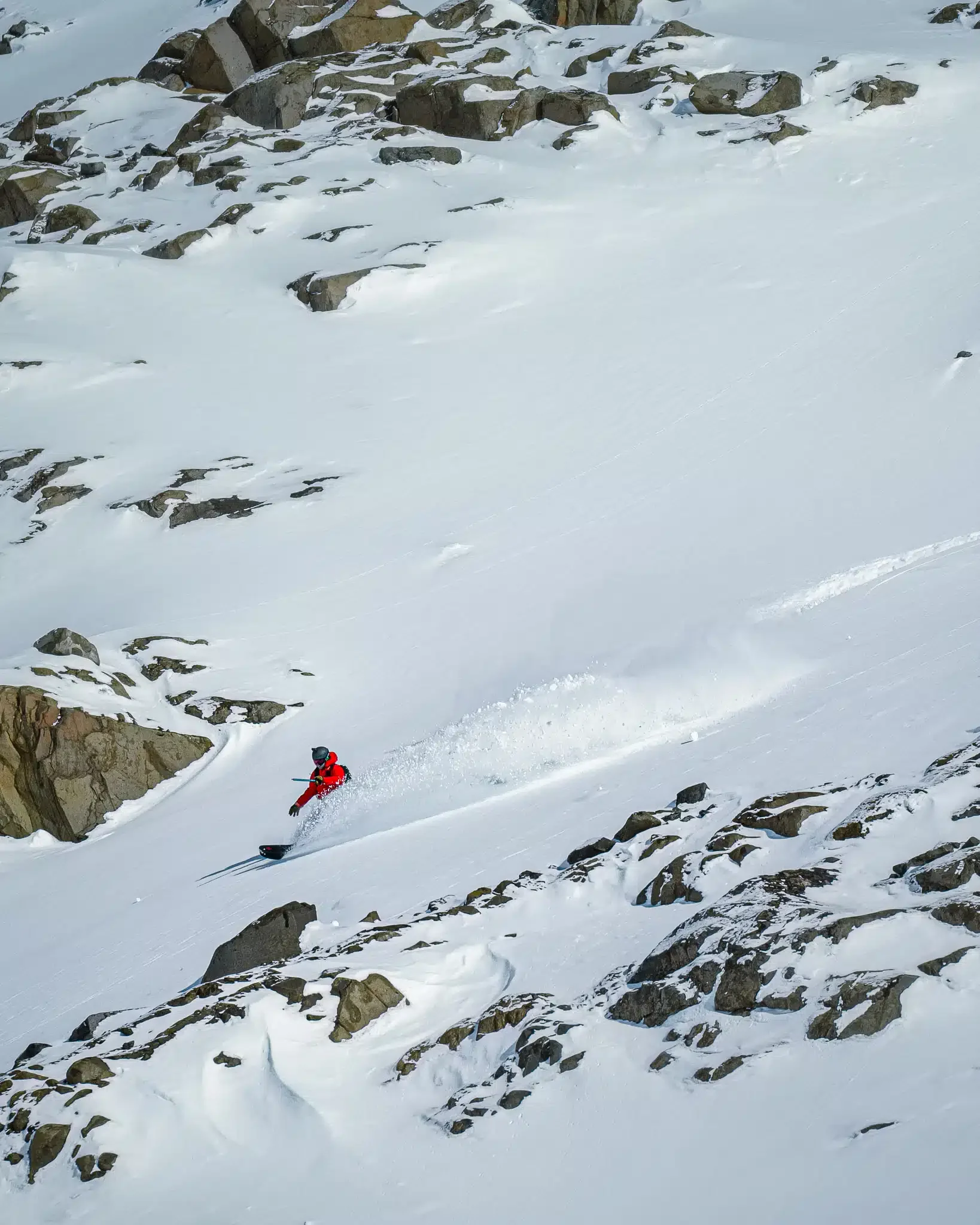
Our earlier Shorty 164 felt distinctly surfy. Its soft nose moved pleasantly through powder and tracked snow, while camber underfoot and a firmer tail supported deliberate edge pressure. The report dates from 19/20.
Climbing, the shovel lifted out of the snow well. In firmer conditions we first had to learn the useful pressure points, explaining the lower traversing score.
Small and medium jumps or drops felt secure on landing. We did not test larger ones then, so a good small landing does not become a claim about unlimited jump size. This does not automatically give today’s B.C version, particularly the Women’s Shorty, identical scores.
What has changed since 25/26 or earlier models?
The manufacturer places this offer in its current 2027 range. That alone does not prove a technical change from 25/26. Compare equal sizes, outline, profile, build and hardware; we do not claim an undocumented annual redesign.
What is included in the price and what else do you need?
Compare like package contents: board, joining hardware, bindings with interface and matching skins are separate items. A product photograph alone does not describe a complete touring setup.
Which alternatives are worth comparing?
Within the brand, compare Stranda Tree Surfer B.C Splitboard, Stranda Women’s Shorty Splitboard, Stranda Biru Splitboard. Start with intended use, then compare price and construction. Pay particular attention to width differences at similar lengths. A more expensive construction of a different shape does not guarantee a better fit.
FAQ: What should you know before choosing?
Who should consider this splitboard?
The Shorty B.C focuses on a surf-inspired descent with a supportive nose and tail. Its name does not make it a small board: the current range runs from 159 to 169. The 164 we rode previously is a useful reference for this style.
Which size and width suit me?
Confirmed sizes are 169, 164W, 164, 159 cm. Start with the manufacturer’s rider-weight range where specified for this version, then check actual boot width at your chosen stance. Height alone is not a reliable sizing method. Between two suitable lengths, the shorter can be easier to move; extra area may help with higher weight or deeper snow. This is not a fixed rule. Distinguish overall length, effective edge and width underfoot. Additional equipment and a heavy pack also change the load.
Have you tested this board yourselves?
Yes, we have our own version-comparison test: Stranda Shorty 164 cm. Scores and charts remain attached to the ridden board. We do not claim an additional test of today’s construction or a new custom commission.
What needs to match in the setup?
Our Gear Guide recommends matching boots and bindings together. Lateral support matters in the changing conditions often found in the Alps. Boots should hold your heel, bindings must fit the actual outer sole, and highbacks should suit your weight and riding. Check overhang at your own binding angles; a wide waist alone does not guarantee a good fit. Practise the complete transition at home before doing it with cold fingers on tour. For skins, length, trimming and nose and tail fittings must match. A shared brand name does not mean a skin fits every outline.
What is included in the price and what else do you need?
Compare like package contents: board, joining hardware, bindings with interface and matching skins are separate items. A product photograph alone does not describe a complete touring setup.
How does it differ from the earlier version?
The manufacturer places this offer in its current 2027 range. That alone does not prove a technical change from 25/26. Compare equal sizes, outline, profile, build and hardware; we do not claim an undocumented annual redesign.
Which sizes and dimensions does the manufacturer list?
Confirmed sizes: 169, 164W, 164, 159 cm. Figures are manufacturer data rather than our measurements. Missing or conflicting entries are not filled with estimates. Manufacturer flex and editorial riding scores are different scales.
| Length | 169 | 164 wide | 164 | 159 |
|---|---|---|---|---|
| Weight range kg/lbs | 80-110/170-240 | 80-110/170-240 | 75-100/165-220 | 70-90/155-200 |
| Board weight | 3590 | 3495 | 3420 | 3250 |
| Eff. Edge | 1350 | 1273 | 1273 | 1225 |
| Nose Width | 323 | 323 | 313 | 306 |
| Waist Width | 260 | 270 | 260 | 255 |
| Tail Width | 313 | 309 | 299 | 293 |
| Sidecut | 9 | 8,6 | 8,6 | 8,23 |
| Setback | 22 | 22 | 22 | 20 |
| Cent. Stance | 53 | 53 | 53 | 53 |
| Stance width | 47-61 | 47-61 | 47-61 | 47-61 |
| Underfoot front width | 273 | 280 | 270 | 265 |
| Underfoot rear width | 270 | 277 | 267 | 260 |
Where do the data, images and test reports come from?
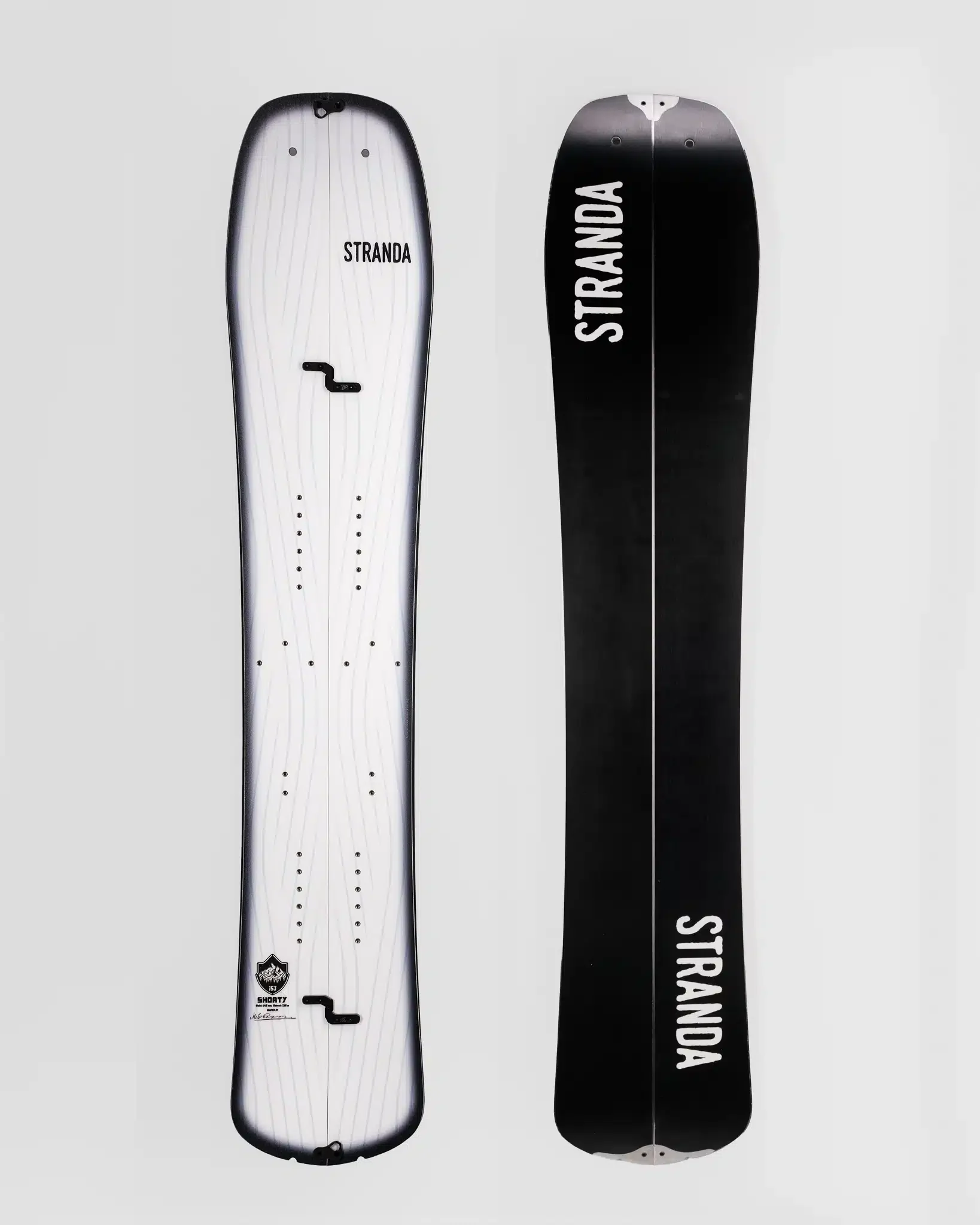
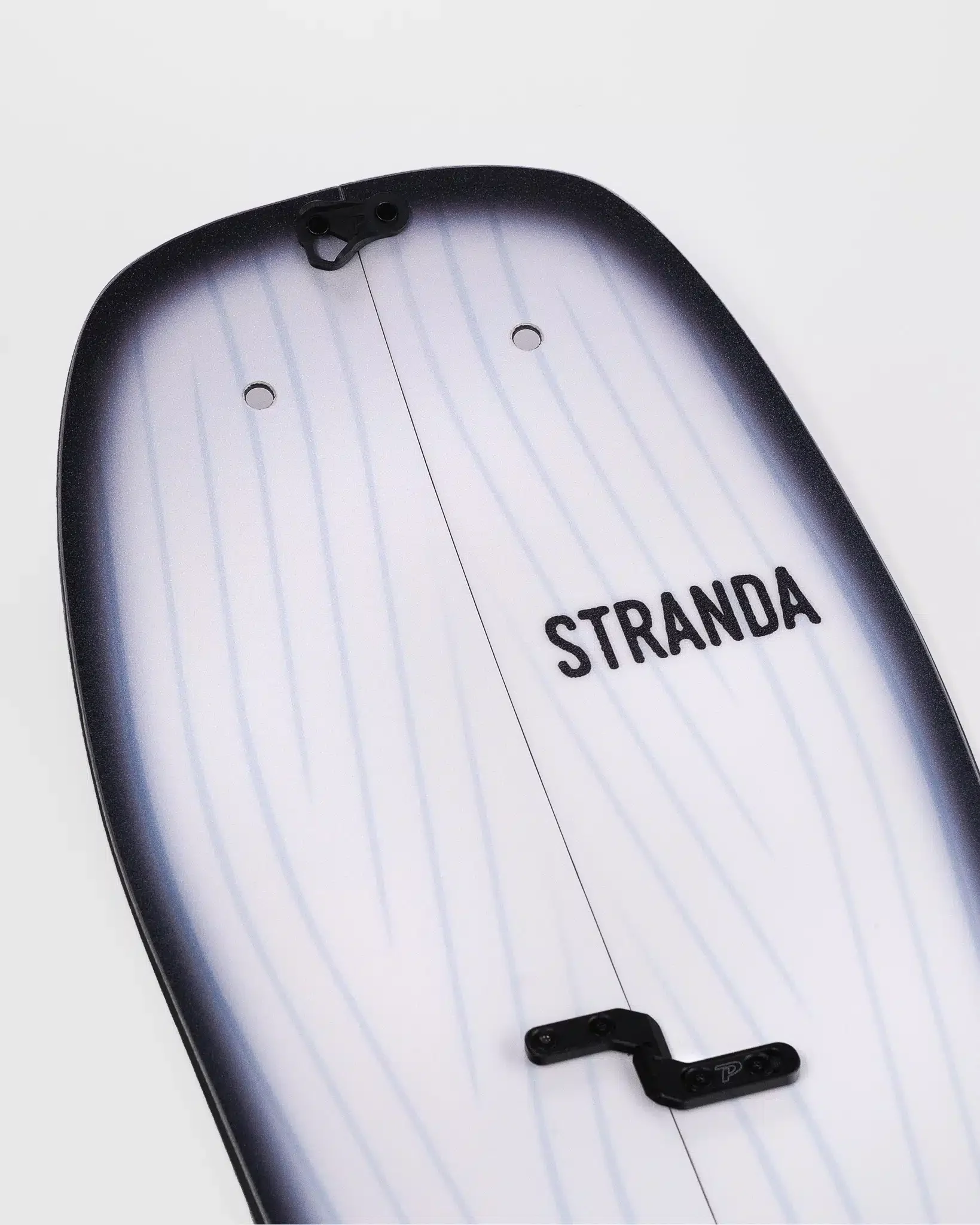
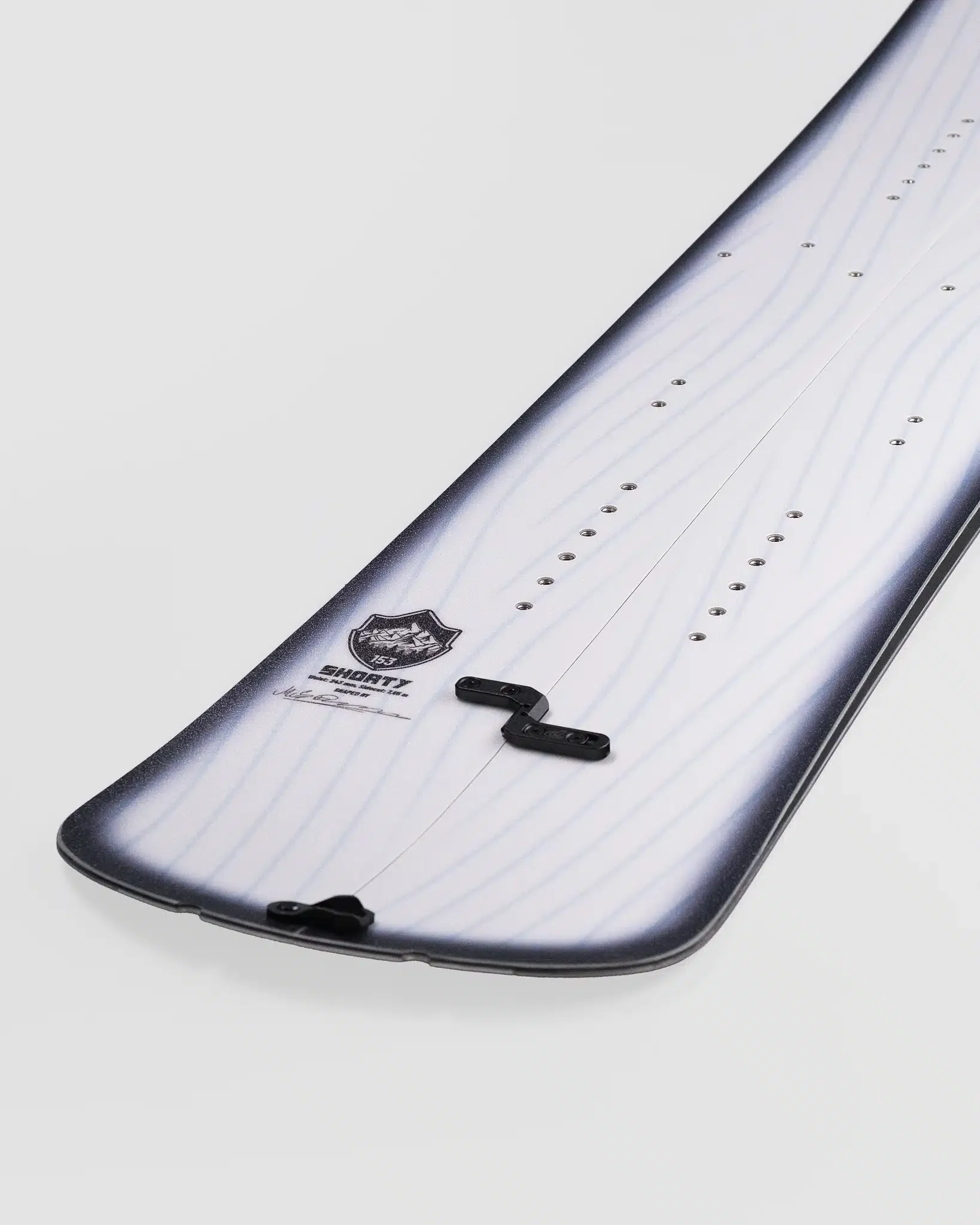
Stranda Shorty B.C Splitboard – manufacturer offer. Checked 19 October 2026. Images and dimensions come from the linked current manufacturer offer. These are manufacturer views, not evidence of our own riding test. Our test experiences come from editorial season notes; charts identify the tested version and season.
What does the board look like? (5 photos)
Show 1 more images