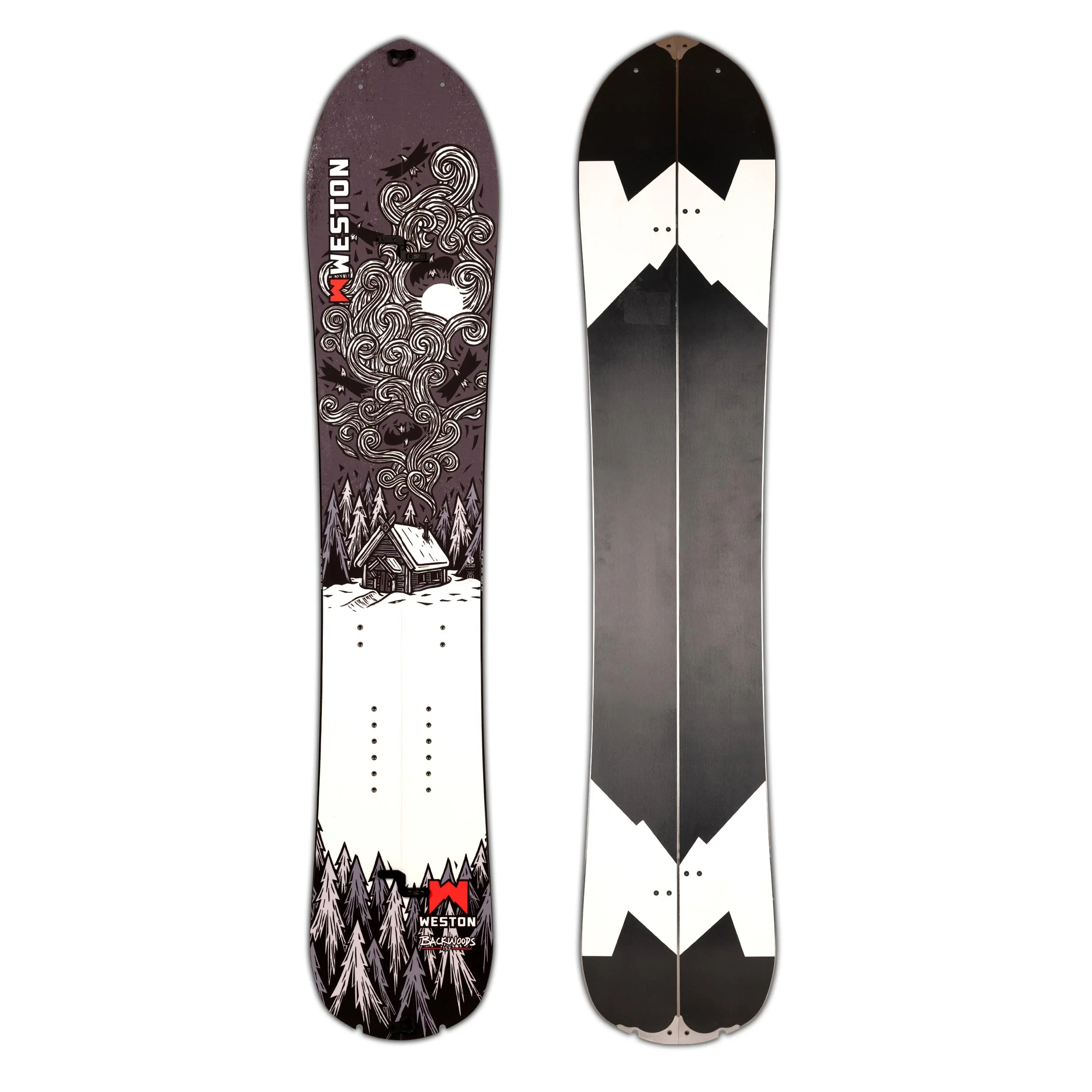
Long climbs followed by a committed descent: the Backwoods Carbon combines Weston’s directional freeride shape with a more elaborate lightweight build. Do not choose it solely by grams. In our test, the decisive question was its firm flex.
Is the Weston Backwoods Carbon Splitboard 26/27 right for your tours?
The concept suits alpine splitters and active freeriders who can use a supportive board. For a very light training setup, the sum of board, bindings and skins still matters. For relaxed tours, the less expensive standard version remains a serious comparison.
What does the shape offer on the descent?
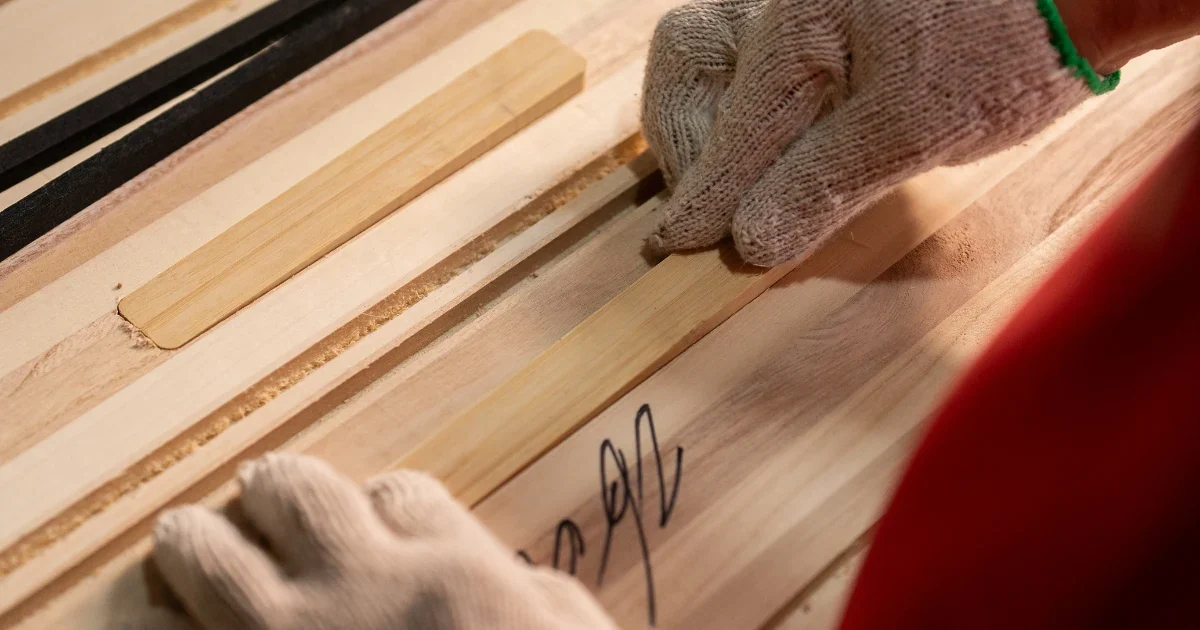
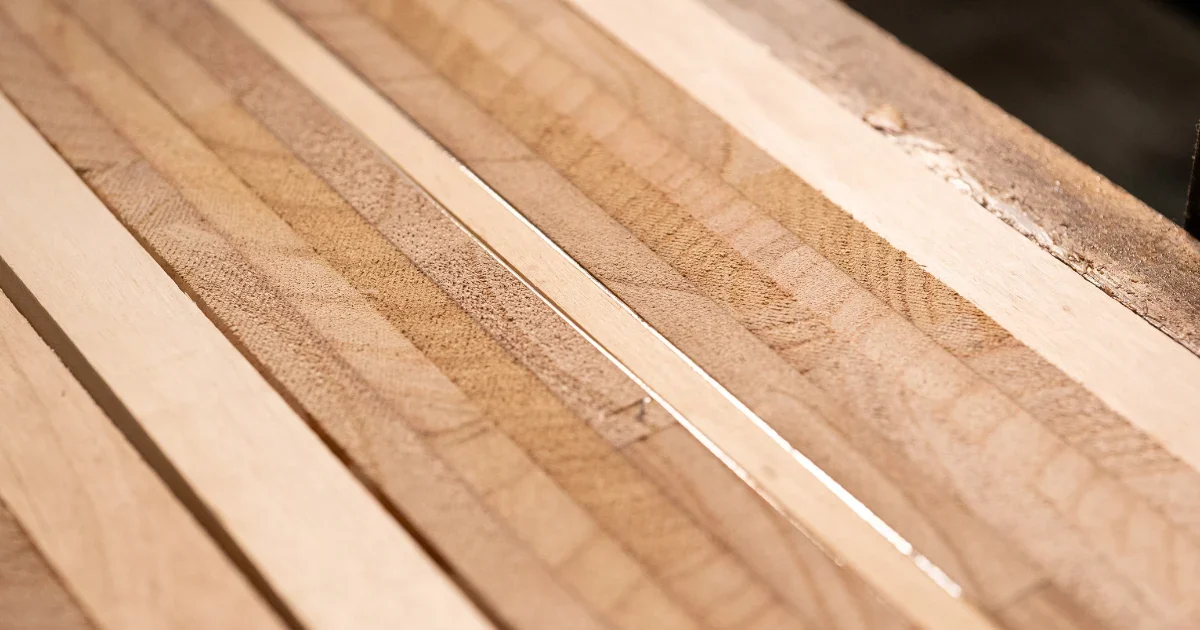
A broad nose, 18 mm taper and camber underfoot retain the Backwoods idea. Carbon, a lighter core construction and the current Phantom connectors distinguish the offered carbon build. Lower weight and direct response are the aims; whether that response feels right depends on your weight and riding style.
What matters on the ascent?
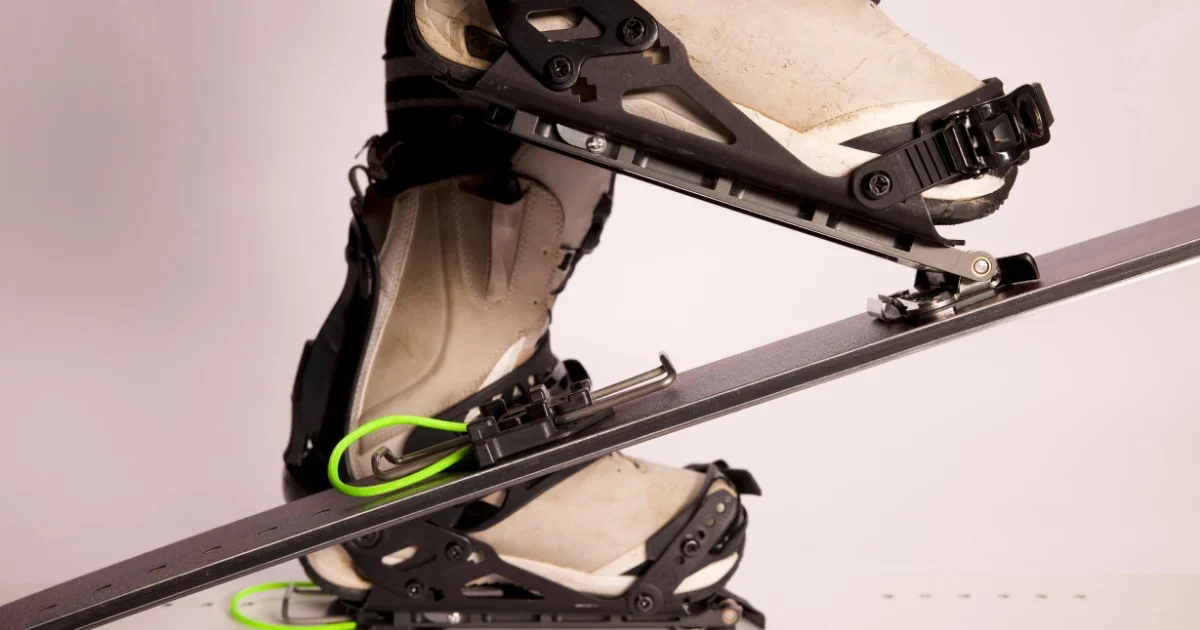
A light board can help on long approaches and repeated kick turns. It cannot compensate for boots that collapse sideways. Check how boots, highbacks and board work together before comparing deck weights alone.
How do you choose the right size?
Sizes are 157, 160, 163 Wide and 167 Wide. The Wide sizes are not simply longer boards of unchanged width. Our test board is recorded as 163 cm at 2.85 kg; that measurement belongs to the ridden version, not automatically the currently offered build.
How do boots, bindings and board work together?
Supportive boots with heel hold and matching highbacks make sense for a firm shape. If your weight cannot load its flex comfortably, a stiffer binding will not automatically make the board more approachable.
Plan the touring setup as a whole: a lighter board offers little benefit if your boot lacks support or excessive width makes every traverse tiring. Choose a suitable board for your descents, then match boots, highback and bindings. Skins also need the right length, width and attachments. Before the first tour, practise a complete transition at home with the actual components you will carry.
Read more about matching your equipment in our Splitboard Gear Guide.
Which of our test experiences help you choose?
Our Backwoods Carbon entry in the ongoing 26/27 test file concerns a ridden 163 cm board weighing 2.85 kg. The current manufacturer table instead gives 3.15 kg for the 163W. We therefore use our experience as a comparison with the board actually ridden; identical construction of the current version is not established. The nearly one-kilogram saving mentioned in the notes also belongs to our comparison with the standard Backwoods at that time.
The light board pleased us on the ascent: it tracked well, held an edge and was easy to manoeuvre in those conditions. The observation about kick turns on hard, grippy snow at up to 40 degrees describes that particular outing, not a general operating limit. Snow, track and rider skill all play a substantial part.
On the descent the Carbon Backwoods was too stiff for us. Our lighter testers could not work it as comfortably as the classic Backwoods. That is the useful buying lesson: a stiff carbon build may suit a stronger rider, while taking some ease out of turns for a lighter one. Our individual scores appear on the right; the Overall Rating in the overview also belongs to this tested board.
Our earlier test reports: Weston Backwoods Carbon Split.
What has changed since the previous season and earlier models?
Weston identifies this version with 26/27. The current product page does not publish a complete list of technical changes from 25/26. A season label alone therefore establishes neither a new shape nor improved riding feel. Compare length, width, construction and hardware of the two actual boards. Moving between standard and carbon versions is a comparison of different builds as well as model years.
Which alternatives should you compare?
Compare Weston Backwoods Splitboard and Weston Gnarnia Carbon Splitboard. The differences in riding style and use are discussed above. A useful demo starts with comparable sizes, your own boots and a familiar stance. What matters is whether the board also suits you in tight terrain and after a long climb.
FAQ: What should you know before the first tour?
Who benefits from the carbon construction?
Riders taking long tours who deliberately want firm support. We liked the climb on the tested 163 but found its downhill flex too stiff for our relatively light testers. Conflicting older records mean we do not assign a specific tester weight.
How do I choose length and width?
Sizes are 157, 160, 163 Wide and 167 Wide. The Wide sizes are not simply longer boards of unchanged width. Our test board is recorded as 163 cm at 2.85 kg; that measurement belongs to the ridden version, not automatically the currently offered build.
Have you tested this board yourselves?
Yes, a 163 cm Backwoods Carbon weighing 2.85 kg. Since the current manufacturer table lists 3.15 kg for 163W, we label the report as a comparison with the ridden board and do not confirm identical current construction.
How should I match boots and bindings to the board?
Supportive boots with heel hold and matching highbacks make sense for a firm shape. If your weight cannot load its flex comfortably, a stiffer binding will not automatically make the board more approachable.
What is included in the price and what else do you need?
Budget for suitable skins, bindings and the required interface. Check actual package contents so your price comparison includes the same parts.
What differs from the previous season?
Weston identifies this version with 26/27. The current product page does not publish a complete list of technical changes from 25/26. A season label alone therefore establishes neither a new shape nor improved riding feel. Compare length, width, construction and hardware of the two actual boards. Moving between standard and carbon versions is a comparison of different builds as well as model years.
Which sizes and specifications does the manufacturer list?
The table shows manufacturer specifications, not our own measurements. Sizes in the current model range: 157, 160, 163 Wide, 167 Wide cm.
| Size (cm) | Effective Edge (cm) | Waist Width (cm) | Tip / Tail Width (cm) | Taper (mm) | Setback (mm) |
|---|---|---|---|---|---|
| 157 | 118 | 25.6 | 30.8 / 29 | 18 | 10 |
| 160 | 121 | 25.9 | 31.2 / 29.4 | 18 | 10 |
| 163W | 123.5 | 27.4 | 32.7 / 30.9 | 18 | 10 |
| 167W | 127.5 | 28.1 | 33.7 / 31.9 | 18 | 10 |
| Size | Skin Selection |
|---|---|
| 157 | Splitboard Skin 3 |
| 160 | Splitboard Skin 3 |
| 163W | Splitboard Skin 5 |
| 167W | Splitboard Skin 5 |
Where do the information and images come from?
Weston Backwoods Carbon Splitboard – manufacturer page. Checked 16 October 2026. Product photographs and size charts come from the manufacturer. Our own test experience is assigned to the ridden board in the test section.
What does the board look like? (4 photos)