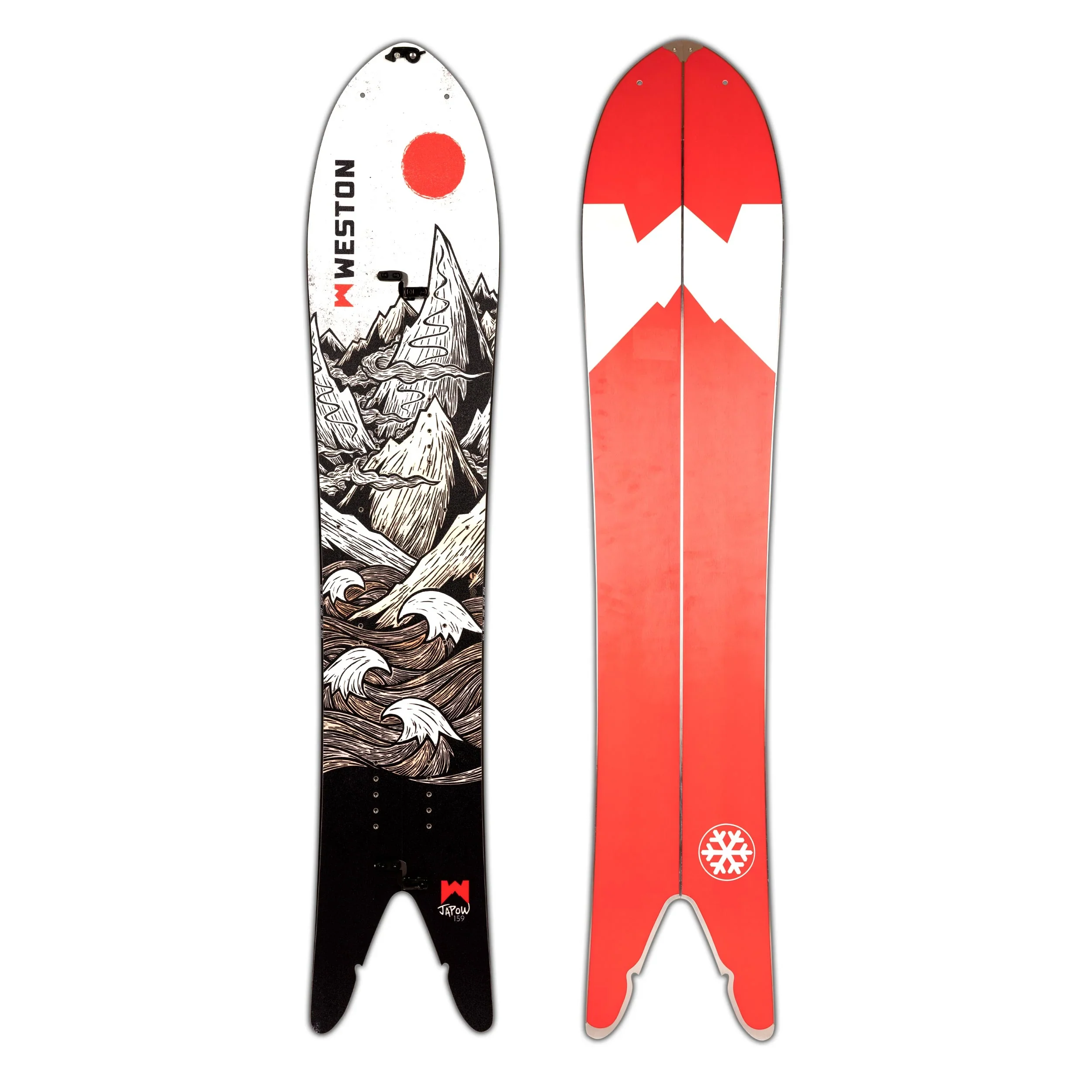
When snowfall decides your touring plans, the Japow is Weston’s clear powder candidate. A large nose, 25 mm taper and swallowtail distribute its area for deep turns. It is a deliberate choice for favourite conditions.
Is the Weston Japow Splitboard 26/27 right for your tours?
Freeride splitters with plenty of powder in their plans are a closer match than training splitters judging every lap by ascent totals. For a highly mixed winter, compare the Backwoods. The Japow does not need to cover every use to be the right addition.
What does the shape offer on the descent?
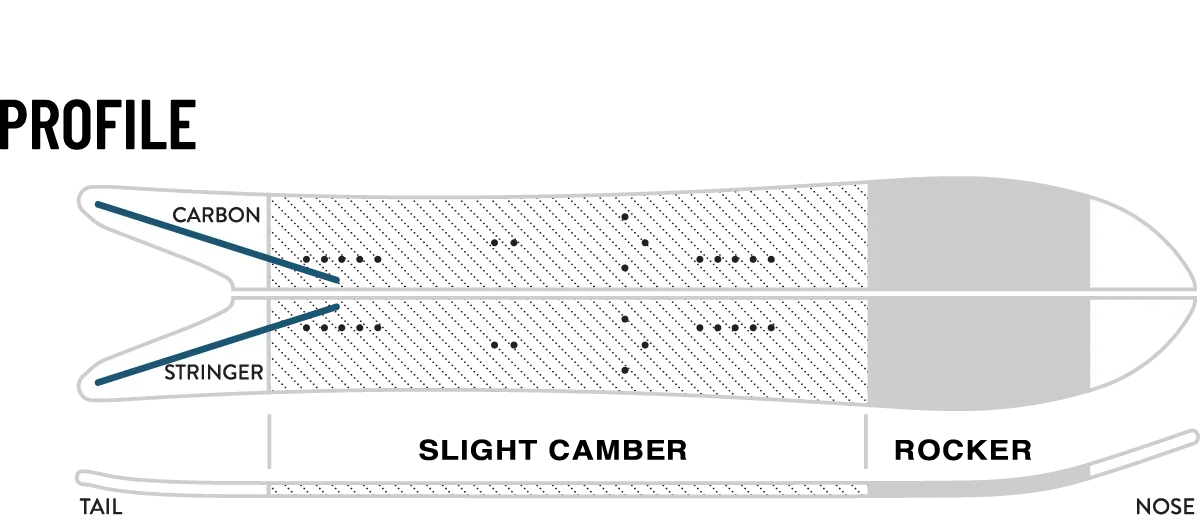
The cut-out tail and broad nose are intended to support float and relieve the back leg. Its powder focus is more pronounced than the Gnarnia’s. If regular switch landings matter, compare the Dream Machine first. A swallowtail is a different shape from a twin tail.
What matters on the ascent?
That extra area travels uphill too. On narrow firm tracks, width can require more leverage from your boots. A compact appearance in a photograph cannot replace checking waist width and your usual approaches.
How do you choose the right size?
Listed sizes are 149, 154, 159, 164 and 169 cm. Area and boot fit change between neighbouring sizes. Match skins to the chosen board length; Weston groups several sizes into skin selections.
How do boots, bindings and board work together?
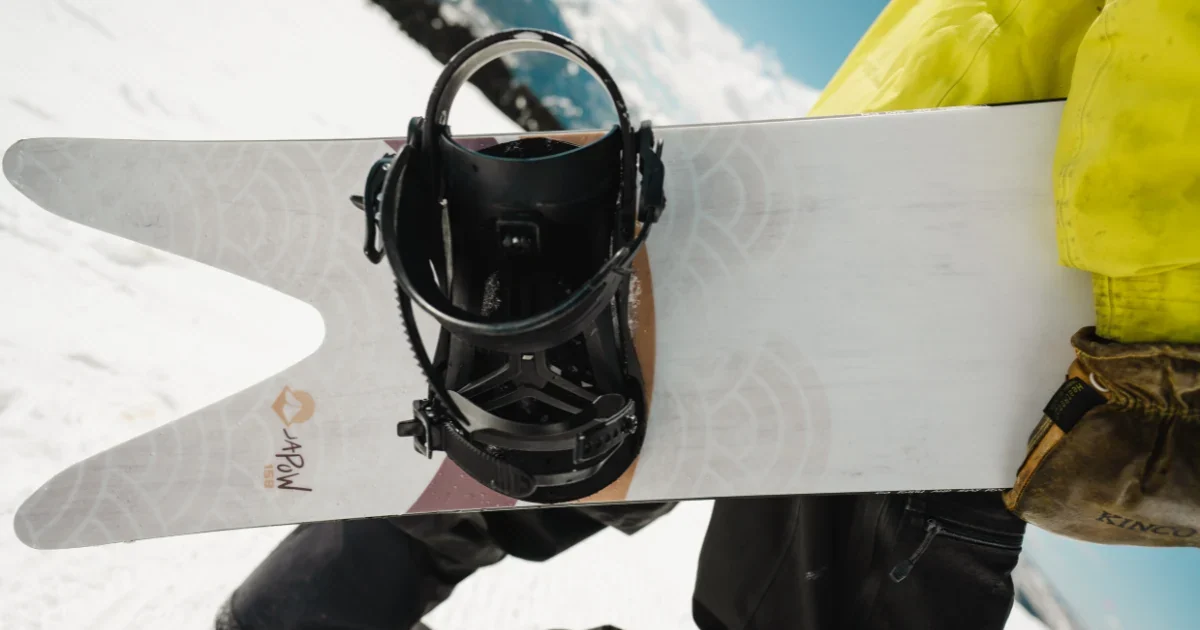
Choose heel hold and adequate lateral support even if you want relaxed powder riding. Check skin attachment at the swallowtail and budget for the complete binding interface. Shape and setup need to work together.
Plan the touring setup as a whole: a lighter board offers little benefit if your boot lacks support or excessive width makes every traverse tiring. Choose a suitable board for your descents, then match boots, highback and bindings. Skins also need the right length, width and attachments. Before the first tour, practise a complete transition at home with the actual components you will carry.
Read more about matching your equipment in our Splitboard Gear Guide.
Which of our test experiences help you choose?
We have not yet tested the Weston Japow Splitboard ourselves. Our assessment uses manufacturer information and the principles in our Gear Guide. We do not assign our own riding scores to it.
On a demo we would use a suitable size and our own boots where possible. Check whether you can still apply pressure cleanly after a long ascent and whether the board feels as manageable in slow turns as on an open face. A firm traverse is particularly revealing about the match between boots, highback and board. A short piste demo cannot replace every aspect of touring experience, but it can reveal unsuitable width or an overly demanding setup early.
What has changed since the previous season and earlier models?
Weston identifies this version with 26/27. The current product page does not publish a complete list of technical changes from 25/26. A season label alone therefore establishes neither a new shape nor improved riding feel. Compare length, width, construction and hardware of the two actual boards. Moving between standard and carbon versions is a comparison of different builds as well as model years.
Which alternatives should you compare?
Compare Weston Japow Splitboard x Hokkaido Backcountry Club and Weston Backwoods Splitboard. The differences in riding style and use are discussed above. A useful demo starts with comparable sizes, your own boots and a familiar stance. What matters is whether the board also suits you in tight terrain and after a long climb.
FAQ: What should you know before the first tour?
Japow or the Hokkaido edition?
The Hokkaido Backcountry Club version follows the same stated powder concept with its own artwork. The secured dimension tables match. A special graphic alone does not establish better riding performance.
How do I choose length and width?
Listed sizes are 149, 154, 159, 164 and 169 cm. Area and boot fit change between neighbouring sizes. Match skins to the chosen board length; Weston groups several sizes into skin selections.
Have you tested this board yourselves?
We have not yet tested the Weston Japow Splitboard ourselves. This advice uses manufacturer information and our Gear Guide; we do not assign our own test scores to it.
How should I match boots and bindings to the board?
Choose heel hold and adequate lateral support even if you want relaxed powder riding. Check skin attachment at the swallowtail and budget for the complete binding interface. Shape and setup need to work together.
What is included in the price and what else do you need?
Budget for suitable skins, bindings and the required interface. Check actual package contents so your price comparison includes the same parts.
What differs from the previous season?
Weston identifies this version with 26/27. The current product page does not publish a complete list of technical changes from 25/26. A season label alone therefore establishes neither a new shape nor improved riding feel. Compare length, width, construction and hardware of the two actual boards. Moving between standard and carbon versions is a comparison of different builds as well as model years.
Which sizes and specifications does the manufacturer list?
The table shows manufacturer specifications, not our own measurements. Sizes in the current model range: 149, 154, 159, 164, 169 cm.
| Size (cm) | Effective Edge (cm) | Waist Width (cm) | Tip / Tail Width (cm) | Taper (mm) | Setback (mm) |
|---|---|---|---|---|---|
| 149 | 116 | 25.2 | 30.7 / 28.2 | 25 | 0 |
| 154 | 119 | 25.6 | 31 / 28.5 | 25 | 0 |
| 159 | 123.5 | 26.2 | 31.7 / 29.2 | 25 | 0 |
| 164 | 125.5 | 26.6 | 32.2 / 29.7 | 25 | 0 |
| 169 | 128.5 | 27 | 32.7 / 30.2 | 25 | 0 |
| Size | Skin Selection |
|---|---|
| 149 | Splitboard Skin 7 |
| 154 | Splitboard Skin 7 |
| 159 | Splitboard Skin 8 |
| 164 | Splitboard Skin 8 |
| 169 | Splitboard Skin 8 |
Where do the information and images come from?
Weston Japow Splitboard – manufacturer page. Checked 16 October 2026. Product photographs and size charts come from the manufacturer. Our own test experience is assigned to the ridden board in the test section.
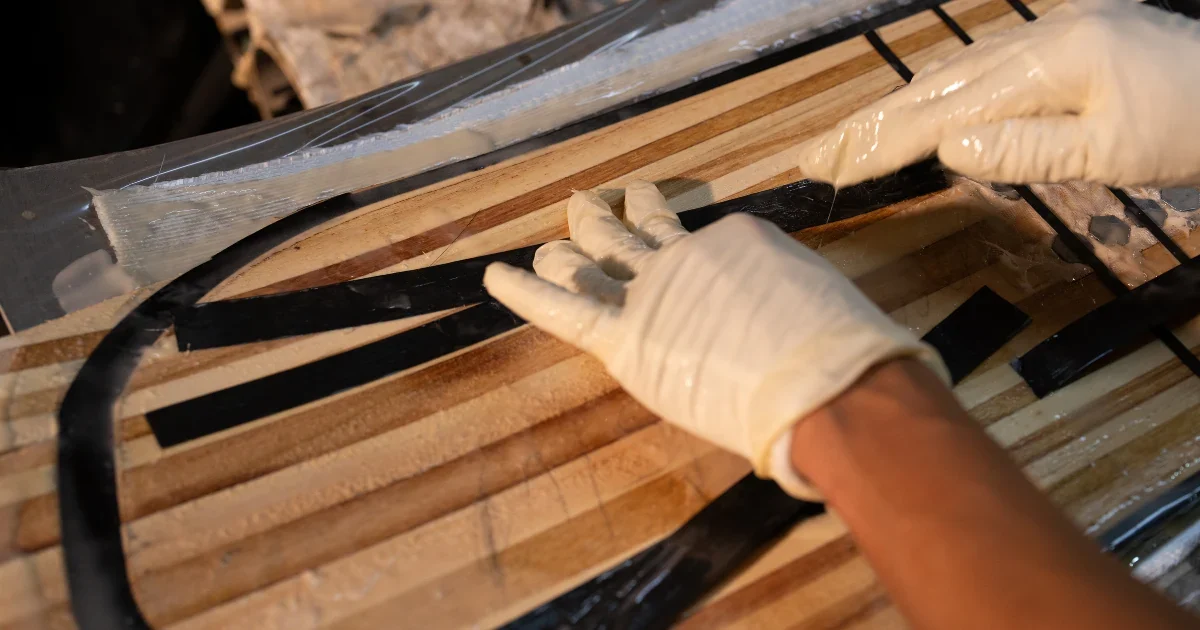
What does the board look like? (4 photos)