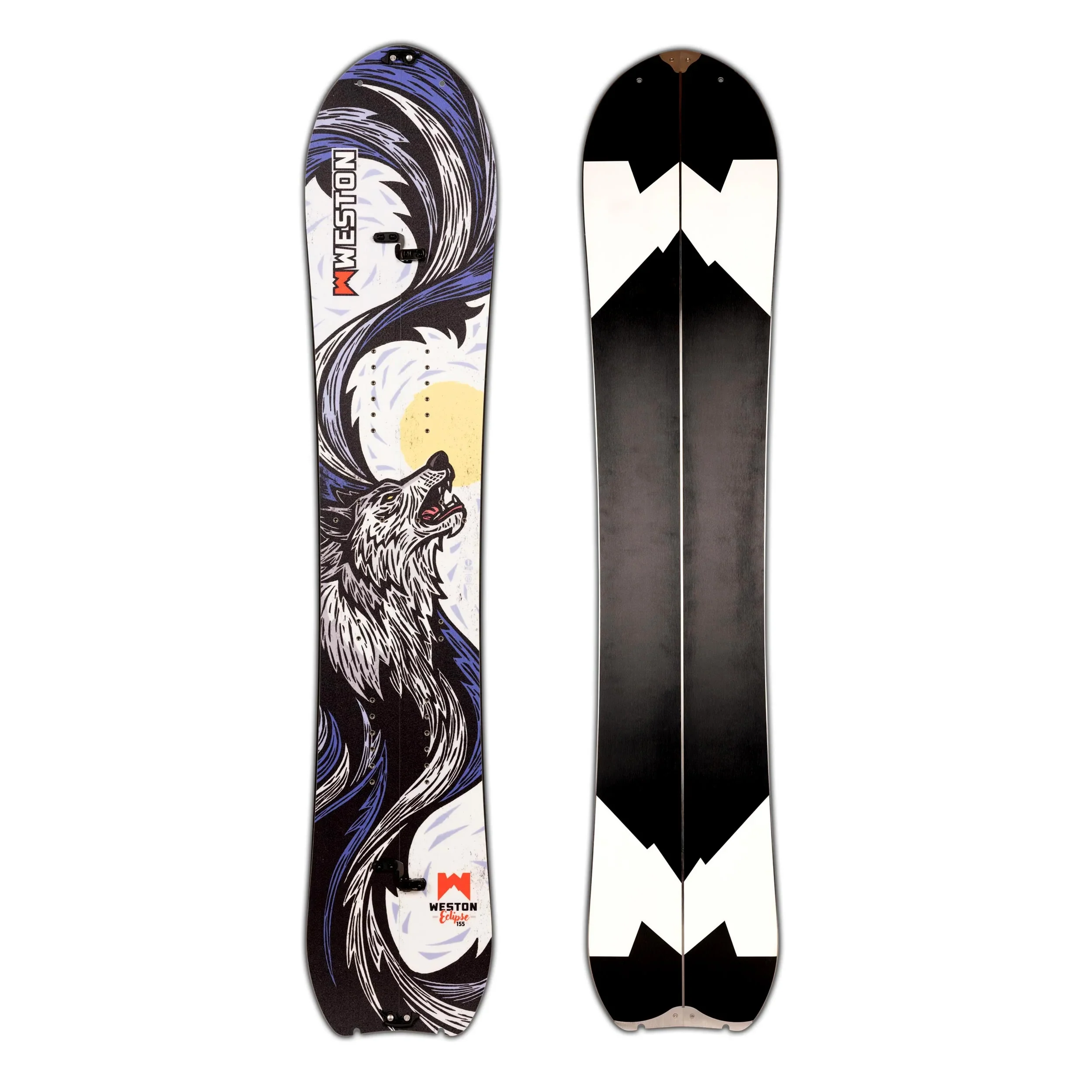
You want the Backwoods freeride idea on a shape better suited to smaller boots? That is the Eclipse’s purpose. It brings a rockered nose and subtly cut-out tail into a shorter size selection.
Is the Weston Eclipse Splitboard 26/27 right for your tours?
Freeride splitters with smaller feet are the relevant audience. Weston explicitly describes the model through fit and performance rather than gender. That is useful for your choice: boot size, weight and riding style still determine the right length.
What does the shape offer on the descent?
Camber underfoot is intended to provide support while the larger nose adds float. The directional shape differs from the Dream Machine’s more twin-oriented brief. If most of your powder turns face forwards, that distinction matters more than the graphic.
What matters on the ascent?
Suitable waist width can matter on the climb. If your current board feels too broad, compare widths deliberately with your own boots. A shorter length does not automatically mean little area: the 145 already has a 24.6 cm waist in the chart.
How do you choose the right size?
Current sizes are 145, 150 and 155 cm. Consider those five-centimetre steps alongside rider weight and waist width. Do not automatically choose the longest for extra float if your boots make it harder to edge.
How do boots, bindings and board work together?
Choose a suitable binding size and good heel hold. A small boot in oversized bindings loses part of its advantage. The highback should match your weight and transmit movement without unnecessary stiffness.
Plan the touring setup as a whole: a lighter board offers little benefit if your boot lacks support or excessive width makes every traverse tiring. Choose a suitable board for your descents, then match boots, highback and bindings. Skins also need the right length, width and attachments. Before the first tour, practise a complete transition at home with the actual components you will carry.
Read more about matching your equipment in our Splitboard Gear Guide.
Which of our test experiences help you choose?
We have not yet tested the Weston Eclipse Splitboard ourselves. Our assessment uses manufacturer information and the principles in our Gear Guide. We do not assign our own riding scores to it.
On a demo we would use a suitable size and our own boots where possible. Check whether you can still apply pressure cleanly after a long ascent and whether the board feels as manageable in slow turns as on an open face. A firm traverse is particularly revealing about the match between boots, highback and board. A short piste demo cannot replace every aspect of touring experience, but it can reveal unsuitable width or an overly demanding setup early.
What has changed since the previous season and earlier models?
Weston identifies this version with 26/27. The current product page does not publish a complete list of technical changes from 25/26. A season label alone therefore establishes neither a new shape nor improved riding feel. Compare length, width, construction and hardware of the two actual boards. Moving between standard and carbon versions is a comparison of different builds as well as model years.
Which alternatives should you compare?
Compare Weston Backwoods Splitboard and Weston Dream Machine Splitboard. The differences in riding style and use are discussed above. A useful demo starts with comparable sizes, your own boots and a familiar stance. What matters is whether the board also suits you in tight terrain and after a long climb.
FAQ: What should you know before the first tour?
Is the Eclipse simply a smaller Backwoods?
Weston identifies the Backwoods as inspiration but specifies separate tuning, a narrower waist and tighter turns. Treat it as its own model. Older Backwoods scores do not become an Eclipse result.
How do I choose length and width?
Current sizes are 145, 150 and 155 cm. Consider those five-centimetre steps alongside rider weight and waist width. Do not automatically choose the longest for extra float if your boots make it harder to edge.
Have you tested this board yourselves?
We have not yet tested the Weston Eclipse Splitboard ourselves. This advice uses manufacturer information and our Gear Guide; we do not assign our own test scores to it.
How should I match boots and bindings to the board?
Choose a suitable binding size and good heel hold. A small boot in oversized bindings loses part of its advantage. The highback should match your weight and transmit movement without unnecessary stiffness.
What is included in the price and what else do you need?
Budget for suitable skins, bindings and the required interface. Check actual package contents so your price comparison includes the same parts.
What differs from the previous season?
Weston identifies this version with 26/27. The current product page does not publish a complete list of technical changes from 25/26. A season label alone therefore establishes neither a new shape nor improved riding feel. Compare length, width, construction and hardware of the two actual boards. Moving between standard and carbon versions is a comparison of different builds as well as model years.
Which sizes and specifications does the manufacturer list?
The table shows manufacturer specifications, not our own measurements. Sizes in the current model range: 145, 150, 155 cm.
| Size (cm) | Effective Edge (cm) | Waist Width (cm) | Tip / Tail Width (cm) | Taper (mm) | Setback (mm) |
|---|---|---|---|---|---|
| 145 | 108 | 24.6 | 29.3 / 27.5 | 18 | 10 |
| 150 | 113 | 25 | 30.0 / 28.1 | 18 | 10 |
| 155 | 118 | 25.6 | 30.8 / 29 | 18 | 10 |
| Size | Skin Selection |
|---|---|
| 145 | Splitboard Skin 1 |
| 150 | Splitboard Skin 2 |
| 155 | Splitboard Skin 3 |
Where do the information and images come from?
Weston Eclipse Splitboard – manufacturer page. Checked 16 October 2026. Product photographs and size charts come from the manufacturer. Our own test experience is assigned to the ridden board in the test section.
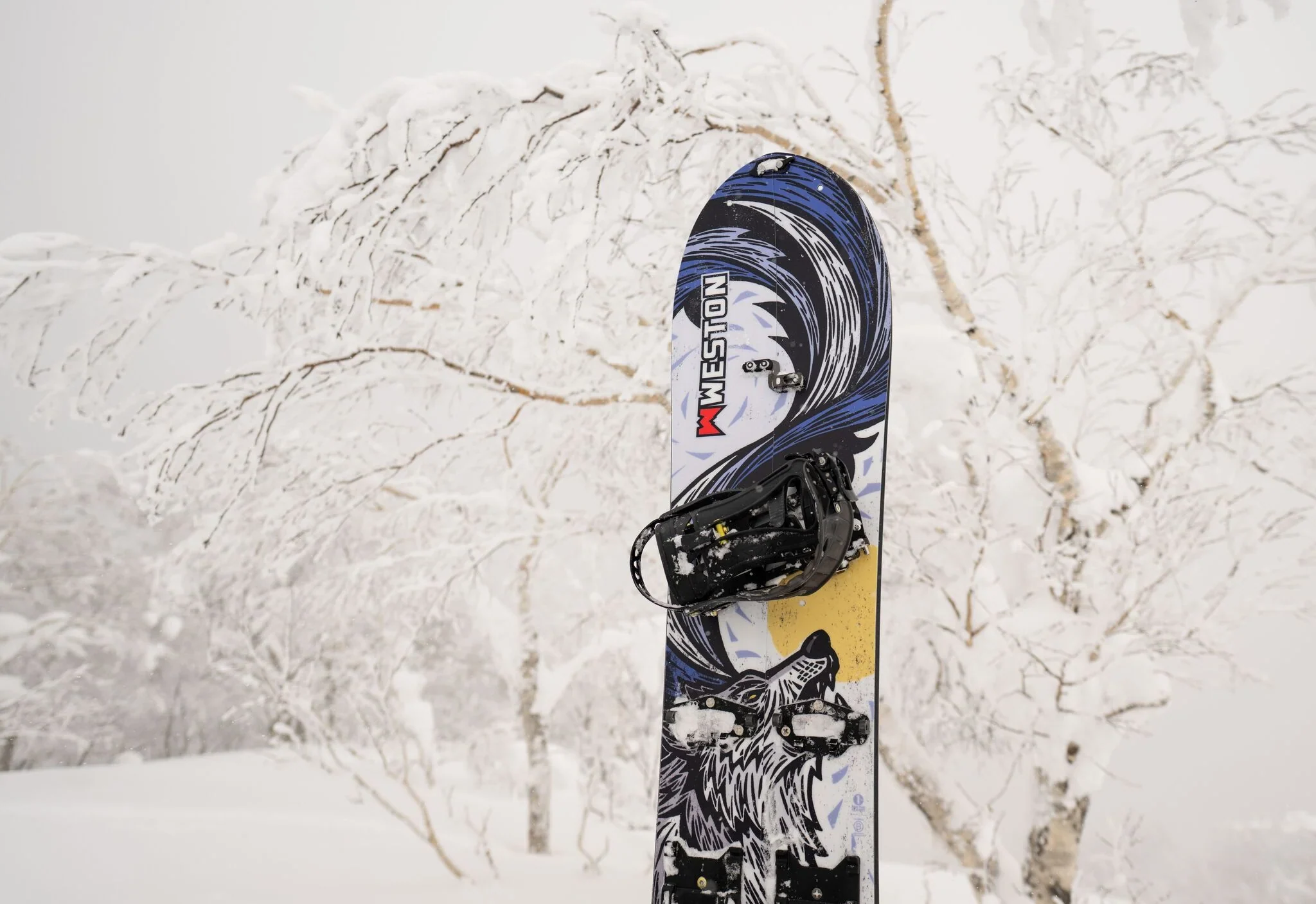
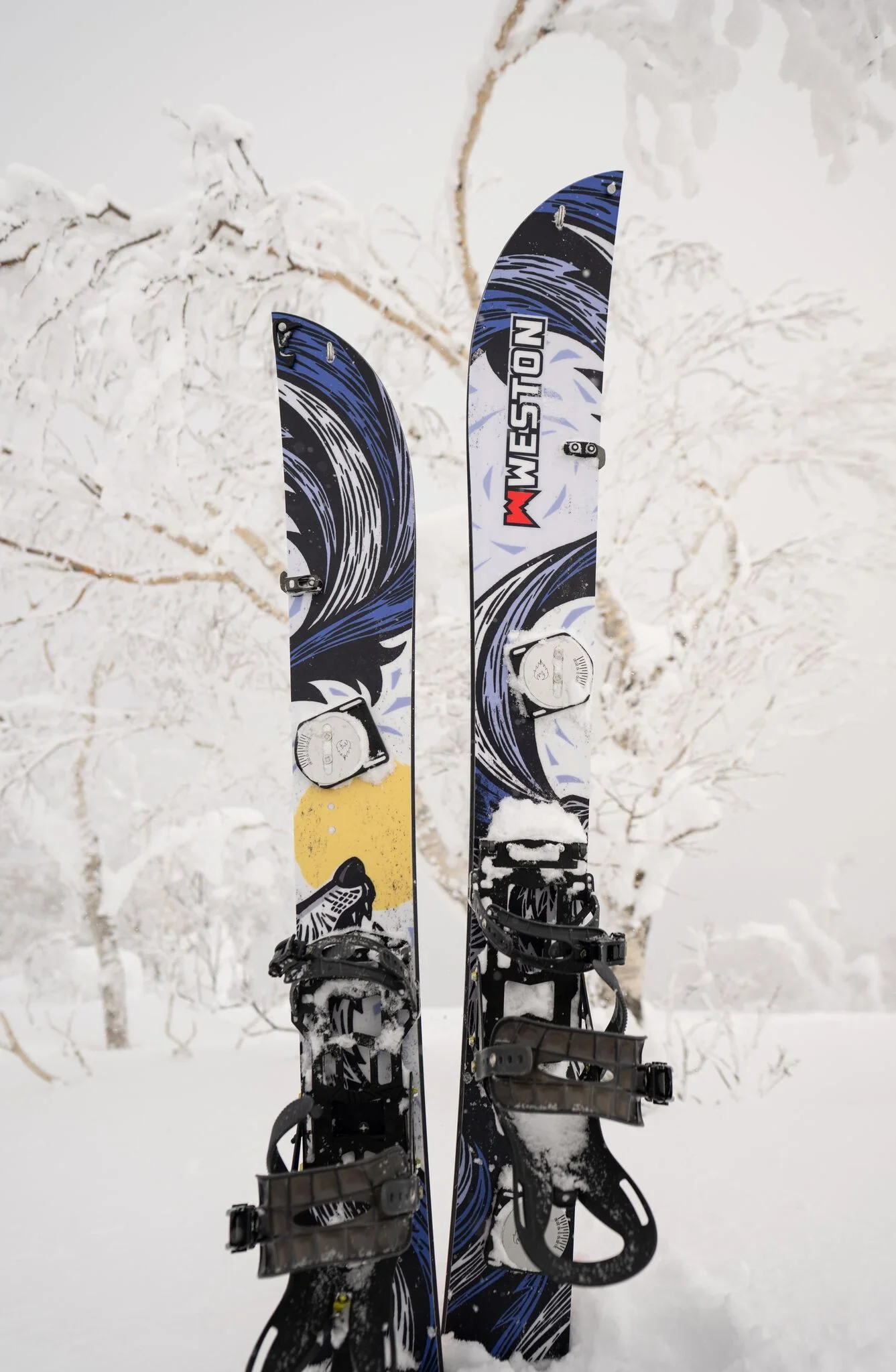
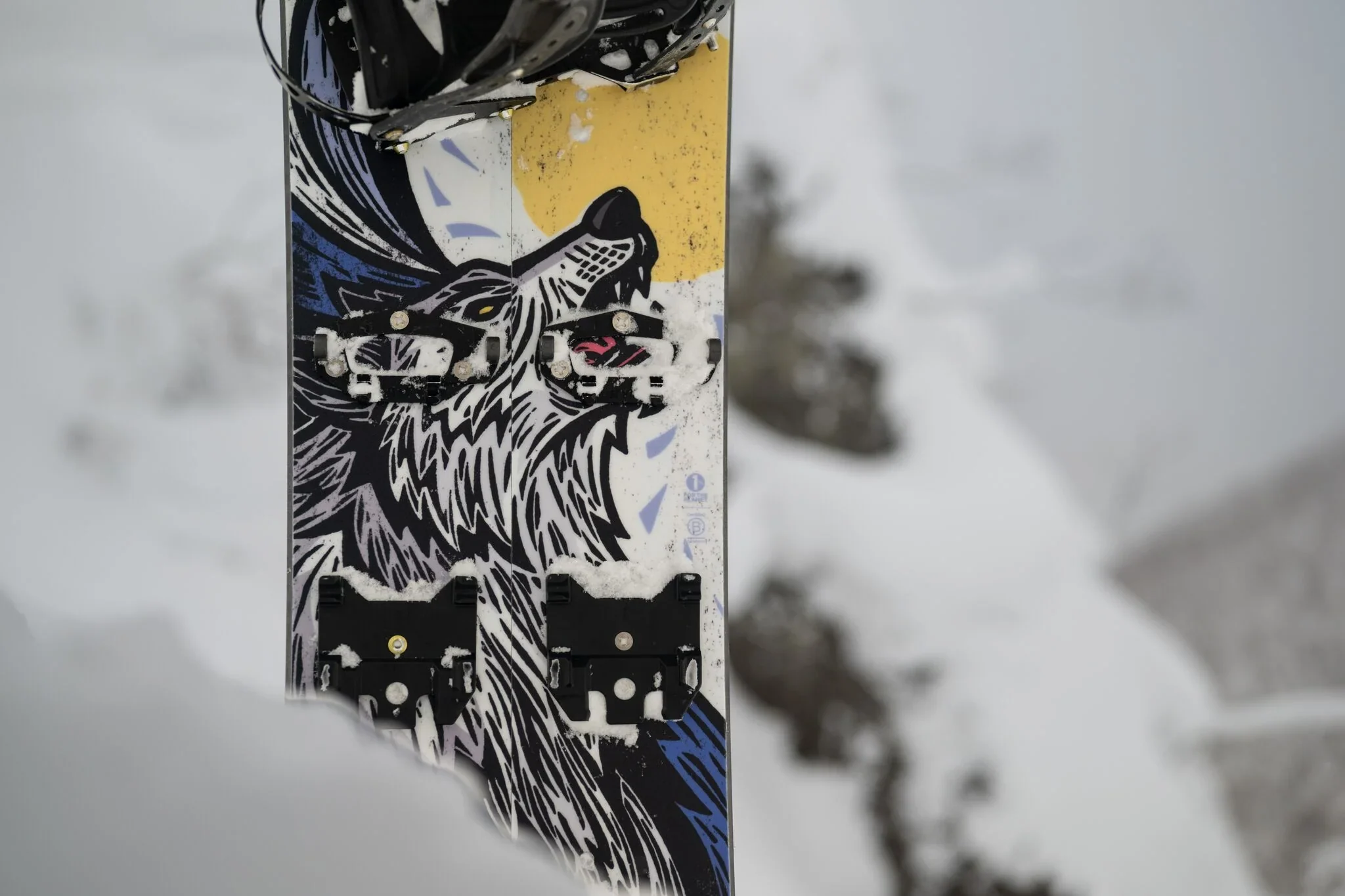
What does the board look like? (4 photos)