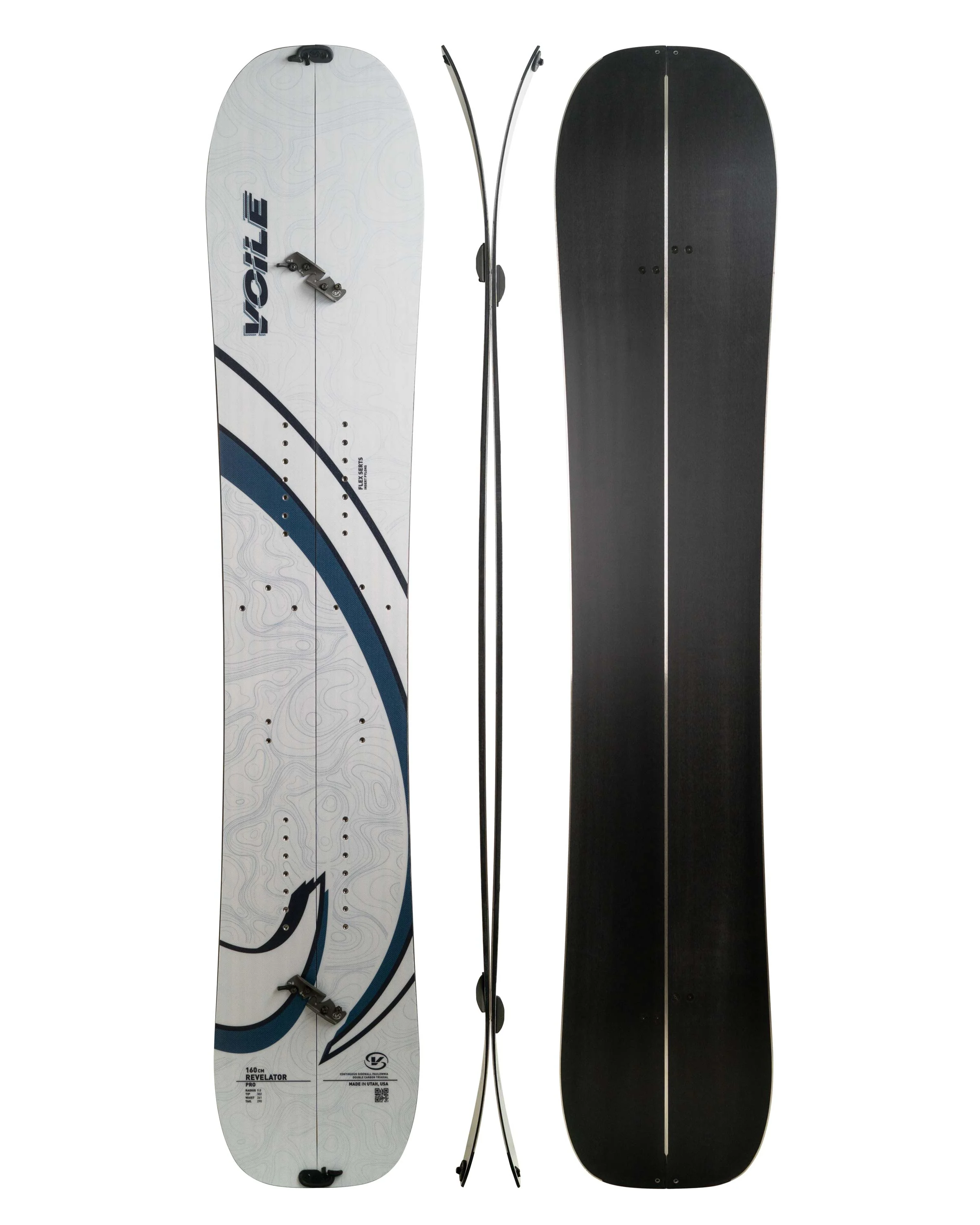
A familiar touring shape with a new build: the Revelator Pro carries Voilé’s established Revelator idea into 26/27. Look beyond a new graphic, because connection and construction have specifically changed.
Is the Voilé Revelator Pro Splitboard 26/27 right for your tours?
Freeride and alpine splitters are the natural audience. You want a versatile touring board and a solid ride-mode connection. For training laps, still compare the complete setup rather than a single manufacturer board-weight figure.
What does the shape offer on the descent?
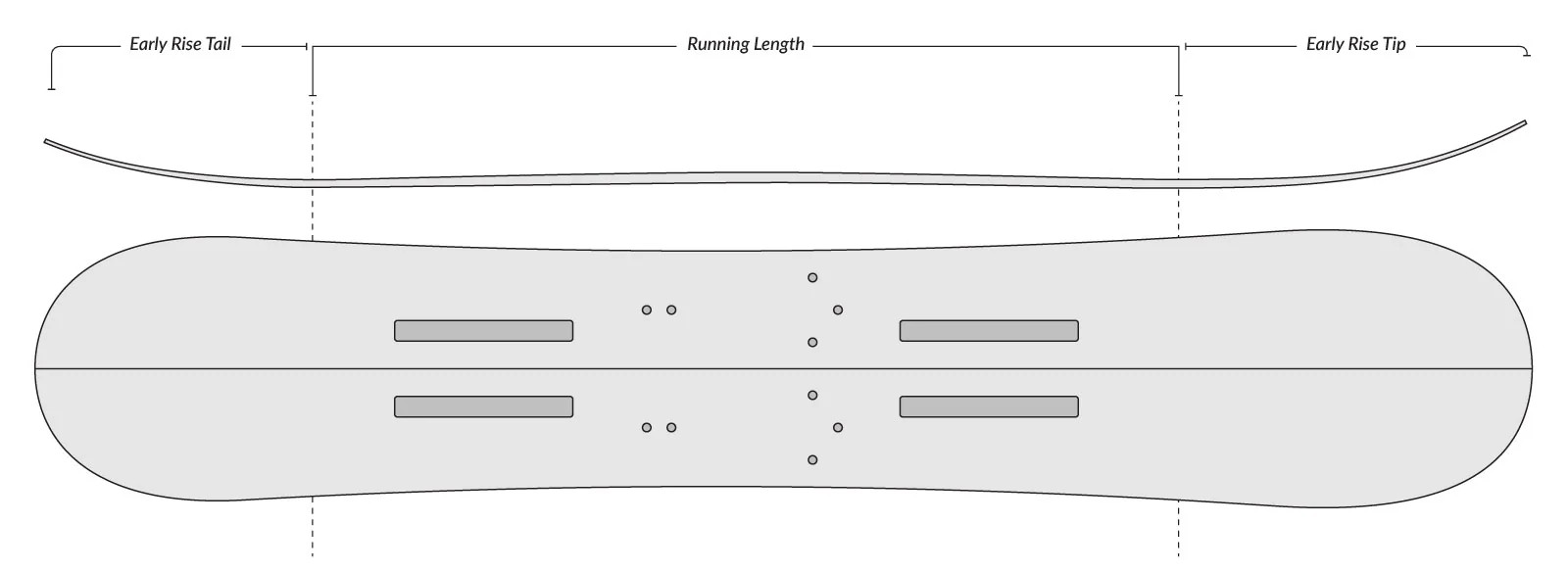
The current version retains Early Rise Camber and the Revelator’s basic shape. Changes include continuous TPU sidewalls instead of cap construction and FlexSert inserts replacing the former channel system. Camlock hooks pull the halves together. These are documented construction changes; we have not yet ride-tested the Pro ourselves.
What matters on the ascent?
Boots, bindings and suitable width still matter on the skin track. A firm or light build alone cannot guarantee comfortable traverses. Choose components that transmit your movement and practise transitions with the interface actually mounted.
How do you choose the right size?
Current sizes are 147, 152, 157, 160, 163 and 167 cm. The secured Voilé chart gives 2960 g only for the 160; other weights are unspecified. We do not extrapolate that number to other sizes.
How do boots, bindings and board work together?
Check compatibility with the new inserts and exact package contents when planning the system. The Revelator name alone does not establish compatibility with an older channel setup. Boot fit remains just as important as the connection between board halves.
Plan the touring setup as a whole: a lighter board offers little benefit if your boot lacks support or excessive width makes every traverse tiring. Choose a suitable board for your descents, then match boots, highback and bindings. Skins also need the right length, width and attachments. Before the first tour, practise a complete transition at home with the actual components you will carry.
Read more about matching your equipment in our Splitboard Gear Guide.
Which of our test experiences help you choose?
We have not yet tested the Voilé Revelator Pro Splitboard ourselves. Our assessment uses manufacturer information and the principles in our Gear Guide. We do not assign our own riding scores to it.
On a demo we would use a suitable size and our own boots where possible. Check whether you can still apply pressure cleanly after a long ascent and whether the board feels as manageable in slow turns as on an open face. A firm traverse is particularly revealing about the match between boots, highback and board. A short piste demo cannot replace every aspect of touring experience, but it can reveal unsuitable width or an overly demanding setup early.
What has changed since the previous season and earlier models?
The Revelator Pro has specific differences from the earlier Revelator: Voilé specifies TPU sidewalls in place of the former cap construction, FlexSert inserts instead of the previous channel system, and Camlock connectors. Early Rise Camber remains the underlying profile concept. The Pro therefore goes beyond a new topsheet, although we have not yet tested how much these changes affect its feel on snow.
Which alternatives should you compare?
Compare Weston Gnarnia Splitboard and Rossignol XV Splitboard. The differences in riding style and use are discussed above. A useful demo starts with comparable sizes, your own boots and a familiar stance. What matters is whether the board also suits you in tight terrain and after a long climb.
FAQ: What should you know before the first tour?
What changed from the older Revelator to the Pro?
Voilé specifies TPU sidewalls, FlexSert inserts replacing channels and Camlock hooks. The basic shape and Early Rise Camber idea remain. An older model introduction is therefore not a ride test of the new Pro construction.
How do I choose length and width?
Current sizes are 147, 152, 157, 160, 163 and 167 cm. The secured Voilé chart gives 2960 g only for the 160; other weights are unspecified. We do not extrapolate that number to other sizes.
Have you tested this board yourselves?
We have not yet tested the Voilé Revelator Pro Splitboard ourselves. This advice uses manufacturer information and our Gear Guide; we do not assign our own test scores to it.
How should I match boots and bindings to the board?
Check compatibility with the new inserts and exact package contents when planning the system. The Revelator name alone does not establish compatibility with an older channel setup. Boot fit remains just as important as the connection between board halves.
What is included in the price and what else do you need?
Budget for suitable skins, bindings and the required interface. Check actual package contents so your price comparison includes the same parts. Voilé quotes US dollars; shipping and possible import costs depend on the offer and destination.
What differs from the previous season?
The Revelator Pro has specific differences from the earlier Revelator: Voilé specifies TPU sidewalls in place of the former cap construction, FlexSert inserts instead of the previous channel system, and Camlock connectors. Early Rise Camber remains the underlying profile concept. The Pro therefore goes beyond a new topsheet, although we have not yet tested how much these changes affect its feel on snow.
Which sizes and specifications does the manufacturer list?
The table shows manufacturer specifications, not our own measurements. Sizes in the current model range: 147, 152, 157, 160, 163, 167 cm.
| Length (cm) | 147 | 152 | 157 | 160 | 163 | 167 |
|---|---|---|---|---|---|---|
| Tip (mm) | 290 | 292 | 298 | 302 | 305 | 308 |
| Waist (mm) | 246 | 248 | 257 | 261 | 263 | 265 |
| Tail (mm) | 278 | 280 | 286 | 290 | 292 | 294 |
| Radius (meter) | 8.2 | 8.4 | 8.8 | 9.0 | 9.2 | 9.4 |
| Pair Weight | not specified | not specified | not specified | 2960g | not specified | not specified |
Where do the information and images come from?
Voilé Revelator Pro Splitboard – manufacturer page. Checked 16 October 2026. Product photographs and size charts come from the manufacturer. Our own test experience is assigned to the ridden board in the test section.
What does the board look like? (2 photos)