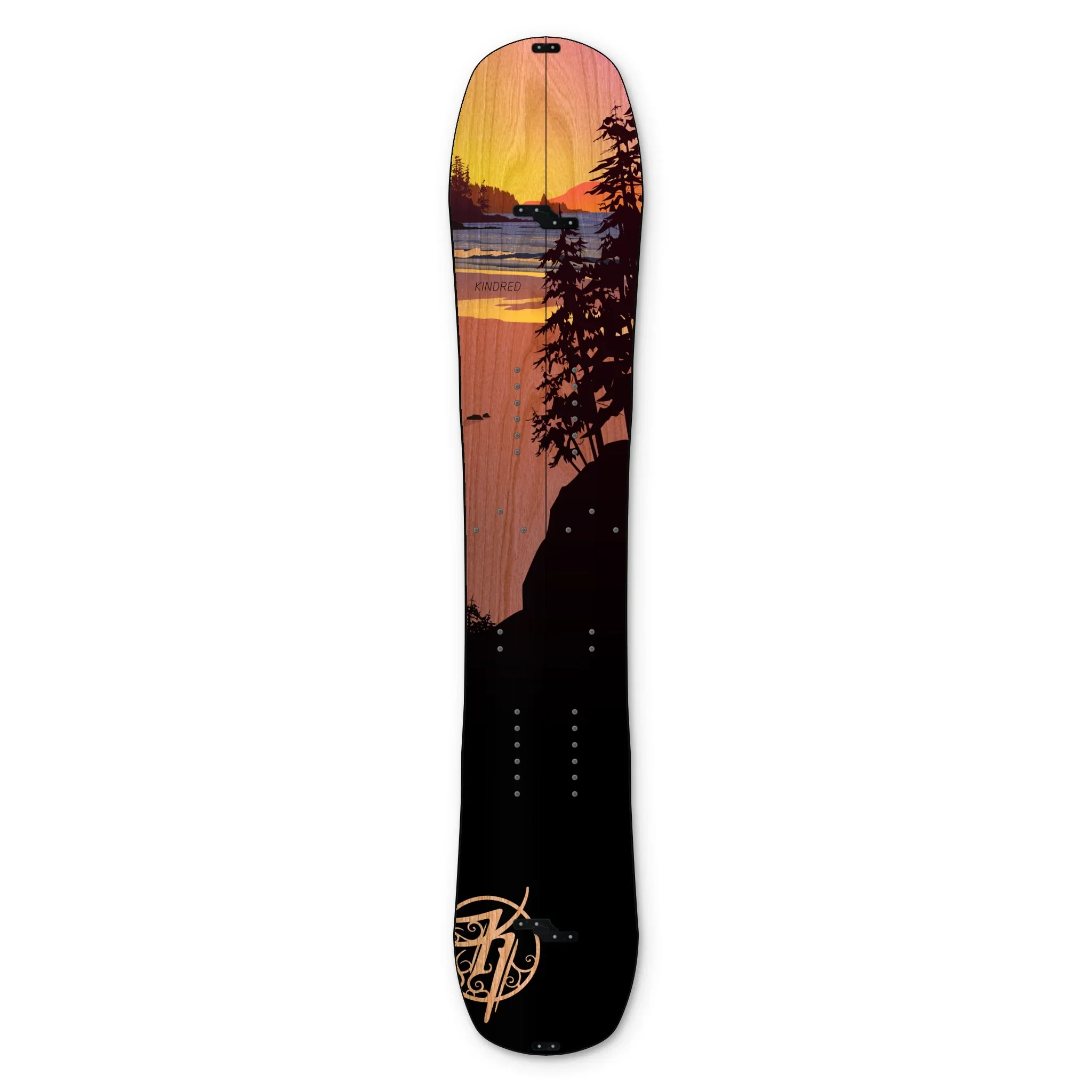
The Black Creek is a versatile directional option with a powder-friendly nose and mild sidecut serration. A firmer tail is intended to support turns without transmitting every irregularity through the front. Compare it if the Tsitika feels too committed to carving.
Is the Kindred Black Creek Split right for your tours?
A tour rarely ends where the best powder lies. Wind-affected patches, a narrow section or a firm exit often come between. For the versatile freeride or recreational touring rider in our Gear Guide, the whole-day balance matters. Choose a size you can still guide cleanly with tired legs. Looking only for maximum composure can buy unnecessary work in slow turns; looking only for easy pivoting can overlook support in rough snow.
What matters on the skin track?
The whole setup matters on the skin track. A board can pivot easily downhill and still need lateral support from boots and bindings. Keep a calm stride and assess edge loading on traverses. A useful balance point matters more for repositioning than weight alone. In deep snow the nose should clear the track; tight kick turns need room for the actual length. Include slow track changes and firm passages in the comparison. An impressive downhill outline alone does not answer that question.
How do you choose length, width and stance?
Confirmed sizes are 146, 150, 154, 158, 162, 166, 170 cm. Start with the manufacturer’s rider-weight range where specified for this version, then check actual boot width at your chosen stance. Height alone is not a reliable sizing method. Between two suitable lengths, the shorter can be easier to move; extra area may help with higher weight or deeper snow. This is not a fixed rule. Distinguish overall length, effective edge and width underfoot. Additional equipment and a heavy pack also change the load.
How should boots, bindings and skins fit?
Our Gear Guide recommends matching boots and bindings together. Lateral support matters in the changing conditions often found in the Alps. Boots should hold your heel, bindings must fit the actual outer sole, and highbacks should suit your weight and riding. Check overhang at your own binding angles; a wide waist alone does not guarantee a good fit. Practise the complete transition at home before doing it with cold fingers on tour. For skins, length, trimming and nose and tail fittings must match. A shared brand name does not mean a skin fits every outline.
Our Splitboard Gear Guide explains the setup relationships.
Which of our test experiences help you choose?
We have not yet tested the Kindred Black Creek Split ourselves. This advice uses manufacturer data and our Gear Guide; we do not assign our own riding scores to this version.
For a demo, use the same boots and a familiar stance. Try slow turns, a firm section and transitions as well as the best powder slope. After a longer climb, it is easier to tell whether the size remains manageable. Manufacturer claims about lightness, grip and damping are starting points for that comparison, not editorial measurements.
What has changed since 25/26 or earlier models?
The manufacturer currently lists this model as a regular offer without clearly assigning the entire construction to a new annual development. This is our 26/27 buying guide. A different graphic or price does not prove a changed ride, and we do not assume identity with earlier versions unchecked.
What is included in the price and what else do you need?
Compare like package contents: board, joining hardware, bindings with interface and matching skins are separate items. A product photograph alone does not describe a complete touring setup.
Which alternatives are worth comparing?
Within the brand, compare Kindred Nootka Split, Kindred Arrowsmith Split, Kindred Tsitika Split. Start with intended use, then compare price and construction. Pay particular attention to width differences at similar lengths. A more expensive construction of a different shape does not guarantee a better fit.
FAQ: What should you know before choosing?
Who should consider this splitboard?
The Black Creek is a versatile directional option with a powder-friendly nose and mild sidecut serration. A firmer tail is intended to support turns without transmitting every irregularity through the front. Compare it if the Tsitika feels too committed to carving.
Which size and width suit me?
Confirmed sizes are 146, 150, 154, 158, 162, 166, 170 cm. Start with the manufacturer’s rider-weight range where specified for this version, then check actual boot width at your chosen stance. Height alone is not a reliable sizing method. Between two suitable lengths, the shorter can be easier to move; extra area may help with higher weight or deeper snow. This is not a fixed rule. Distinguish overall length, effective edge and width underfoot. Additional equipment and a heavy pack also change the load.
Have you tested this board yourselves?
We have not yet tested the Kindred Black Creek Split ourselves. This advice uses manufacturer data and our Gear Guide; we do not assign our own riding scores to this version.
What needs to match in the setup?
Our Gear Guide recommends matching boots and bindings together. Lateral support matters in the changing conditions often found in the Alps. Boots should hold your heel, bindings must fit the actual outer sole, and highbacks should suit your weight and riding. Check overhang at your own binding angles; a wide waist alone does not guarantee a good fit. Practise the complete transition at home before doing it with cold fingers on tour. For skins, length, trimming and nose and tail fittings must match. A shared brand name does not mean a skin fits every outline.
What is included in the price and what else do you need?
Compare like package contents: board, joining hardware, bindings with interface and matching skins are separate items. A product photograph alone does not describe a complete touring setup.
How does it differ from the earlier version?
The manufacturer currently lists this model as a regular offer without clearly assigning the entire construction to a new annual development. This is our 26/27 buying guide. A different graphic or price does not prove a changed ride, and we do not assume identity with earlier versions unchecked.
Which sizes and dimensions does the manufacturer list?
Confirmed sizes: 146, 150, 154, 158, 162, 166, 170 cm. Figures are manufacturer data rather than our measurements. Missing or conflicting entries are not filled with estimates. Manufacturer flex and editorial riding scores are different scales.
| Specification | 146 | 150 | 154 | 158 | 162 | 166 | 170 |
|---|---|---|---|---|---|---|---|
| Running length | 1042 mm | 1067 mm | 1090 mm | 1131 mm | 1166 mm | 1207 mm | 1227 mm |
| Nose length | 244 mm | 254 mm | 260 mm | 260 mm | 262 mm | 262 mm | 270 mm |
| Tail length | 174 mm | 184 mm | 190 mm | 190 mm | 192 mm | 194 mm | 202 mm |
| Nose width | 289 mm | 294 mm | 298 mm | 304 mm | 308 mm | 312 mm | 320 mm |
| Tail width | 279 mm | 284 mm | 288 mm | 292 mm | 296 mm | 300 mm | 308 mm |
| Waist width | 242 mm | 247 mm | 252 mm | 255 mm | 259 mm | 261 mm | 270 mm |
| Sidecut radius | 6.5 m | 6.8 m | 7.25 m | 7.5 m | 7.9 m | 8.1 m | 8.5 m |
| Stance width | 482 mm | 495 mm | 508 mm | 533 mm | 559 mm | 559 mm | 584 mm |
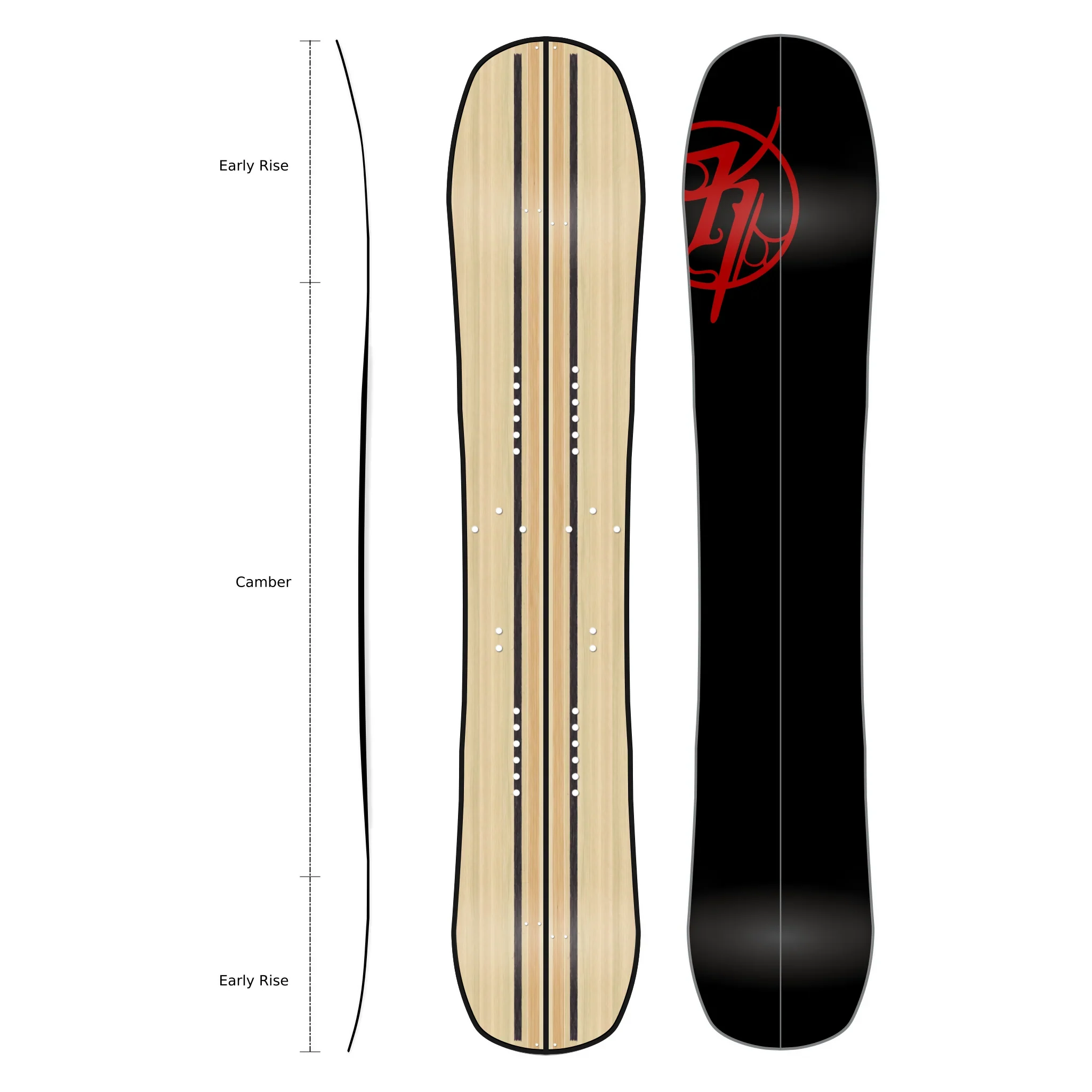
| Camber profile | Early Rise | Early Rise | Early Rise | Early Rise | Early Rise | Early Rise | Early Rise |
| Carbon weight (g) | 2406 | 2550 | 2690 | 2718 | 2914 | 3050 | 3179 |
| Fiberglass weight (g) | 2754 | 2860 | 3003 | 3080 | 3457 | 3520 | 3639 |
| Surface area (cm²) | 3554.13 | 3809.69 | 3874.64 | 4069.72 | 4304.16 | 4505.89 | 4695.73 |
Where do the data, images and test reports come from?
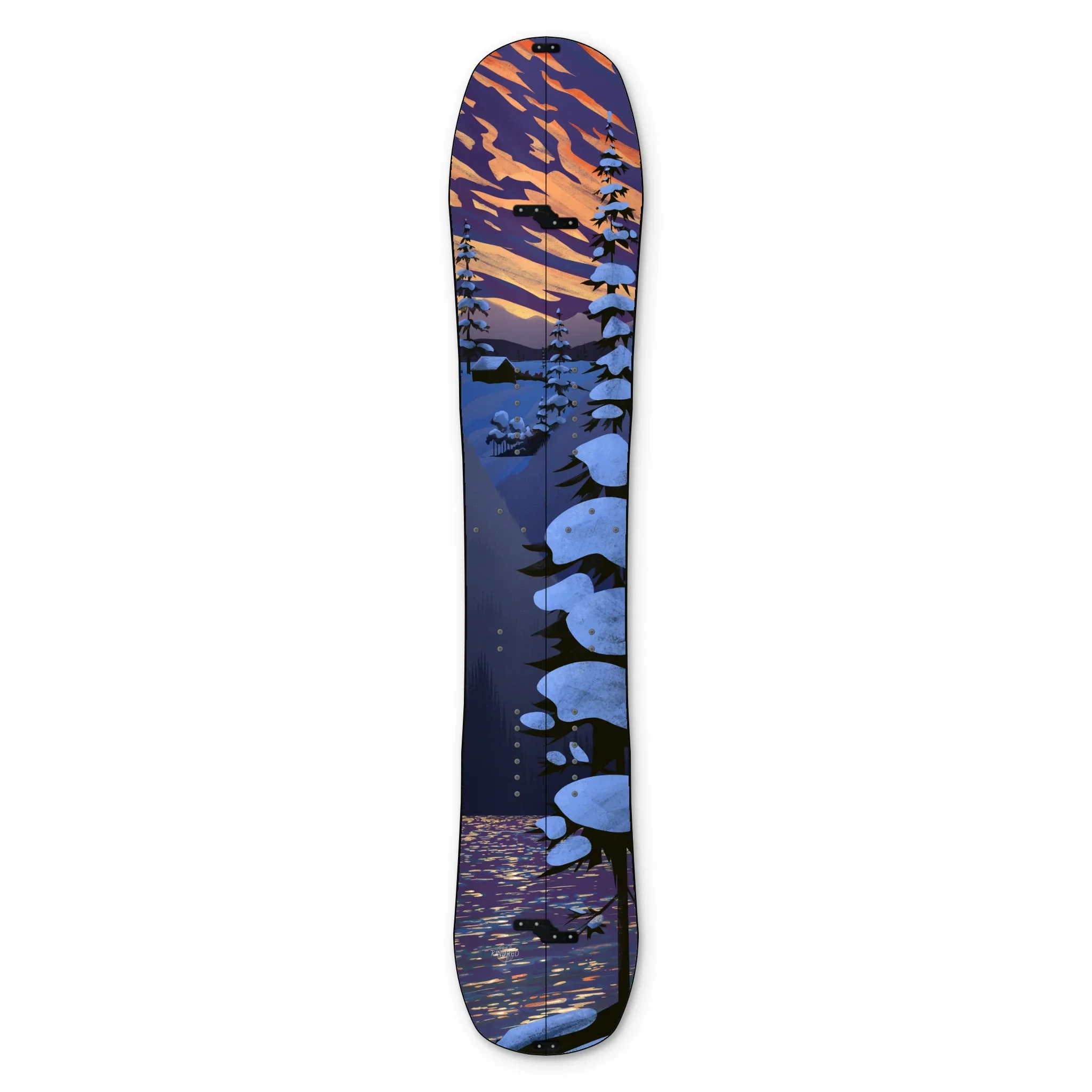
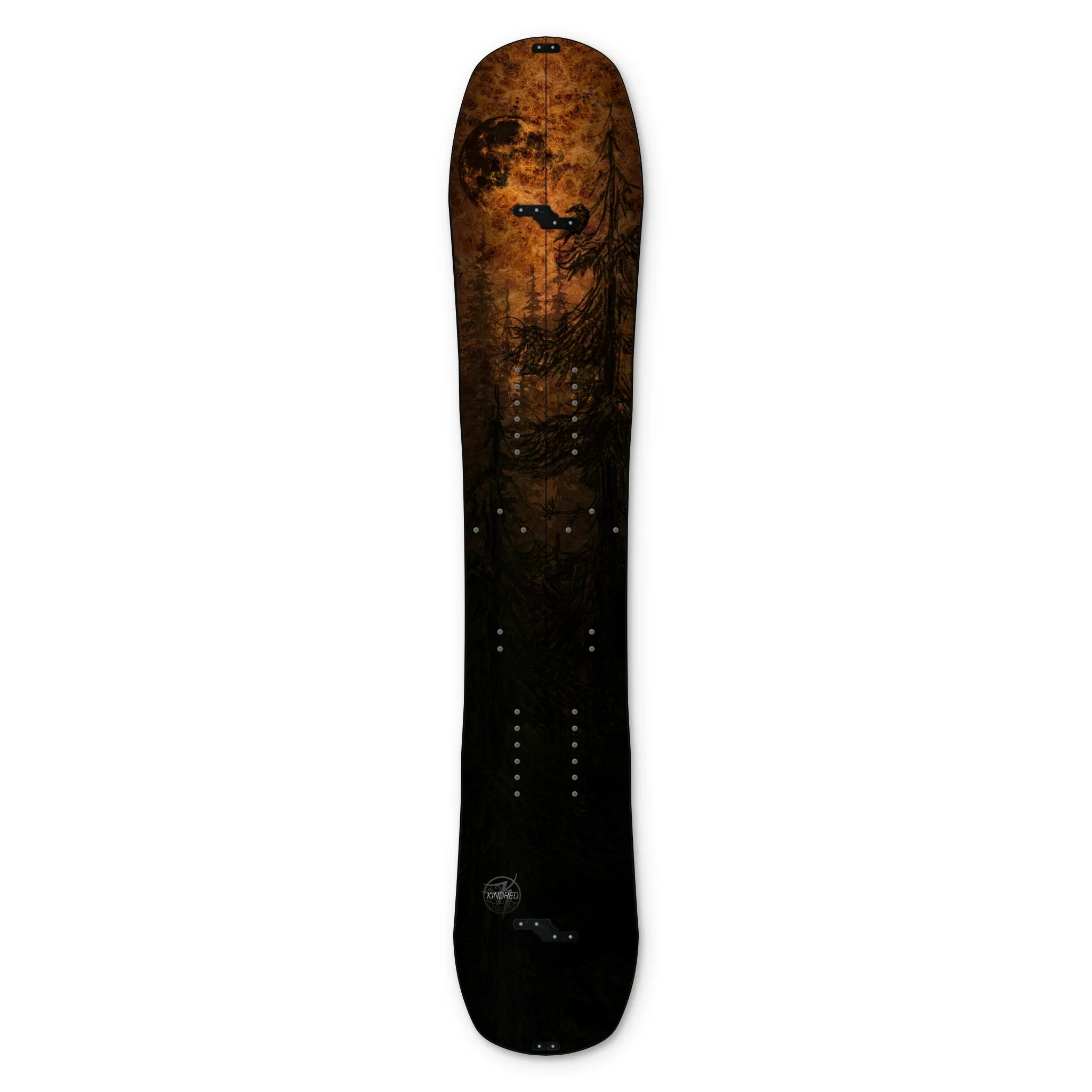
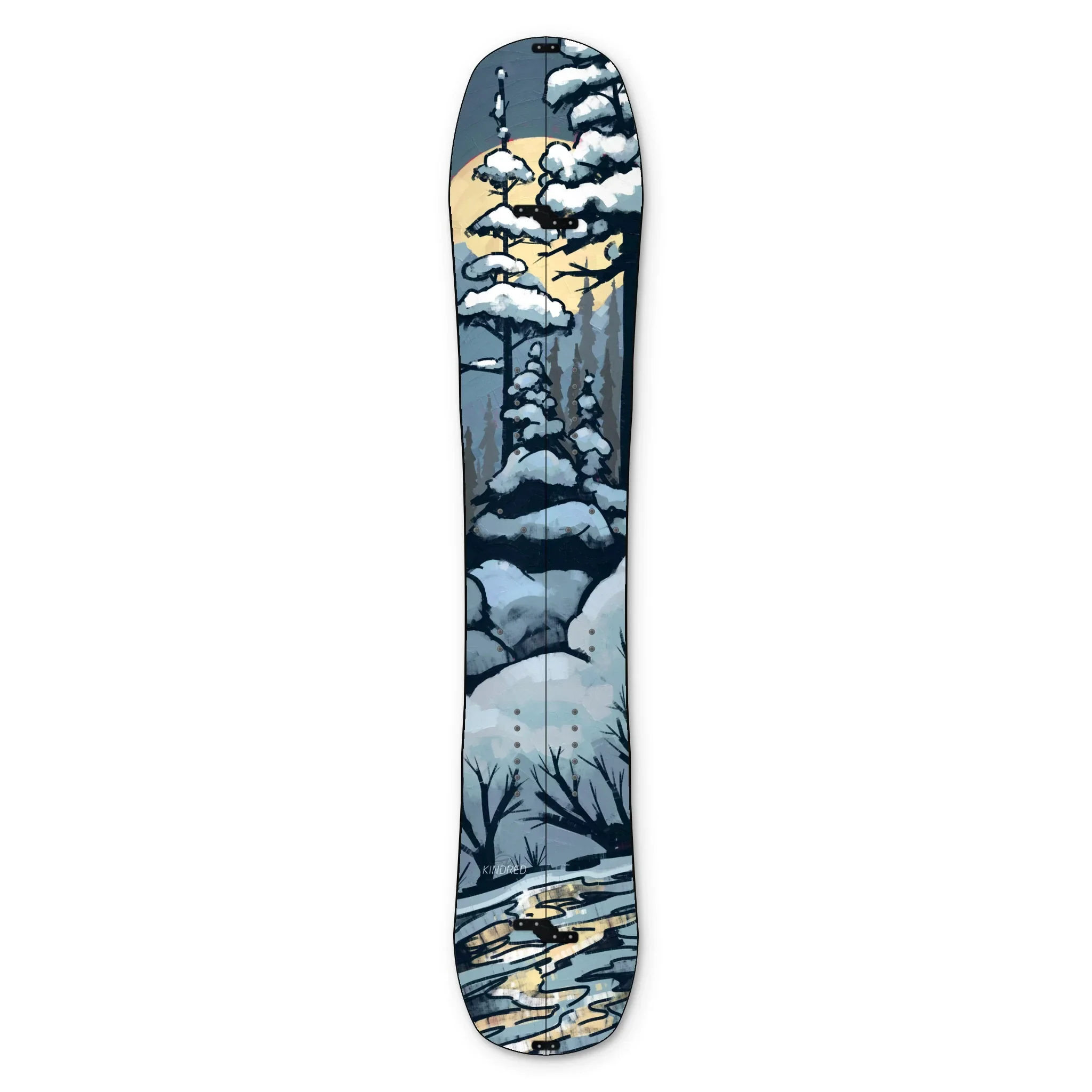
Kindred Black Creek Split – manufacturer offer. Checked 19 October 2026. Images and dimensions come from the linked current manufacturer offer. These are manufacturer views, not evidence of our own riding test.
What does the board look like? (5 photos)
Show 1 more images